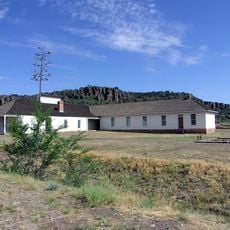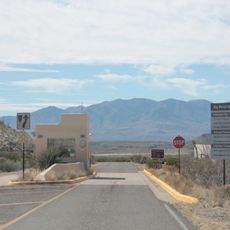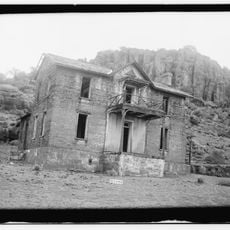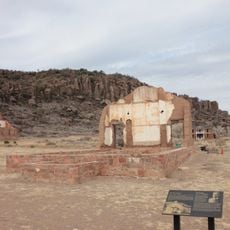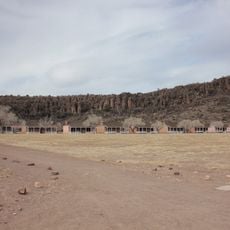
Marathon Uplift, Rock formation in Brewster County, Texas, United States.
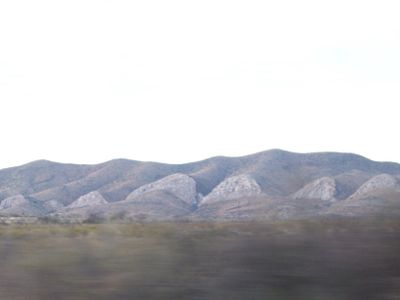
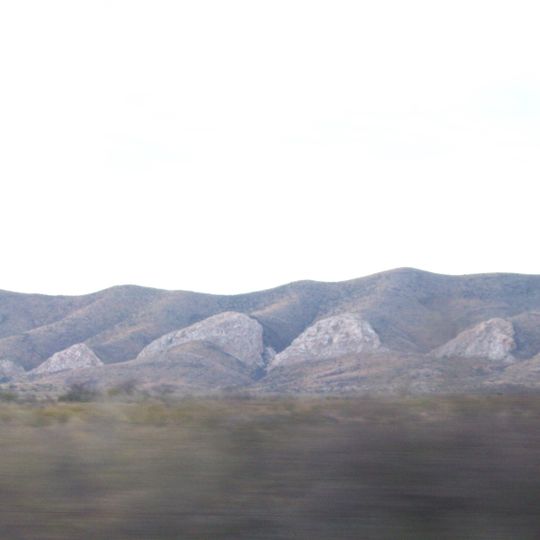
Marathon Uplift is a domal uplift of Paleogene age, about 126 km across, in southwest Texas. Erosion of Cretaceous and younger strata from its crest created the Marathon Basin, where northeast-trending ridges of pre-Permian Paleozoic rock rise as rounded summits and shallow saddles, with bare light-grey outcrops along the crest.
The Marathon Uplift is a Paleogene-age domal uplift about 126 km across. Its Marathon Basin formed when erosion stripped Cretaceous and younger strata from the crest. The northeast-trending ridges of pre-Permian Paleozoic rock in the basin were shaped by the Ouachita orogeny, the same event that built the Ouachita Mountains of Arkansas and Oklahoma.
The uplift and its basin lie in the Trans-Pecos region of West Texas, and the ridges of pre-Permian Paleozoic strata in the basin trend northeast, the same grain as the Ouachita Mountains of Arkansas and Oklahoma. The name comes from the town of Marathon, which sits at the foot of the structure. Geologists come here to read folded and faulted Paleozoic rock in a dry, scrub-covered landscape.
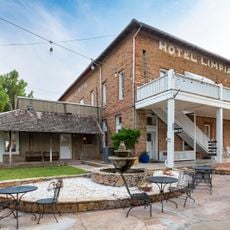
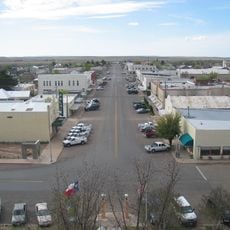
The formation is easy to see from Highway 90, and much of it can be explored on foot without a long walk. Marathon, just nearby, is a good base since it has places to stay and eat before or after visiting the area.
The rocks exposed here are among the oldest found at the surface anywhere in Texas, brought up from deep within the Earth by tectonic folding. In some spots, a visitor can place a hand on stone that would normally sit far below the surface.
The community of curious travelers
AroundUs brings together thousands of curated places, local tips, and hidden gems, enriched daily by 92,701 contributors worldwide.