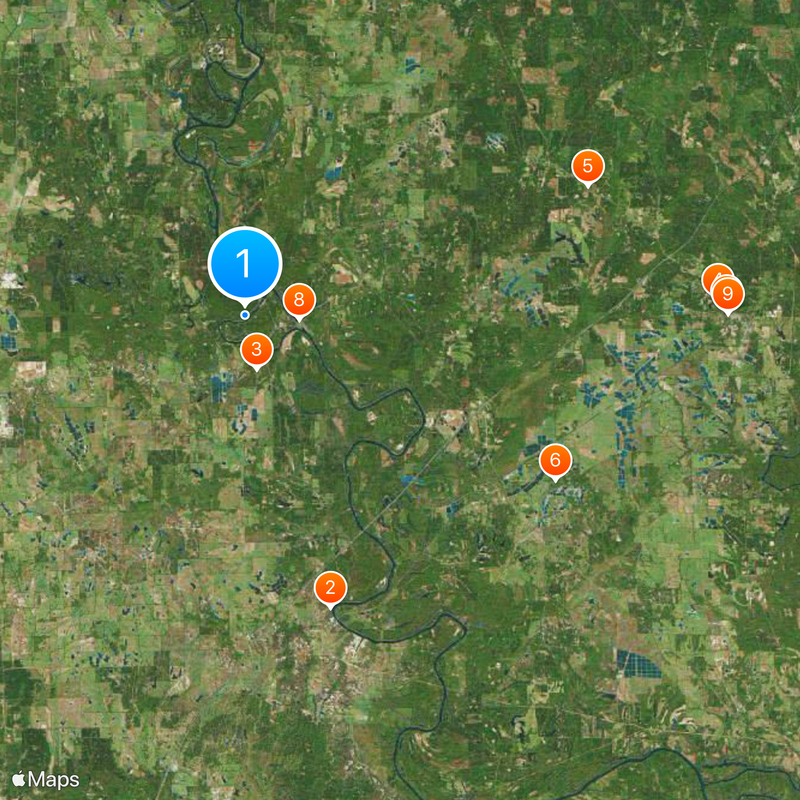
Tennessee-Tombigbee Waterway, Artificial waterway between Tennessee and Tombigbee Rivers in Alabama and Mississippi, United States.
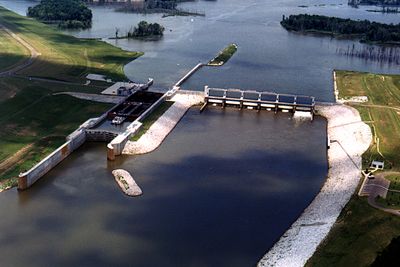
The Tennessee-Tombigbee Waterway is an artificial connection between two rivers in Alabama and Mississippi, stretching across multiple sections. Ten locks and dams regulate water flow to enable navigation throughout the region.
The Spanish first proposed a Tennessee–Tombigbee link in the 16th century, and engineers surveyed a canal route in 1875 but rejected it as too costly. Congress authorized the project in the River and Harbor Act of 1946, and the U.S. Army Corps of Engineers began construction in 1972 after President Nixon backed it. The waterway was completed on December 12, 1984, nearly two years ahead of schedule, and opened to traffic in January 1985.
The waterway links communities along its route and has created new gathering spots for commerce and leisure. Today, people use it for fishing, boating, and experiencing the surrounding natural areas.
The waterway's ten locks measure 110 by 600 feet (34 by 183 m) with a 9-foot (2.7 m) depth, matching those on the Mississippi above Lock and Dam 26 at Alton, Illinois. The lock chambers can hold towboats pushing eight barges. Boaters should plan for lockage time at each of the ten structures between the Tennessee River and Demopolis, Alabama.
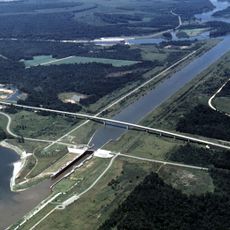
The Divide Cut between the Tombigbee and Tennessee watersheds reaches 175 feet (53 m) deep. Excavation moved nearly 310 million cubic yards of soil, more earth than was moved for the Panama Canal.
The community of curious travelers
AroundUs brings together thousands of curated places, local tips, and hidden gems, enriched daily by 92,883 contributors worldwide.