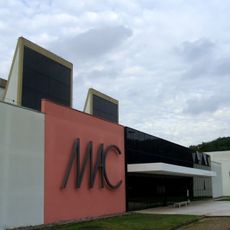
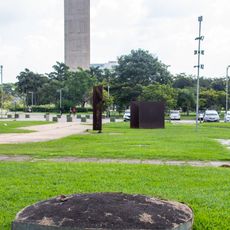
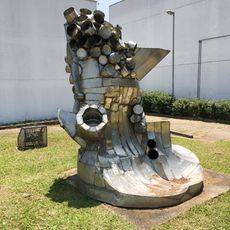
Museu Histórico do Instituto Butantan, Scientific history museum at Instituto Butantan, São Paulo, Brazil.
The Museu Historico do Instituto Butantan is a science museum in Sao Paulo that displays the history of vaccines and research work. It holds old medical equipment, handwritten records, and laboratory samples from different periods of the institution.
In 1899, a bubonic plague outbreak in Santos led Emílio Ribas to appoint Vital Brazil to head a new serum laboratory, set up in an old stable on the Butantan farm about 9 km from central São Paulo. On 23 February 1901 the laboratory became the independent Instituto Serumtherápico do Estado de São Paulo, and on 11 June 1901 it delivered its first anti-plague serums. The Historical Museum opened in 1981 as a reconstruction of that first laboratory.
The museum displays laboratory items and photographs that show how science advanced in Brazil. The collection documents the journey from early experiments to modern methods.
Access is possible from Avenida Vital Brazil, and the museum is open to visitors on most days of the week. It is recommended to check the exact opening hours in advance as these may vary seasonally.
The museum occupies a reconstruction of the first laboratory where Vital Brazil and his team produced anti-plague serums in 1901. Its collection includes bleeding tubes in which horse blood was left to settle for about a day, separating plasma with antibodies from the solid part, and a 1.70-metre distiller once used to make distilled water for serum production.
The community of curious travelers
AroundUs brings together thousands of curated places, local tips, and hidden gems, enriched daily by 94,077 contributors worldwide.