Komodo National Park, Protected national park in Lesser Sunda Islands, Indonesia
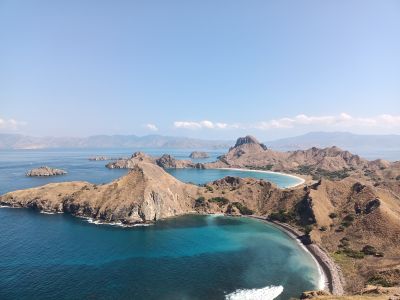
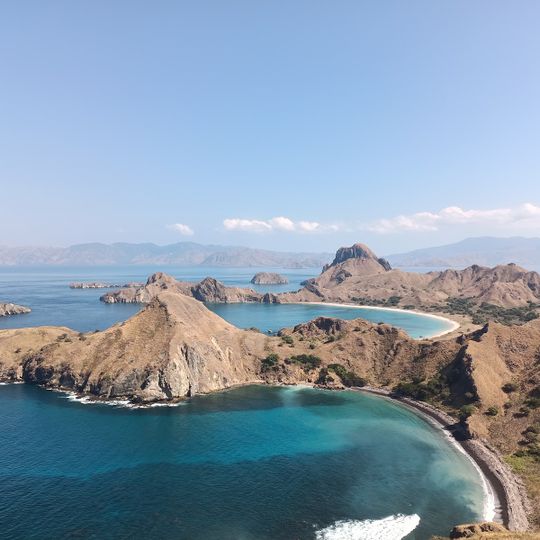
Komodo National Park is a protected area in the Lesser Sunda Islands, Indonesia, that encompasses three main islands and numerous smaller islets. The landscape shifts between dry savannas, mangrove forests, white sand beaches, and steep volcanic slopes that drop down to the coastline.
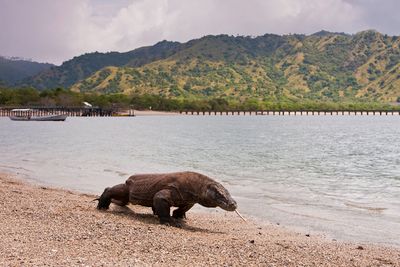
The Indonesian government created the protected area in 1980 to preserve the largest living lizards on Earth and their natural habitats. UNESCO recognized the natural value of the area in 1991 and added it to the World Heritage list.
Four villages lie inside the park: Komodo village on Komodo, Rinca and Kerora on Rinca, and Papagaran on Papagarang. Most residents are fishermen whose families came from Bima, Manggarai, South Flores and South Sulawesi, and most are Muslim. Descendants of Komodo's original inhabitants, the Ata Modo, still live on the island, though no full-blooded Ata Modo remain and their language is merging with that of later migrants.
Visitors travel by boat from Labuan Bajo and follow a ranger who shows safe paths and monitors encounters with the monitor lizards. The walks lead over dry hills with limited shade, so early morning hours are most comfortable for exploring.
The waters around the islands host more than a thousand fish species, 260 coral species, and provide shelter for sea turtles and manta rays. The currents between the islands bring nutrient-rich water that creates exceptional biodiversity below the surface.
The community of curious travelers
AroundUs brings together thousands of curated places, local tips, and hidden gems, enriched daily by 92,750 contributors worldwide.