Opa-locka Thematic Resource Area, Moorish Revival architectural ensemble in Opa-locka, Florida, US
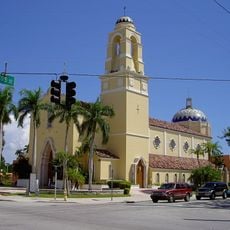
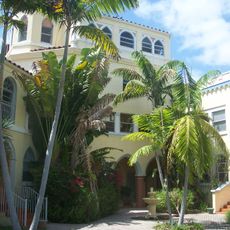
The Opa-locka Thematic Resource Area is a group of 17 surviving Moorish Revival buildings in Opa-locka, Miami-Dade County, Florida, listed on the National Register of Historic Places. Architect Bernhardt E. Muller designed them between 1926 and 1928 with onion-shaped domes, minarets, crenelated parapets, Saracenic arches, watchtowers, mosaic tile and outdoor spiral staircases. The set includes the Opa-locka Company Administration Building, the Seaboard Air Line railroad station and the Harry Hurt Building, the development's first commercial structure.
Aviation pioneer Glenn Hammond Curtiss founded the Opa-locka project in 1926 on 4.2 acres during the Florida land boom, and his Opa-locka Company hired architect Bernhardt E. Muller to design over 80 Moorish Revival buildings. The September 1926 Miami hurricane destroyed many of the originals; 17 of the 20 buildings later listed on the National Register survive today.
The street names draw from Arabian tales, including Ali Baba Avenue, Sharazad Avenue, Caliph Street, and Sinbad Avenue. Walking through these roads reminds visitors of the fantasy world that shaped this neighborhood's identity.
The Administration Building, which once served as City Hall, stands as the central structure and is accessible for viewing. Visitors can walk through the area at their own pace, as the district's size allows for a self-guided exploration of the historic buildings.
The buildings were conceived in 1926 by aviator Glenn Curtiss, who wanted to create a fantastical city inspired by Oriental storybook worlds. This makes the area one of the few communities in America whose entire character is rooted in such literary imagination.
The community of curious travelers
AroundUs brings together thousands of curated places, local tips, and hidden gems, enriched daily by 92,639 contributors worldwide.