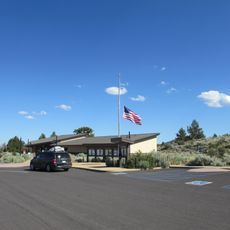
Lava Beds National Monument, National monument in Siskiyou and Modoc counties, California, United States
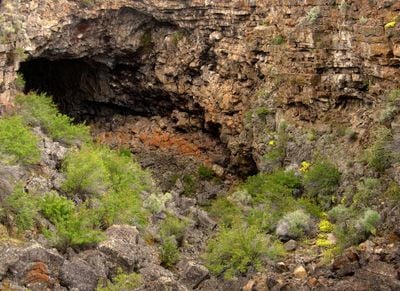
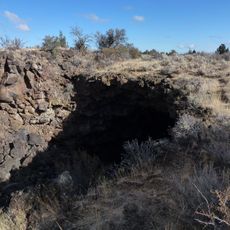
Lava Beds National Monument is a national monument on the northeastern flank of Medicine Lake Volcano in Siskiyou and Modoc counties, California. It protects more than 46,000 acres of volcanic terrain, including about 30 lava flows, cinder cones, spatter cones, fumaroles, pit craters, and maars. The monument has the largest concentration of lava tubes in North America, with 27 marked entrances and developed trails. A layered rock formation with a dark cave opening and loose rock below appears in the photographs.
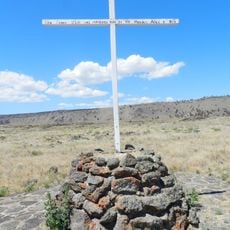
The monument was the battleground of the Modoc War from 1872-1873, when Native American warriors fought to defend their territory against the United States Army. This conflict shaped the region's history and left marks that visitors can still observe today.
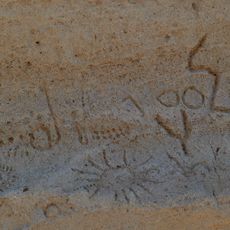
Petroglyph Point is a cliff of layered tuff at Tule Lake, formed about 275,000 years ago when cinders erupted through shallow water. Its rock face holds one of California's largest collections of petroglyphs, carved by Modoc ancestors. The site lies within the traditional homeland of the Modoc people, whose language and oral traditions remain part of the region.
The visitor center offers safety information, cave maps, and flashlight rentals to help with exploration of the tunnel network. Wear sturdy shoes and bring plenty of water, as hiking can be strenuous and shade is limited across the terrain.
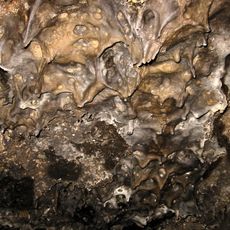
Most of the monument's lava tubes formed 30,000 to 40,000 years ago, when the surface of a basaltic flow crusted over and insulated the molten lava beneath. As the supply ended, the remaining lava drained away and left a hollow tube. Lavacicles on the ceilings record the dripping of viscous lava as the level fell, and dripstone formed where lava splashed onto the walls.
The community of curious travelers
AroundUs brings together thousands of curated places, local tips, and hidden gems, enriched daily by 92,808 contributors worldwide.