Fort Langley National Historic Site, Trading post in Township of Langley, Canada
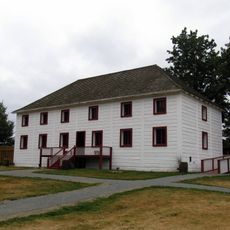
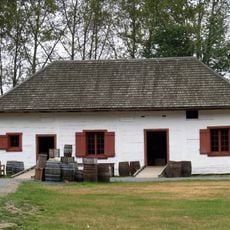
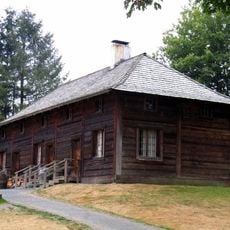
Fort Langley National Historic Site stands above the Bedford Channel across from McMillan Island, where a visitor centre and a trading post of ten structures enclosed by wooden palisades occupy the site. Only the 1840s storehouse survives from the Hudson's Bay Company era; Parks Canada rebuilt the other buildings and the palisades in the later 20th century.
Fort Langley was first built in 1827 at a site 4 km downstream, later called Derby, and was moved to its present location in 1839; a fire destroyed the new post the following year and it was rebuilt. On 19 December 1858 James Douglas proclaimed the Crown colony of British Columbia at the fort during the Fraser Canyon Gold Rush, formally ending the Hudson's Bay Company monopoly. The company ran the post until 1886, when it opened a new store in the town and abandoned the riverside fort.
The fort's name honours Thomas Langley, a prominent Hudson's Bay Company director. To secure trade with the Sto:lo, the men at the first fort were encouraged to take Sto:lo women as wives, and only Indigenous people bringing furs were allowed past the stockade gate. Today staff in 19th-century dress demonstrate blacksmithing and barrel-making.
The site is located along the Fraser River with accessible parking and walkways connecting all areas for visitors to explore. Comfortable shoes are recommended, and visitors should prepare for changing weather since most of the experience takes place outdoors.
Visitors can stay overnight in modern tent-like structures called oTENTik accommodations located within the palisade walls, offering a night inside the trading post setting. This lodging option blends a historic location with contemporary comforts.
The community of curious travelers
AroundUs brings together thousands of curated places, local tips, and hidden gems, enriched daily by 94,051 contributors worldwide.