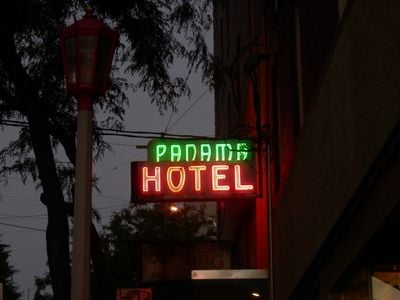
Panama Hotel, Historic hotel in International District, Seattle, United States.
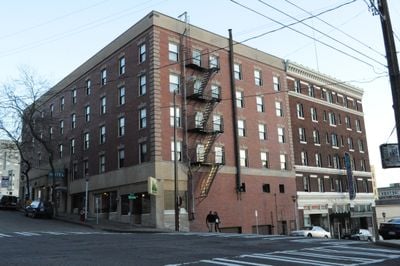
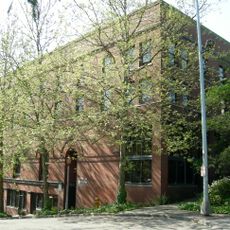
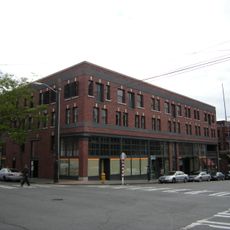
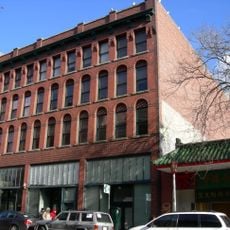
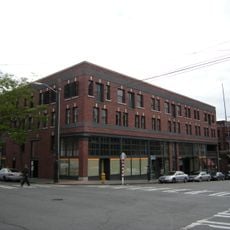
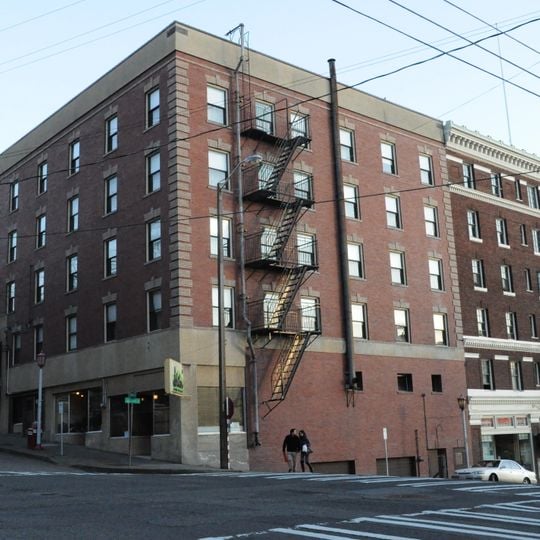
The Panama Hotel is a six-storey red-brick building on a corner in Seattle's International District, completed in 1910 and designed by Sabro Ozasa to resemble a Buddhist monastery. A black metal fire escape zigzags down the corner-facing side, and a light band runs above the ground floor and along the top storey. In the basement, the Hashidate-Yu sento, closed since 1963, survives with its facilities intact.
Opened in August 1910 as long-term lodging for Japanese immigrant men, the building housed a clinic, photo studio, translation office, insurance company, bathhouse and restaurants. In 1938 Isaburo Hori bought it in his US-citizen son Takashi's name, as Washington's alien land law barred non-citizens from owning land. From 1942, before Executive Order 9066 removals, a Chinese restaurant couple's request led Hori to store Japanese families' belongings in the basement, where many remain.
The name likely refers to the Panama Canal, then under construction when the hotel opened in August 1910. The basement held Hashidate-Yu, a sento run from 1916 and closed in 1963, where Japanese immigrants bathed and talked without white scrutiny; the hotel deliberately advertised it in English not at all.
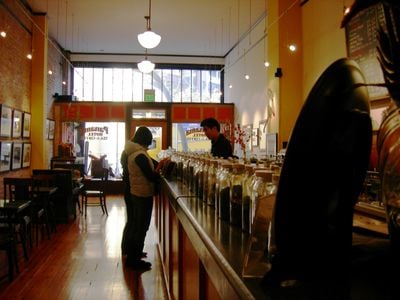
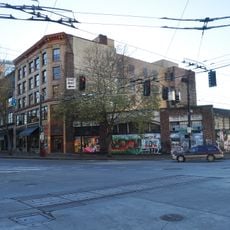
The hotel stands at the corner of Sixth Avenue South and South Main Street, in Seattle's Chinatown-International District. The basement and the Hashidate-Yu bathhouse are closed to the public; the stored belongings are seen only through the glass panels set into the ground-floor cafe floor. The upper floors still function as a hotel.
Glass floor panels allow visitors to see preserved items from the 1940s that families left behind before departing. This window into the past makes an otherwise hidden part of local history visible to those who enter today.
The community of curious travelers
AroundUs brings together thousands of curated places, local tips, and hidden gems, enriched daily by 93,779 contributors worldwide.