Monte Cristo, ghost town in Washington, USA
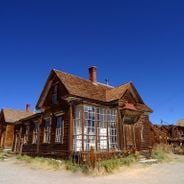
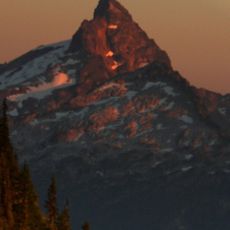
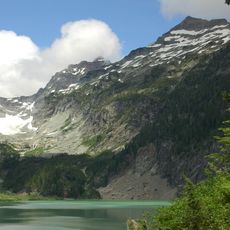
Monte Cristo is a ghost town at the headwaters of the South Fork Sauk River, in a valley between Silvertip Peak and Cadet Peak in eastern Snohomish County. A single-story cabin of weathered brown and gray planks with a pitched gabled roof stands on a grassy slope, loose planks and logs at its base. A cleared stretch of valley floor holds fallen timber and stumps, railway tracks curving over a wooden trestle bridge toward small wooden buildings with pitched roofs.
Prospector Joseph Pearsall traced glittering deposits to Seventysix Gulch in 1889, and by 1891 the camp held 13 mines and 40 claims. John D. Rockefeller's syndicate bought the Pride and Mystery mines, paying the Wilmans brothers $470,000. Floods in 1896 and 1897 wrecked rail tunnels and track, ore ran out below about 500 feet, and mining ceased in 1907.
The name Monte Cristo comes from a novel by Alexandre Dumas, reflecting miners' hopes for sudden fortune. Walking through the overgrown streets today, you can see how people from different backgrounds gathered here with the shared dream of finding riches in the mountains.
The route begins at Barlow Pass and follows the closed four-mile road along the South Fork Sauk River on mostly level ground. The bridge near the townsite is standing, but its approaches have washed out, so hikers must ford the river or cross fallen trees. The site reopened to the public on June 3, 2016, after arsenic cleanup.
Friedrich Trump, grandfather of former U.S. President Donald Trump, once ran a hotel here that also operated as a brothel. This detail connects this small mountain town to a larger family story that reflects America's expansion into the frontier.
The community of curious travelers
AroundUs brings together thousands of curated places, local tips, and hidden gems, enriched daily by 93,095 contributors worldwide.