Grotte de Montgaudier, Prehistoric cave near Montbron, France.
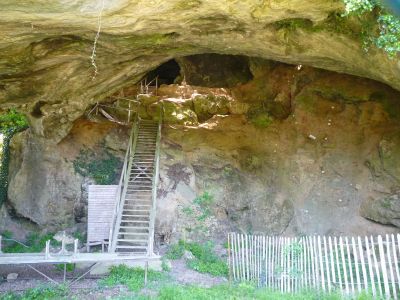
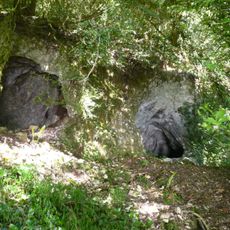
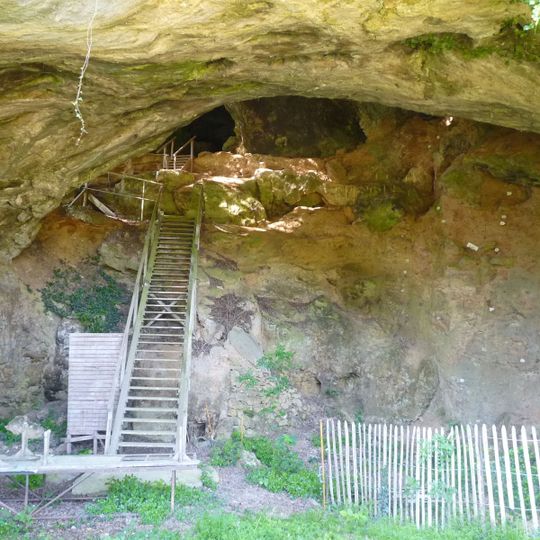
Grotte de Montgaudier is a cave formed in limestone cliffs above the Tardoire River near Montbron. The entrance spans about 13 meters wide and 10 meters high, with visible stratification from multiple periods.
Systematic excavations began in 1886, uncovering ivory tools, harpoons, flint implements, and decorated bone pieces from the Magdalenian period. A Neanderthal juvenile's jawbone discovered here in 1974 demonstrated that the site documents much deeper human presence.
The discovery of a Neanderthal juvenile's jawbone in 1974 established the site as a significant location for understanding human evolution in Western Europe.
The cave entrance is visible from outside and approachable, but access to the interior requires permission and proper lighting due to safety rules. It is wise to check locally beforehand about current access conditions and visiting options.
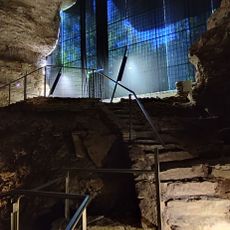
The interior contains about 30 distinct sedimentary layers spanning different time periods, with some exceeding 80,000 years old. This layering reveals continuous human presence and helps researchers trace changes in hunting techniques and tool production over millennia.
The community of curious travelers
AroundUs brings together thousands of curated places, local tips, and hidden gems, enriched daily by 60,000 contributors worldwide.