Sandia Cave, Archaeological site and show cave in Las Huertas Canyon, New Mexico, United States.
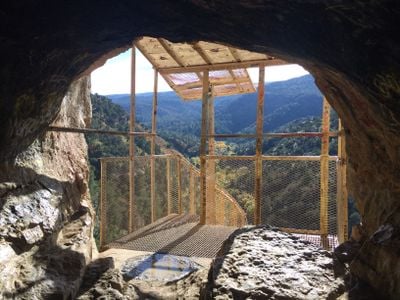
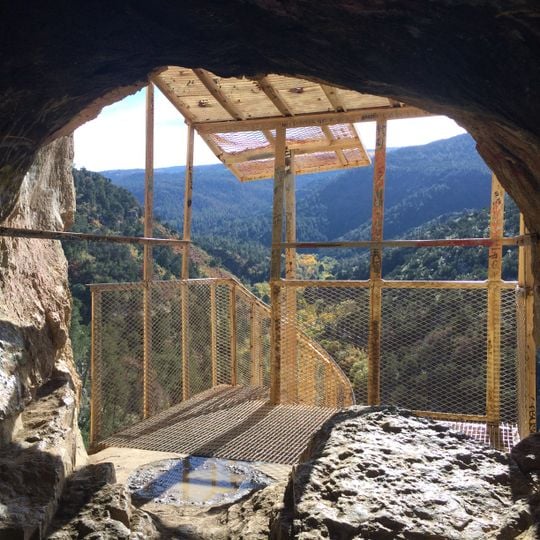
Sandia Cave is an archaeological site and show cave located on a steep cliff wall in Las Huertas Canyon, reached by metal stairs with protective caging at the entrance. The cave opens into chambers where excavations have revealed archaeological remains from different periods of human habitation.
Sandia Cave was discovered in 1936 and excavated in the 1930s and 1940s by Frank Hibben of the University of New Mexico, who claimed the oldest human evidence in the New World. The site became a National Historic Landmark in 1961 on the strength of those claims. In 1995 Douglas Preston's New Yorker article questioned the finds, and later stratigraphy and radiometric dating left "Sandia Man" younger than first claimed.
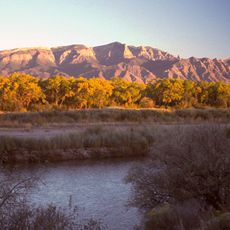
The cave's name comes from the Sandia Mountains, and the site is also called Sandia Man Cave after Frank Hibben's 1930s claim of an ancient "Sandia Man." Hibben reported Sandia points, a type of spear point he said was older than Folsom points, alongside bones of mammoth, mastodon, sloth, horses and camels. Later work discredited these claims, and Sandia Man has been dropped from most textbooks.
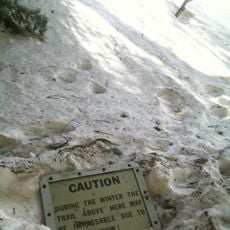
The trailhead is on the east side of NM 165, but the half-mile route is difficult: it crosses ledges and climbs a steep metal staircase to the cave mouth. The cave has been thoroughly excavated, so no portable artifacts remain inside.
Frank Hibben, who excavated the cave in the 1930s and 1940s, claimed its Sandia points were older than any other evidence of humans in North America. In 1995 Douglas Preston reported in The New Yorker that mammoth bones Hibben attributed to the cave were traced to an industrial gravel pit, and that the site had been thoroughly discredited.
The community of curious travelers
AroundUs brings together thousands of curated places, local tips, and hidden gems, enriched daily by 94,035 contributors worldwide.