Sandia Mountains, Mountain range in Bernalillo County, New Mexico, US
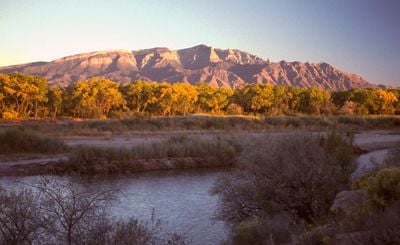
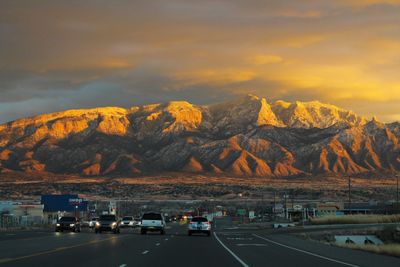
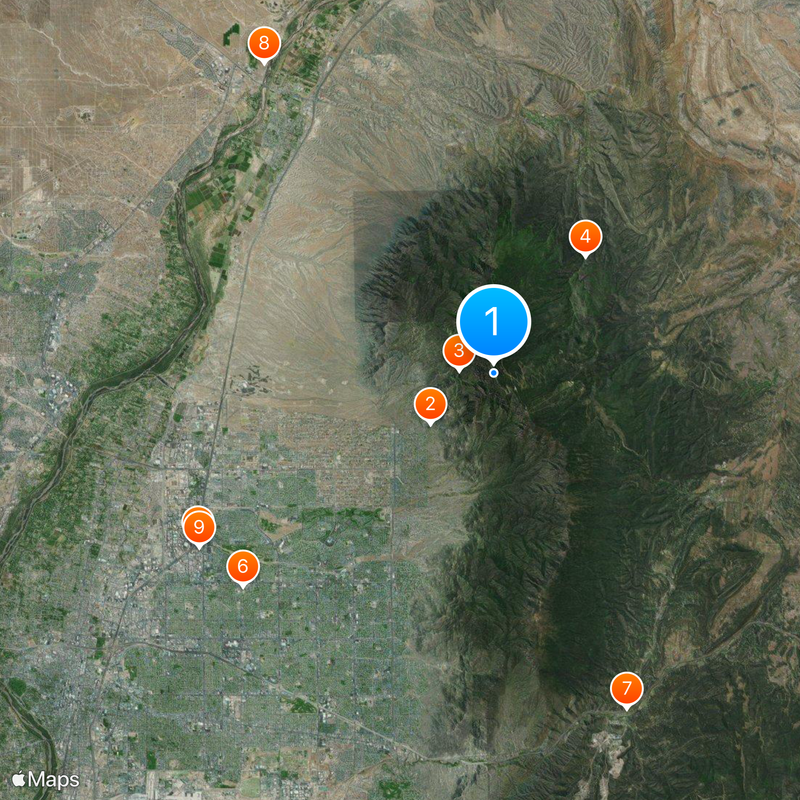
The Sandia Mountains form a north-south ridge east of Albuquerque with two main summits, the highest reaching 3,254 meters (10,678 feet). The ridge separates the Rio Grande valley from the high plateau and presents steep western walls of pink granite.
The range takes its name from the Pueblo of Sandia: when Spaniards encountered the pueblo in 1540, they called it Sandia because they took the squash gourds growing there for watermelons, and the name passed to the mountains to the east. The Sandias were uplifted over the last ten million years as part of the Rio Grande Rift, forming the eastern boundary of the Albuquerque Basin. Their core is Sandia granite dated to 1453±12 million years, topped by about 300 feet of Pennsylvanian limestone and sandstone.
Sandía means watermelon in Spanish, but Robert Julyan argues the name comes from the Pueblo: Spaniards arriving in 1540 called it Sandia because they took the squash gourds growing there for watermelons, and the name passed to the range. Sandia Pueblo people, Southern Tiwa speakers, call the mountain Bien Mur, "big mountain"; in Tewa it is Oekuu Pʼin, "turtle mountain", a sacred mountain of the South.
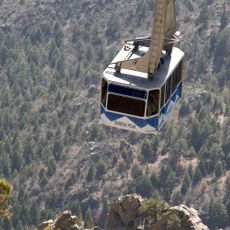
The Sandia Peak Tramway carries visitors more than 1,200 meters (4,000 feet) up to the ridge and provides access to hiking trails of different difficulty levels. Temperatures at the summit are often 10 to 15 degrees Celsius (20 to 30 degrees Fahrenheit) cooler than in the city, so bring warm layers even in summer.
The different elevations create separate climate zones, so within a few kilometers you ascend from desert grassland through piñon-juniper woodlands to subalpine meadows with Engelmann spruce. This vertical diversity allows encounters with plant and animal species that otherwise live hundreds of kilometers apart.
The community of curious travelers
AroundUs brings together thousands of curated places, local tips, and hidden gems, enriched daily by 93,662 contributors worldwide.