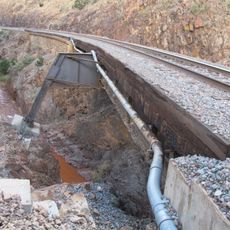
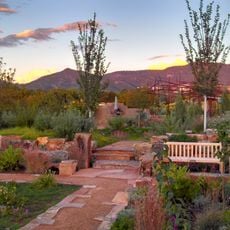
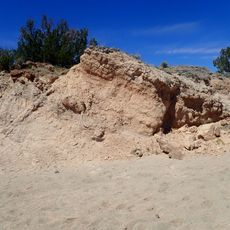
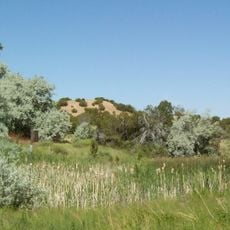
San Lazaro archaeological site, Archaeological site in New Mexico, US.
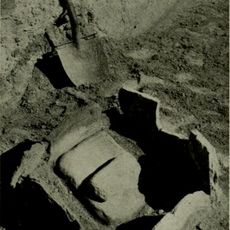
San Lazaro archaeological site covers more than 175 hectares on the south side of the Galisteo River, south of Santa Fe. Its several room blocks hold an estimated two to five thousand chambers, and the complex also includes kilns, a water diversion canal and a hilltop shrine. Nels Nelson excavated the site in the 1910s.
The site became home to Tanoan peoples during Spanish colonial times starting in the 16th century, until they were displaced following the Pueblo Revolt of 1680. This upheaval ended a long period of habitation and scattered the community that had lived there.
The site displays residential buildings, kilns, and water channels that show how Puebloan communities organized their daily life and work. These structures reveal their skills in craftsmanship and the close bonds that held families and neighbors together.
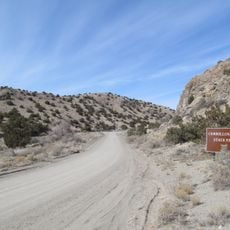
Access requires advance arrangements and is typically guided to protect the fragile remains scattered across the grounds. Visitors should prepare for uneven terrain and heat while bringing proper footwear and water.
Some researchers link San Lazaro to "Malagón", the name recorded by the 1581–82 Chamuscado and Rodríguez Expedition, the first European party to enter the Galisteo basin. The pueblo was occupied when Juan de Oñate established Santa Fe de Nuevo México in the late 1590s.
The community of curious travelers
AroundUs brings together thousands of curated places, local tips, and hidden gems, enriched daily by 94,084 contributors worldwide.