Aurora Reservoir, Reservoir in Aurora, Colorado, US
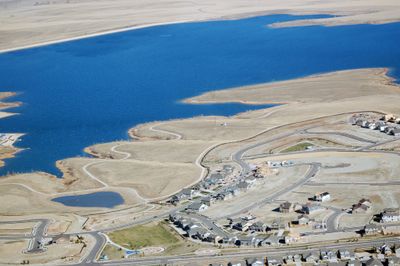
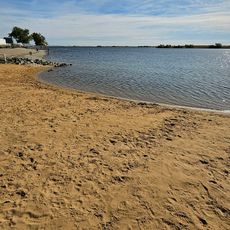
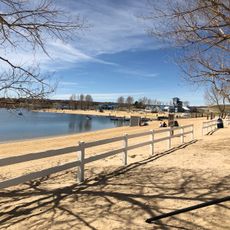
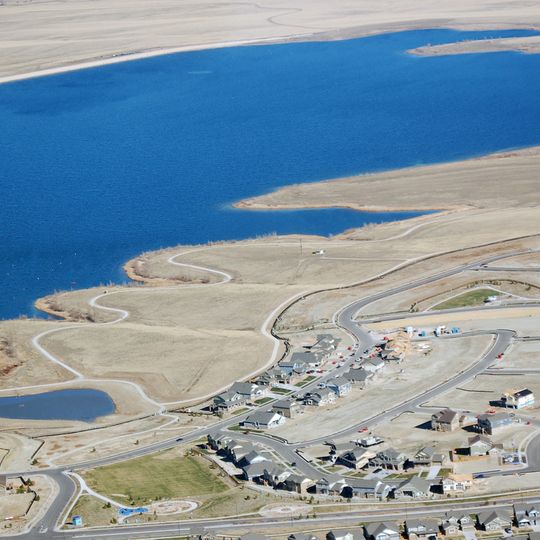
Aurora Reservoir is a large body of water in Colorado, located east of Denver, serving both water storage and recreation. The site encompasses around 800 acres of water surrounded by trails for walking, running, and biking, with designated areas for fishing, boating, and swimming throughout the year.
Aurora Reservoir was built in 1989 at a cost of 41 million dollars and filled in 1990 to supply drinking water to the City of Aurora. Miles of undeveloped prairie once separated it from the city, earning the site the name "Aurora's Outback". Since then, suburban communities such as Beacon Point and Southshore have been built immediately southwest of the water.
The reservoir hosts triathlons, sailing camps and other local functions through the year. Its three southern coves are named Senac, Marina and Lone Tree, after Senac Creek and the marina and lone tree features. Anglers know it for trout, walleye and catfish; in October 2010 it produced the largest catfish caught in Colorado.
The site is open year-round with activities varying by season, boating available from mid-March through fall months. Visitors should know that only electric-motor or non-motorized boats are permitted, and there is an 8.5-mile loop trail available for walking and other activities.
A Cessna 310 airplane was deliberately sunk in the reservoir in 1994 as a diving attraction and sits only 30 feet (9.1 m) below the surface, which is why local SCUBA schools bring students here for open-water certification.
The community of curious travelers
AroundUs brings together thousands of curated places, local tips, and hidden gems, enriched daily by 93,819 contributors worldwide.