Cave and Basin National Historic Site, National historic site in Banff National Park, Canada
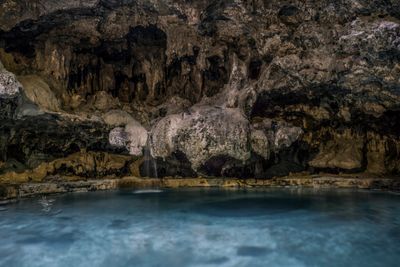
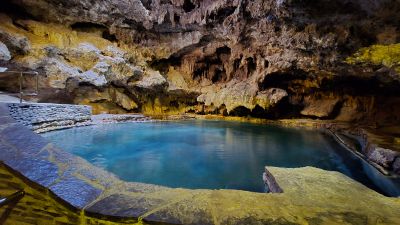
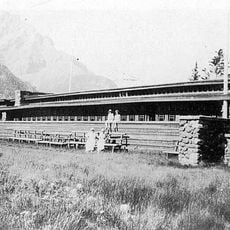
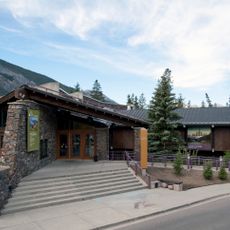
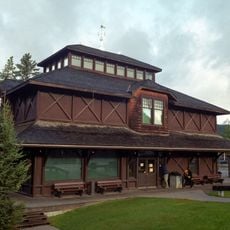
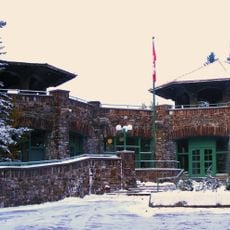
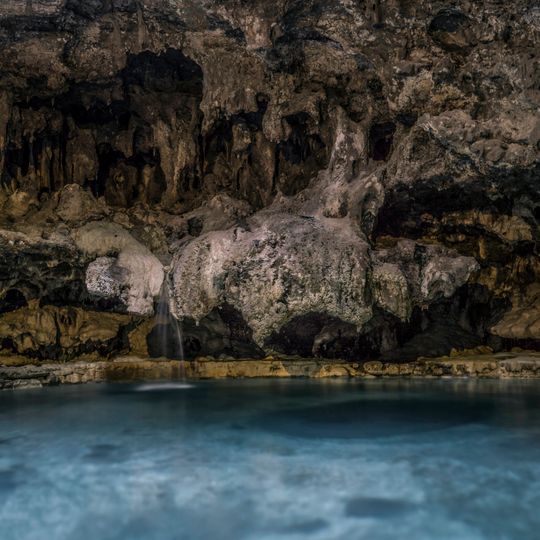
Cave and Basin is a national historic site in Banff where sulphurous thermal water emerges from the northeast flank of Sulphur Mountain, heated geothermally from about three kilometres down. The cave holds a pale grey rock bulge above a pool of cloudy blue water, reached by an artificial tunnel driven in 1886. Above ground stand a replica of the 1887 bathhouse and the restored 1916 swimming pool.
Three railway workers discovered the springs in 1883, prompting the Canadian government to establish Banff as the country's first national park in 1885. This discovery marked a turning point in how Canada approached the protection of natural landscapes.
The site takes its name from the cave and the basin of thermal water below the rock face. The first written record of the springs is by James Hector of the Palliser Expedition in 1859; Joe Healey came upon the site in 1875. A permanent exhibit opened on 13 September 2013 covers Canada's first national internment operations, many of whose detainees built early structures here.
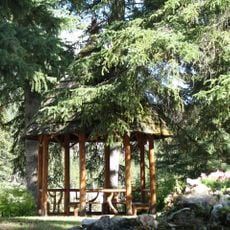
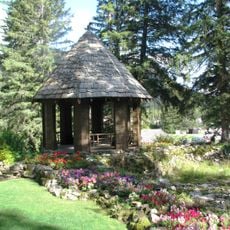
The natural grotto is reached through an artificial tunnel driven in 1886; the restored 1916 pool and the replica 1887 bathhouse stand nearby, with hiking and snowshoe trails around the grounds. The Banff Upper Hot Springs is a separate facility about 5 km southeast. Much of the early masonry was built by detainees of a World War I internment camp.
The waters are home to the only known habitat of the endangered Banff Springs snail, a species found nowhere else in the world. This makes the site a crucial location for protecting this rare creature from extinction.
The community of curious travelers
AroundUs brings together thousands of curated places, local tips, and hidden gems, enriched daily by 94,264 contributors worldwide.