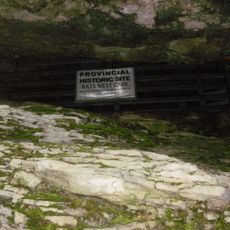
Exshaw Formation, Geological formation in Alberta, Canada and Montana, United States
The Exshaw Formation is a geological layer spanning Alberta and Montana, composed mainly of black shale and calcareous siltstone beds. The layers vary in thickness and reveal traces of an ancient ocean that once covered this region.
The formation was first documented and named by P.S. Warren in 1937 at Jura Creek. This discovery established its importance as a key record of ocean conditions from the Late Devonian to Early Mississippian time.
The formation serves as an educational resource for geology students and researchers studying the Late Devonian to Early Mississippian periods.
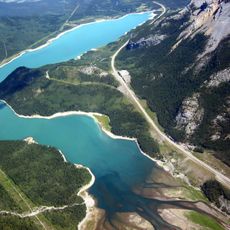
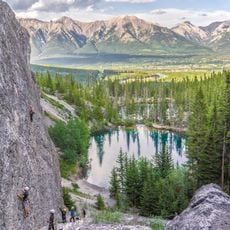
The formation appears in exposed outcrops across the landscape where the layers become visible. The best way to study it is to visit these open sites and observe the varying layer thicknesses directly.
The black shales contain tiny fossilized sea animals and shell-like creatures preserved for millions of years. These smaller fossils offer clues about ancient ocean conditions and are often overlooked by casual visitors.
The community of curious travelers
AroundUs brings together thousands of curated places, local tips, and hidden gems, enriched daily by 92,555 contributors worldwide.