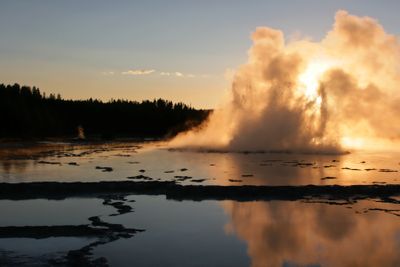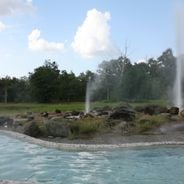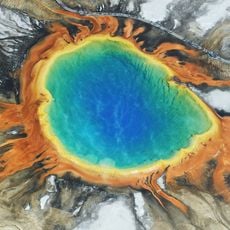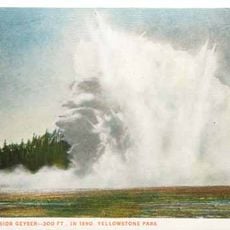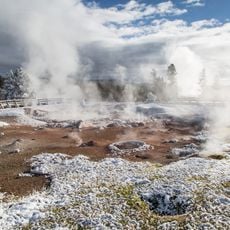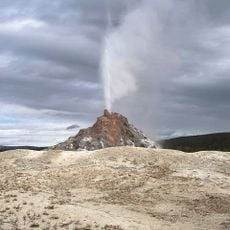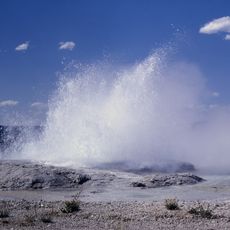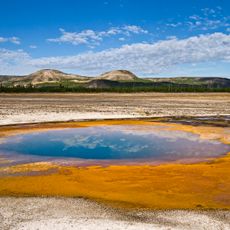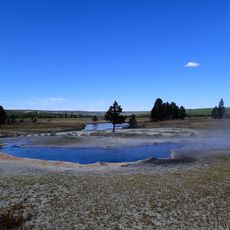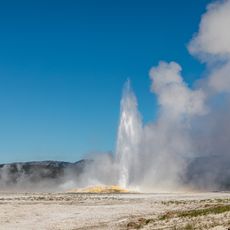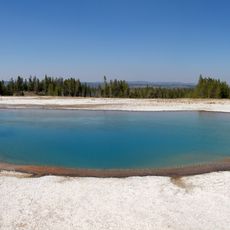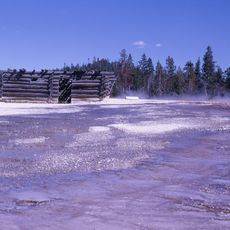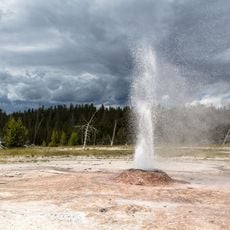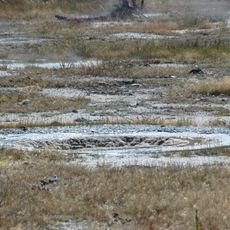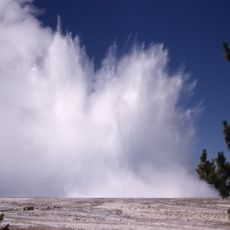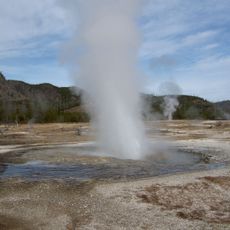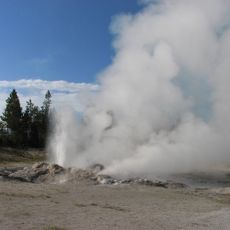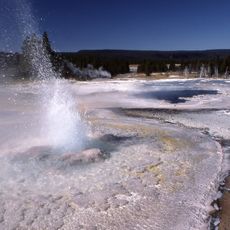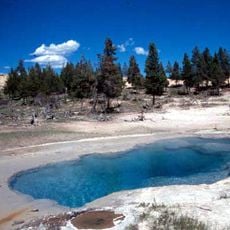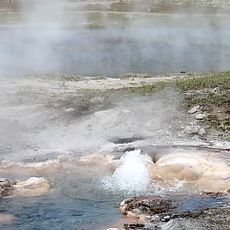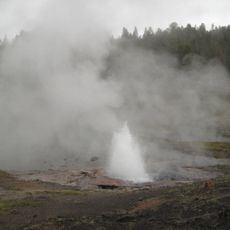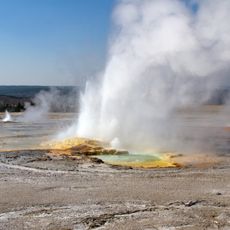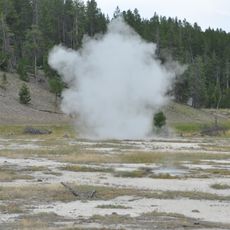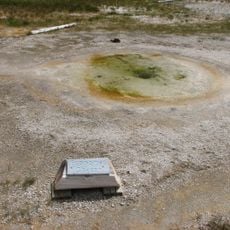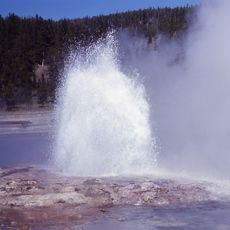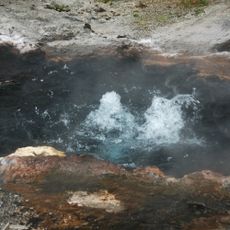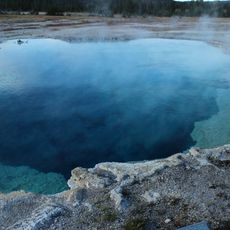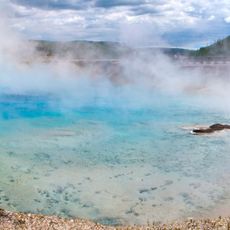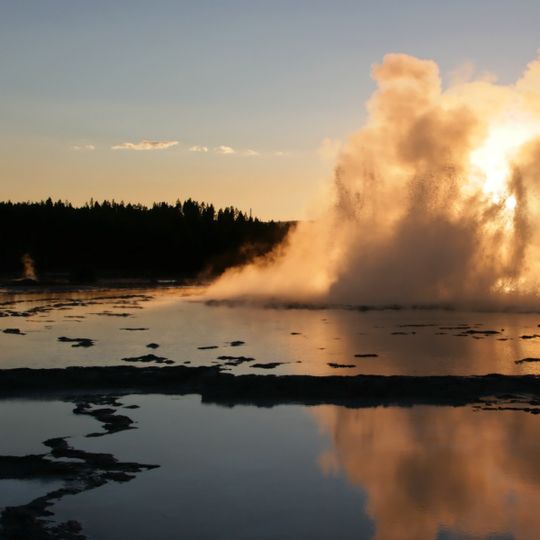
Great Fountain Geyser, Fountain geyser in Lower Geyser Basin, Yellowstone National Park, United States.
The Great Fountain Geyser is a geyser in the Lower Geyser Basin of Yellowstone National Park that shoots water up to 220 feet (67 meters) high from a single opening. The eruption unfolds in multiple bursts that last around one hour in total.
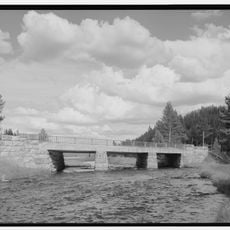
Photographer W.H. Jackson first recorded the geyser's eruptions in 1883, bringing its activity to scientific attention. From that point onward, it became a well-documented feature of the park and has continued to draw visitors seeking to witness its displays.
The name reflects the fountain-like water displays that define the site and draw visitors from around the world. People gather here to witness a natural phenomenon that repeats on its own schedule, creating a shared experience with others who travel to see it.
Check eruption forecasts at the Old Faithful Visitor Center, as the geyser erupts every 9 to 15 hours with a two-hour prediction window. Arriving in the early morning or evening often provides better viewing conditions, since air temperature and light affect how well you can see the water displays.
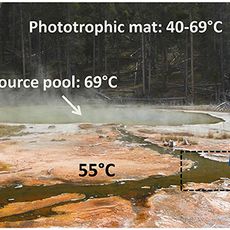
The bacterium Thermus aquaticus was discovered near this geyser and became crucial to transforming how scientists analyze and study DNA. This tiny organism thriving in extremely hot water led to laboratory techniques that are now used in research facilities worldwide.
The community of curious travelers
AroundUs brings together thousands of curated places, local tips, and hidden gems, enriched daily by 90,911 contributors worldwide.