Kake Cannery, Historic salmon cannery in Kake, Alaska, US
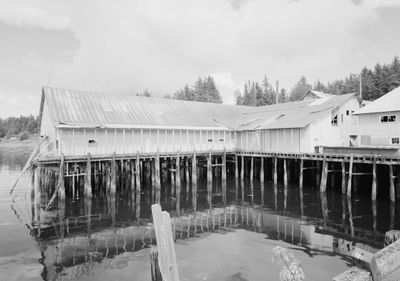
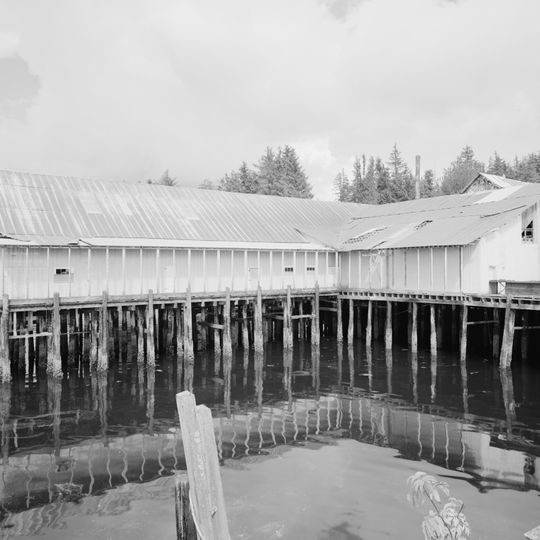
Kake Cannery is a historic salmon processing facility in Alaska with warehouses, processing buildings, and worker housing. The structures connect via wooden walkways built on pilings that extend over the water.
The facility developed between 1912 and 1940 as a major salmon processing center on the coast. It rose during a period when fishing was Alaska's largest industry and a source of significant wealth.
Labor at the cannery was divided by ethnicity. White men held positions of responsibility, while immigrants from China, Japan and the Philippines did lower-level tasks; a bunkhouse was set aside for Japanese and Filipino workers and another for whites, and a third for Chinese workers no longer stands. Tlingit people were hired to catch the fish, and contractors handled housing and feeding.
The cannery stands about 1 mile (1.6 km) southeast of Kake and roughly 90 miles (140 km) south of Juneau, on the northeastern coast of Kupreanof Island; the site is reached by boat or floatplane, as no road connects it. Its 18 surviving buildings sit on wooden pilings linked by boardwalks over the water, so footing is uneven and the shorter right wing has missing and damaged roof panels.
Warehouse No. 4, built in the 1930s, held a mechanized can-forming operation, so cans were made on site rather than shipped in. The complex retains 18 of an estimated 21 buildings, all mounted on wooden pilings and linked by boardwalks. There is no documented Warehouse No. 3.
The community of curious travelers
AroundUs brings together thousands of curated places, local tips, and hidden gems, enriched daily by 94,116 contributors worldwide.