Leduc Formation, Dolostone formation in Alberta, Canada
The Leduc Formation is a Late Devonian stratigraphic unit of fossil reefs in the Western Canada Sedimentary Basin, named after the city of Leduc. It occurs as separate reef buildups along the Woodbend shelf margin, from Drumheller to the Peace River Arch, reaching 180 to 300 m in thickness. The reefs were deposited as limestone and mudstone, with stromatoporoids as the main reef builders; many were later dolomitized.
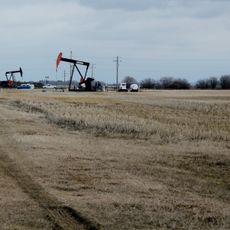
The formation was formally described by Imperial Oil Limited in 1950 following the discovery of the Leduc No. 1 well, dating to the Late Devonian period. This discovery led to a major oil boom in central Alberta.
The formation's discovery transformed Alberta's economy, leading to rapid development of petroleum industries and substantial population growth in Calgary and Edmonton.
This formation is mainly known as an underground rock layer and is not directly accessible for public visits. Understanding it requires geological knowledge or specialized guided tours.
The Leduc reefs are never exposed at the surface, so geologists studied the Cairn Formation outcrops in the Canadian Rockies to understand them. The Strachan and Ricinus West gas fields, found in 1967 and 1969 using seismic common-depth-point techniques, lie in reefs of the same age.
The community of curious travelers
AroundUs brings together thousands of curated places, local tips, and hidden gems, enriched daily by 93,758 contributors worldwide.