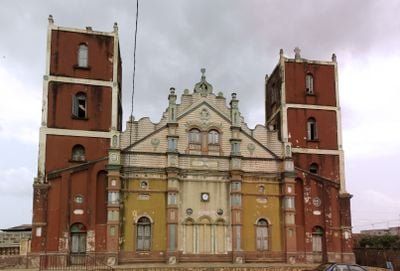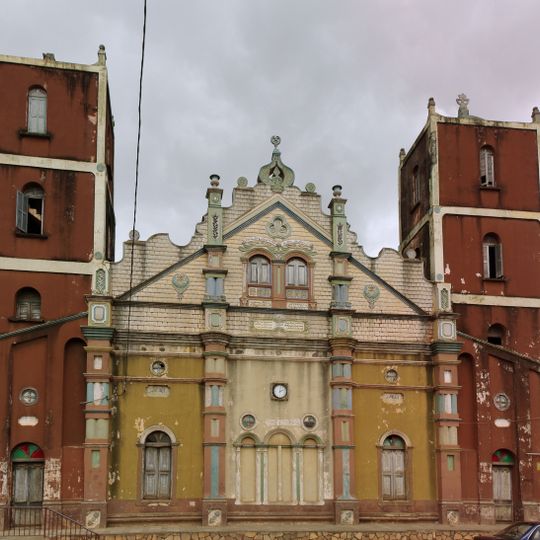
Central mosque of Porto-Novo, Brazilian-influenced mosque in Porto-Novo, Benin.
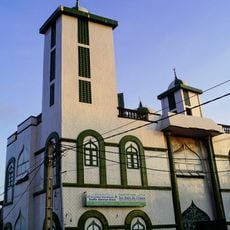
The Great Mosque of Porto-Novo is a two-storey Afro-Brazilian building with a 3,700 m² tiled floor and a facade pierced by many openings. Its front is decorated with floral, vegetable and scrolled stucco moulding, and it has a long central hall with a shallow vaulted roof.
The building was constructed between 1912 and 1925 during the French colonial period and replaced an earlier structure from 1880 that was built by the Afro-Brazilian community. This development shows the long history of Islamic presence in the city.
Islam reached Porto-Novo in the 19th century through Hausa and Yoruba traders from Nigeria. King Sodji appointed a spiritual leader for the Muslim community and gave it land near the royal palace, where a first mosque rose in the 1880s; complaints about the muezzin's call led to a move to the present site.
The prayer floor covers 3,700 m² across two levels, reached by stairs, with tiled surfaces throughout. The building stands in central Porto-Novo, a short walk from the royal palace area where the first mosque stood. Non-Muslim visitors should dress modestly and avoid the halls during prayer; the many openings on the facade make the interior bright at most hours.
The building merges Islamic and Christian architectural elements in an unusual way. It features a Latin cross layout with two transepts and lancet-shaped openings, which are rarely seen in mosques.
The community of curious travelers
AroundUs brings together thousands of curated places, local tips, and hidden gems, enriched daily by 92,835 contributors worldwide.