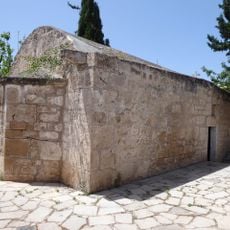
Agia Paraskevi, Byzantine temple in Geroskipou, Cyprus
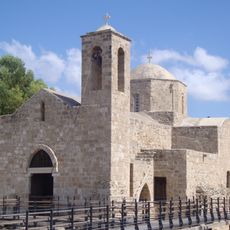
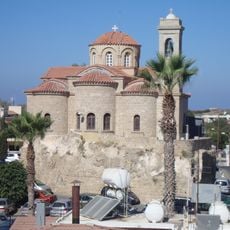
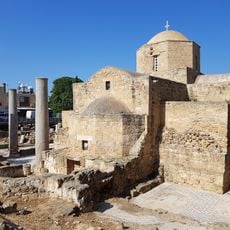
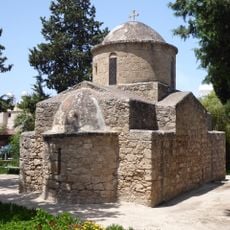
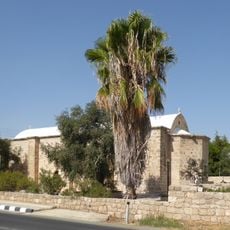
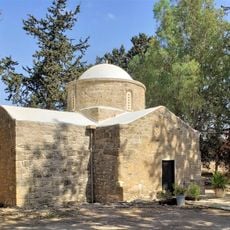
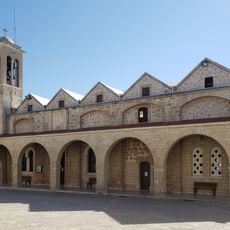
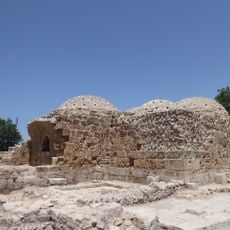
Agia Paraskevi is a three-aisled domed basilica in Geroskipou with five domes: three along the central nave and two smaller ones above the side aisles. Its plan follows Justinian-era models such as the Church of St John at Ephesus and the Church of the Holy Apostles in Constantinople. A domed chapel adjoins the south aisle, and a bell tower built in 1886 stands at the southeast corner.
Agia Paraskevi was founded around 833–844 on the site of an earlier building, possibly a Roman temple or early Christian basilica; column capitals and fragments survive in the courtyard. The main body was built in the 11th century, when the church was dedicated to Saints Barnabas and Hilarion. In the mid-19th century it was rededicated to Saint Paraskevi, the west wall was demolished to enlarge it, and a bell tower (1886) and narthex (1893) were added.
The church is named after Paraskeva of Rome, and its iconostasis dates from the 16th century. In the north aisle stands the double-sided Panagia Geroskipiotissa icon, painted in the late 15th century, with the Virgin Hodegetria on one face and the Crucifixion on the other. A local legend tells that a villager saw a light at the edge of Geroskipou and found the icon there with a burning lamp before it.
The temple is located at Plateia Agias Paraskeuis 1 and welcomes visitors Monday through Saturday with no entrance fee. The courtyard and surrounding areas allow you to view the structure from different angles and approach it at your own pace.
The temple holds a double-sided icon from the 15th century depicting the Virgin Mary on one side and the Crucifixion on the other. This unusual object demonstrates the skilled craftsmanship of the Byzantine period.
The community of curious travelers
AroundUs brings together thousands of curated places, local tips, and hidden gems, enriched daily by 93,521 contributors worldwide.