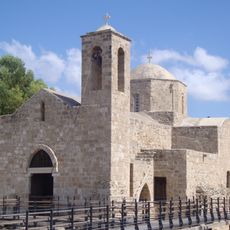
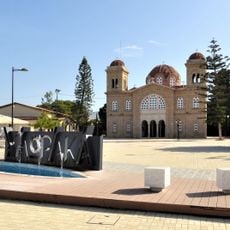
Basilica of Panagia Limeniotissa, Ruined early Christian basilica in Kato Paphos, Cyprus
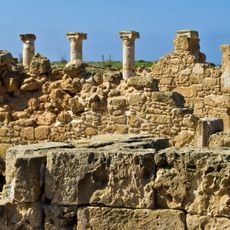
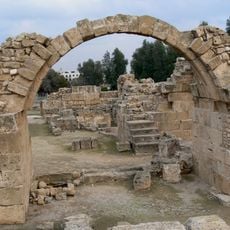
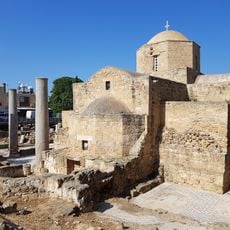
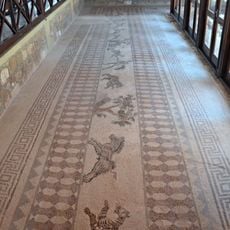
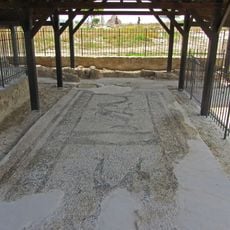
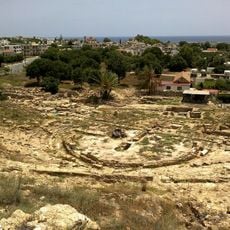
The Basilica of Panagia Limeniotissa is an early Christian church with marble column remnants and geometric floor mosaics positioned near Paphos harbor. The ruins reveal a three-aisled structure with decorative elements that demonstrate the skilled craftsmanship of ancient builders.
Built in the early 5th century as a three-aisled basilica with two rows of marble columns, an apse and a narthex, it was nearly destroyed in the Arab raids of 653, when the Arabs used it as workshops, stables and quarters and added a tower in the narthex. Rebuilt on a smaller scale after 688, it was destroyed by the 1159 earthquake recorded by Neophytos of Cyprus, and a smaller successor perished in 1222.
The epithet Limeniotissa means "of the Harbour", marking the church as the seafront sanctuary of ancient Nea Paphos, a short walk north of today's harbour. After the Arab raids of 653 the building was put to military use, housing workshops, stables and troops, and a tower was raised in its narthex.
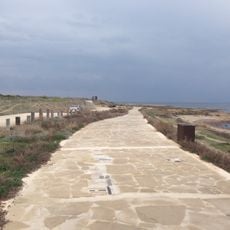
The site is located within the Paphos Archaeological Park and is accessible daily, with opening hours varying by season. Visitors should wear appropriate footwear and prepare for uneven surfaces, as the ruins require careful navigation.
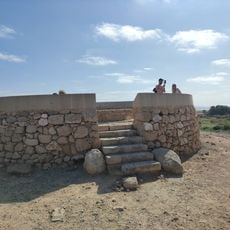
The basilica's location was lost for centuries and only identified in 1937; official excavation began in 1959. The 653 Arab raid saw the building reused as workshops, stables and army quarters, with a tower added to the narthex that may have served as a watchtower, lighthouse or minaret.
The community of curious travelers
AroundUs brings together thousands of curated places, local tips, and hidden gems, enriched daily by 95,042 contributors worldwide.