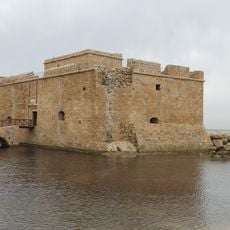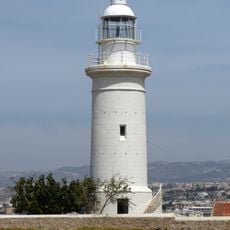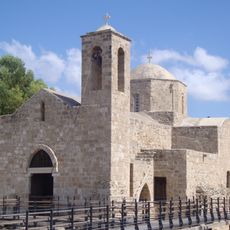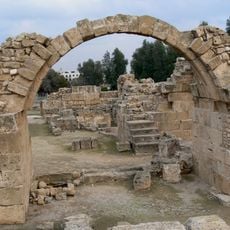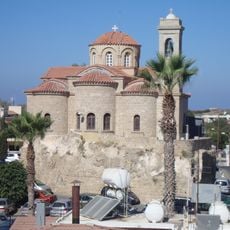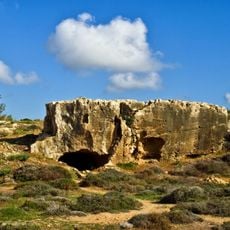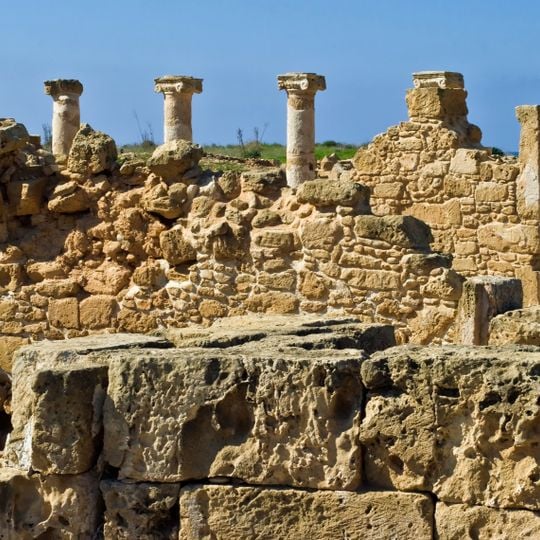
Paphos Archaeological Park, Archaeological site in Paphos, Cyprus.
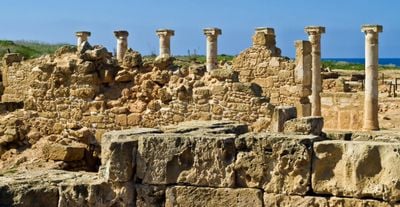
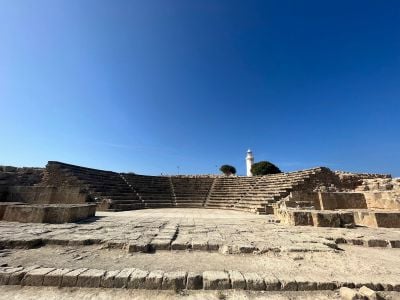
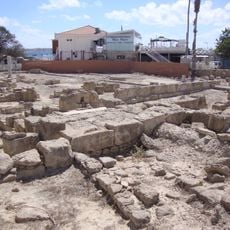
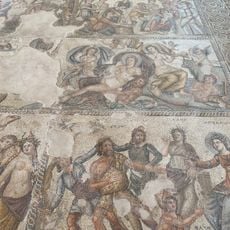
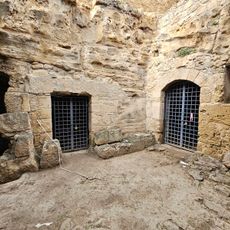
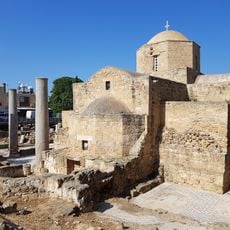
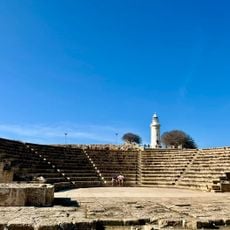
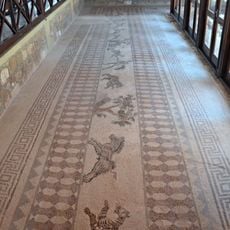
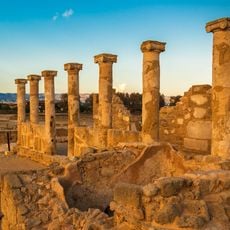
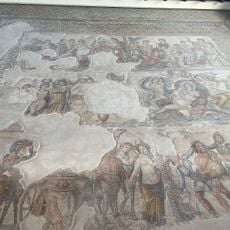
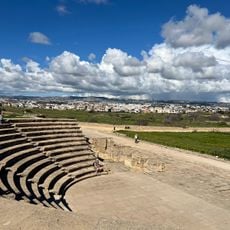
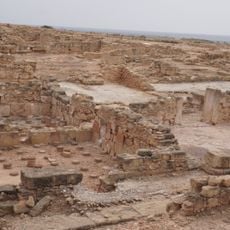
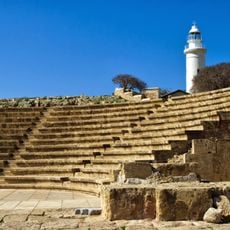
Paphos Archaeological Park covers the excavated remains of Nea Paphos, founded in the late 4th century BC and later the island's Ptolemaic and Roman capital. Its four Roman villas, including the House of Dionysos with 40 rooms and 15 mosaic floors, hold polychrome mosaics. Visitors also see the agora, odeon, and the ruins of Saranta Kolones fortress.
Paphos became the capital of Cyprus in the second century BCE, marking a shift in the island's political center. The city flourished under Roman rule, which left behind the buildings and artistic works visible today.
The House of Dionysos takes its name from a large mosaic of Dionysos and Ikarios, whose drinking shepherds carry the caption "the first to drink wine". Other floors show Poseidon and Amymone, Pyramus and Thisbe, and Narcissus at his reflection. Hunting scenes with animals never found on Cyprus point to models imported from northern Egypt.
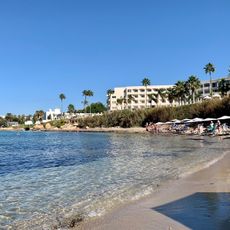
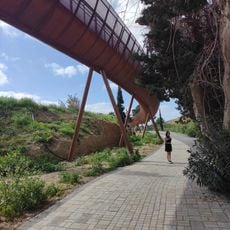
The park lies by Kato Pafos harbour and is explored on foot; paths between the excavated blocks are uneven. The Villa of Theseus measures 120 by 80 m, so allow time to cross the site. Shade is scarce; wear sturdy shoes and bring sun protection.
The floors in the House of Aion date to the fourth century and represent an exceptional example of Roman artistry with details rarely preserved so well. The scenes and techniques reveal the skill that ancient craftspeople brought to their work.
The community of curious travelers
AroundUs brings together thousands of curated places, local tips, and hidden gems, enriched daily by 92,883 contributors worldwide.