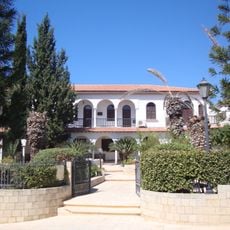
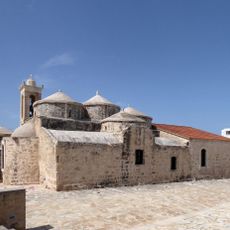
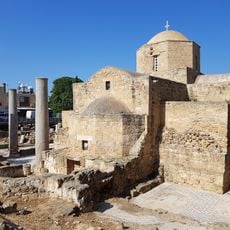
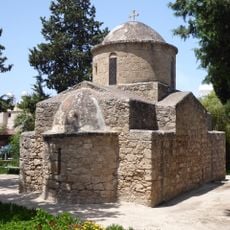
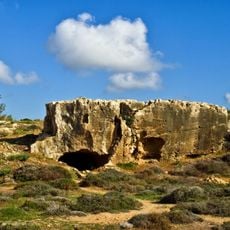
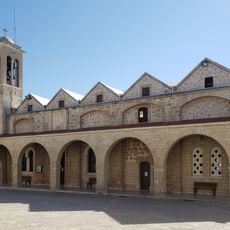
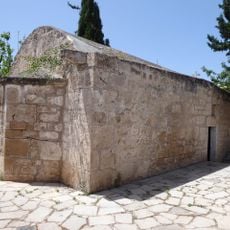
Paphos Archaeological Museum, Archaeological museum in central Paphos, Cyprus.
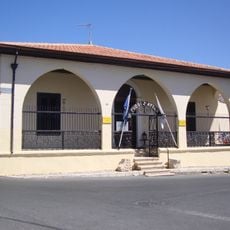
Paphos Archaeological Museum is a museum in central Paphos housing artifacts collected over many centuries of local history. The five galleries display objects from the Neolithic period through medieval times, all discovered in the Paphos district.
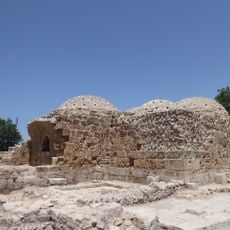
The museum opened to the public in 1964, shortly after Cyprus gained independence from Britain in 1960 under the Zurich and London agreements. It began with two exhibition halls and was extended in stages in 1965, 1977 and 1987; a west wing added in 1989 brought the total to five rooms plus an outdoor gallery. A renovation and redesign followed in 2014–2020. Many exhibits came from the collection previously held in the Turkish Bath.
The collection traces Cypriot pottery from Neolithic Lemba and Choirokoitia through the Bronze Age, Hellenistic and Roman periods to the Lusignan era. Among the finds are terracotta hot-water bottles shaped for different parts of the body and a survey of Mediterranean amphora forms and origins. The museum opened in 1964, shortly after independence, and its displays were rearranged in a 2014–2020 renovation.
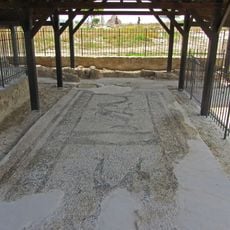
The museum stands at Georgiou Griva Digeni 42 in the upper town, near the municipal park and early 20th-century neoclassical buildings. Step behind the main building to the fenced yard, where larger finds are displayed under a covered gallery. Access is step-free throughout.
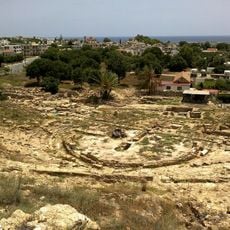
The museum's oldest pieces are Epipalaeolithic hunter-gatherer tools and cruciform picrolite figurines, among Cyprus's earliest worked stone objects. Finds also include the island's earliest copper artefacts and 9th-millennium BC settlement wells, material from the Bronze and Iron Age polity at Kouklia and from Ptolemaic and Roman Nea Paphos.
The community of curious travelers
AroundUs brings together thousands of curated places, local tips, and hidden gems, enriched daily by 92,788 contributors worldwide.