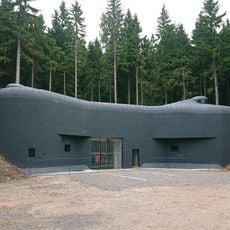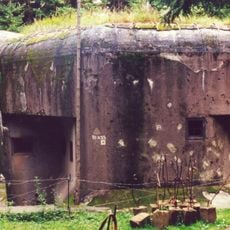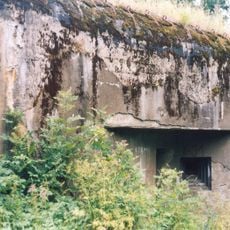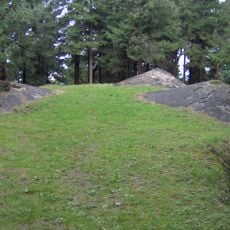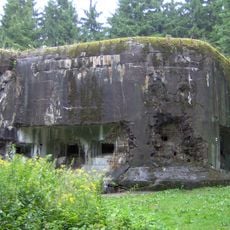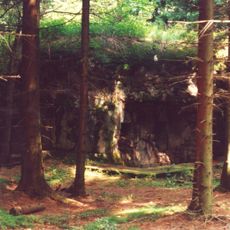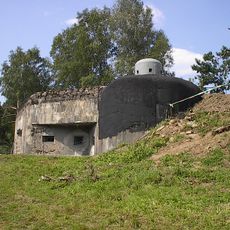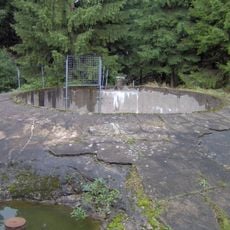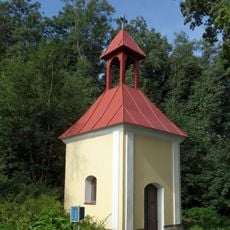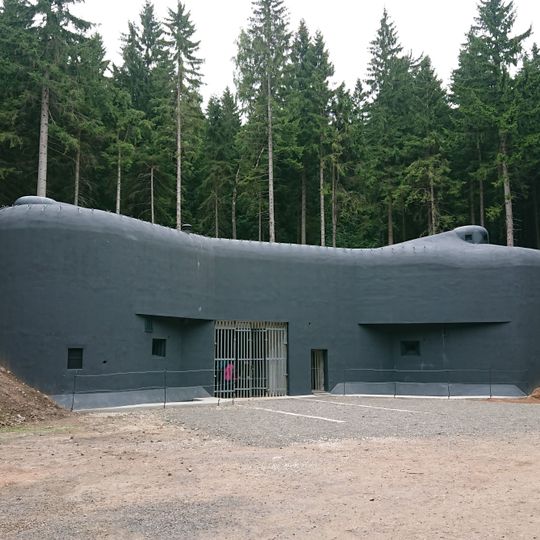
Bouda, Artillery fortress museum in Těchonín, Czech Republic.
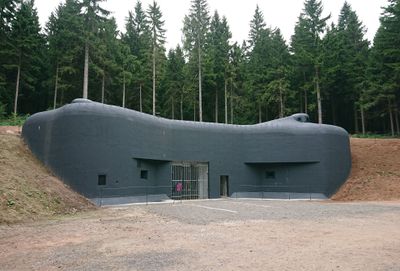
Bouda is a 1930s military fortification comprising five combat structures linked by an underground tunnel network. These passages stretch over two kilometers (1.2 miles) beneath the Orlické Mountains and form an intricate subterranean complex.
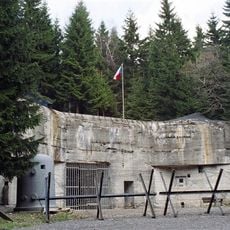
Planning began with a site survey in September 1934, and the design was drawn up in the winter of 1935–1936 by Captain Vladimír Resner with Lieutenant Karel Hrubec. The Prague firm of Zdenko Kruliš started construction on 1 October 1936, with a planned completion in 20 months. The fortress was never finished: the artillery turret was never installed, and after the Munich Agreement the border area was ceded in 1938. During the occupation the armoured bells and cupolas were torn out, and in 2021 the entrance object was restored to its 1938 appearance.
The fort is named after the hill Bouda, and its five fighting structures carry names from Czech legend: Kazi, Horymír, Krok, Teta and Libuše. Since 1995 the complex has been a national cultural monument, and it lies on the educational trail known as the Concrete Border. Guided tours of the museum last about one hour.
Tours guide visitors through the tunnel sections and typically last around one hour while exploring the subterranean passages. Interior temperatures stay cold year-round at about 5 degrees Celsius (41 degrees Fahrenheit), so bring a jacket regardless of season.
The K-S 22a Krok entrance shelter is the sole surviving example of this particular access design in the Czech Republic. This concrete structure demonstrates how engineers built entry points to shield them from hostile fire.
The community of curious travelers
AroundUs brings together thousands of curated places, local tips, and hidden gems, enriched daily by 94,599 contributors worldwide.