Port of Bissau, Maritime port in Bissau, Guinea-Bissau
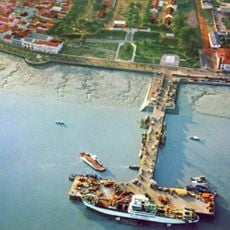
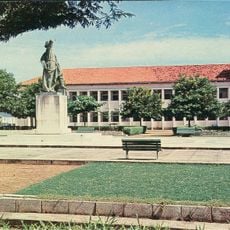
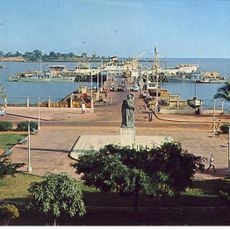
The Port of Bissau is a maritime facility at the mouth of the Geba River with two piers and a T-shaped jetty extending roughly 260 meters along the shoreline. The infrastructure accommodates different vessel sizes and was developed for cargo handling operations.
The colonial government of Portuguese Guinea sought a landing pier at Bissau from 1870; the first stone of the Correia e Lança pier, partly masonry and partly timber, was laid on 14 July 1889, and this is today's Pidjiguiti dock. A second pier built between 1910 and 1913 fell into ruin, and its reinforced-concrete replacement, designed by engineer Henrique O'Donnell, was inaugurated on 28 May 1953. On 3 August 1959 police fired on striking dockworkers at Pidjiguiti, killing about 50 and wounding over 100, an event that opened strong resistance to Portuguese rule.
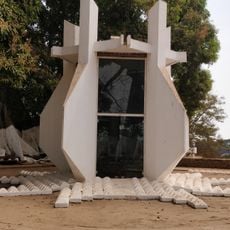
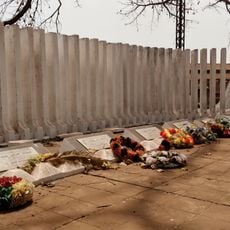
The Pidjiguiti dock, the port's oldest pier, dates from 1889, when its first stone was laid under governor Correia e Lança. A large black fist monument, the "Mão de Timba", marks the 3 August 1959 shooting of striking dockworkers, in which police killed about 50 and wounded over 100. The strike, organised by the PAIGC, is remembered as the start of organised resistance to Portuguese rule.
Visitors can observe the port from the shoreline where ships are being loaded and unloaded and daily activity is clearly visible. Access to inner port areas depends on current conditions and permissions, so it is best to check ahead.
The black fist monument near the Pidjiguiti docks, called the "Mão de Timba", marks where police fired on striking dockworkers on 3 August 1959, killing about 50 and wounding over 100. The strike was organised by the PAIGC, and the monument is the spot to look for rather than any oral-history display.
The community of curious travelers
AroundUs brings together thousands of curated places, local tips, and hidden gems, enriched daily by 92,890 contributors worldwide.