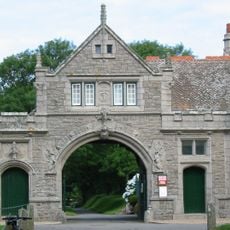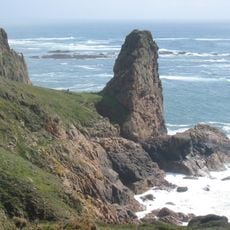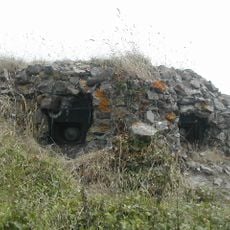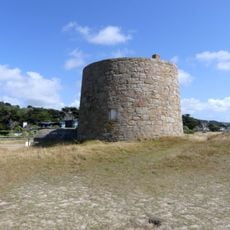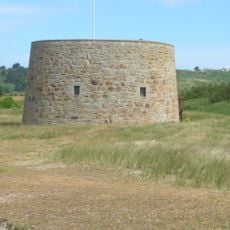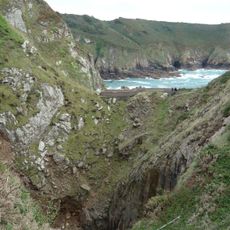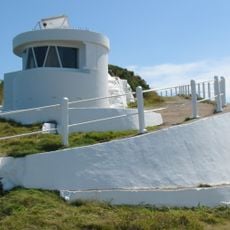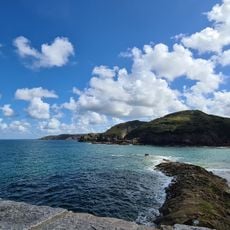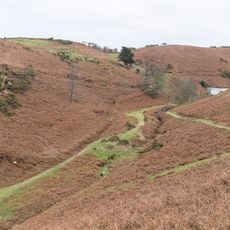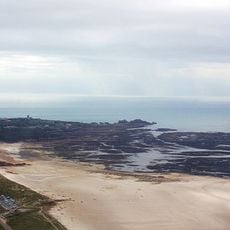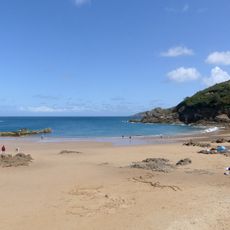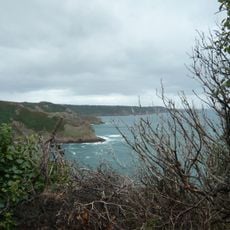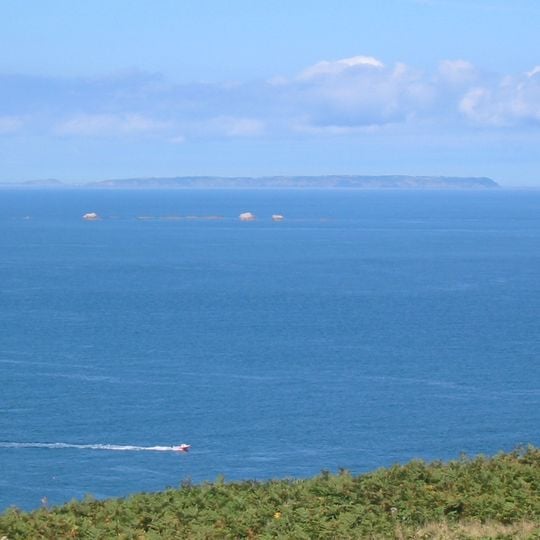
Pierres de Lecq, Rock formation north of Jersey.
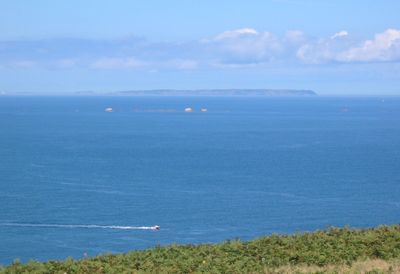
Pierres de Lecq are a group of uninhabitable rocks between Jersey and Sark, 6 km north of Grève de Lecq and 22.4 km west of the Cotentin Peninsula. Only three or four remain visible at high tide: L'Êtaîthe, La Grôsse and La Vouêtaîthe. The area has one of the world's greatest tidal ranges, sometimes as much as 12 m.
The name Paternosters comes from a legend about the 16th-century colonisation of Sark: a boat carrying women and children was wrecked on the reef, and their cries are said to be heard in the wind. Superstitious sailors recited the Lord's Prayer when passing the rocks, hence the name.
The rocks carry names in Jèrriais language given by island fishermen, such as L'Êtchièrviéthe and Lé Bel, reflecting the region's maritime tradition. This naming shows how local communities maintain their bond to the sea through language and memory.
The rocks lie 6 km north of Grève de Lecq in Saint Mary and 22.4 km west of the Cotentin Peninsula, with no regular boat service to them. The tidal range here can reach 12 m, so plan any approach around local tide tables and calm weather. Only L'Êtaîthe, La Grôsse and La Vouêtaîthe stay above water at high tide.
The reef marks a natural boundary between different water masses and supports surprising ecological diversity. This biological importance makes it an interesting place for nature observers and researchers.
The community of curious travelers
AroundUs brings together thousands of curated places, local tips, and hidden gems, enriched daily by 93,922 contributors worldwide.