Leonine City, Ancient defensive wall in Vatican City, Italy
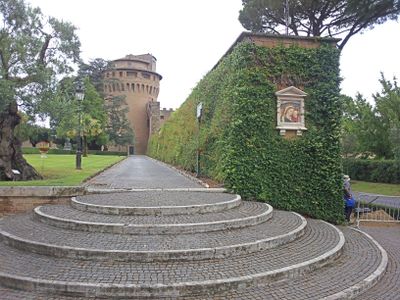
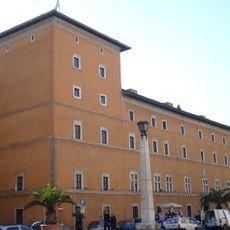
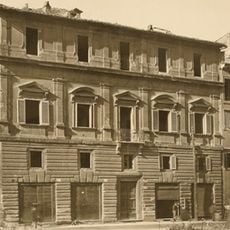
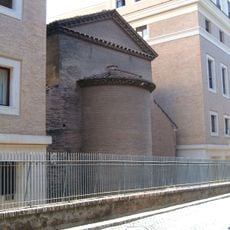
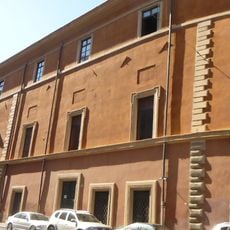
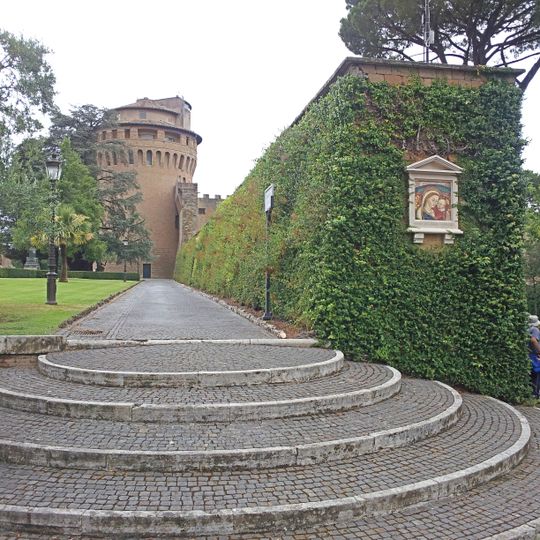
The Leonine City is a fortified wall surrounding Vatican Hill that forms the present-day border of Vatican City. The structure runs roughly 3 kilometers (1.9 miles) and includes several passages and towers that still enclose much of the papal territory.
Construction began in 848 under Pope Leo IV after Saracen forces raided Saint Peter's Basilica in 846. The completion of the fortification took about four years and transformed the defense of the papal residence.
The name refers to Pope Leo IV, who commissioned the fortification to protect Saint Peter's Basilica and the surrounding buildings. Today the walls separate the sovereign territory of Vatican City from the rest of Rome, marking one of the smallest international borders in the world.
You can see the wall from the outside while walking along the Vatican Gardens and at several streets near Saint Peter's. Access to some sections is only possible through guided tours offered by the Vatican Museums.
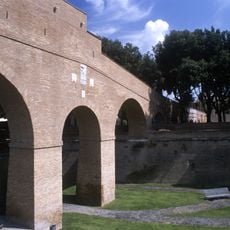
An elevated escape corridor called Passetto di Borgo runs inside the wall, connecting the Vatican Palace to Castel Sant'Angelo for quick papal evacuations. Pope Clement VII used it during the Sack of Rome in 1527.
The community of curious travelers
AroundUs brings together thousands of curated places, local tips, and hidden gems, enriched daily by 92,634 contributors worldwide.