St Stephen of the Abyssinians, Romanesque church in Vatican City, Italy
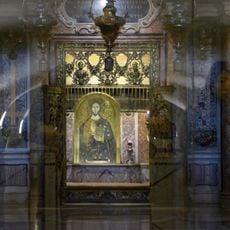
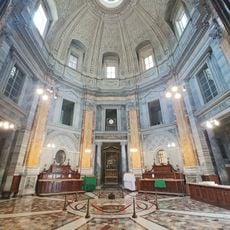
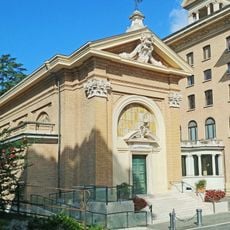
St Stephen of the Abyssinians is a small church within Vatican City featuring a single nave supported by ancient columns and a preserved Romanesque doorway from the 12th century. Inside, a 15th-century fresco depicts the Madonna holding the Christ Child.
Tradition attributes the church's foundation to Pope Leo I (c. 400–461); a monastery of Saint Stephen already existed by the synod of Pope Gregory III in 732. Pope Sixtus IV restored it in 1479 and gave it to Coptic monks, when the Ethiopian name took hold. Pope Clement XI reduced its size in 1706, and it was altered again in 1928.
The church is Ethiopia's national church in Vatican City, where Mass is celebrated in the Alexandrian rite of the Ethiopian Catholic Church. Italians long called it Santo Stefano dei Mori or degli Indiani, while Ethiopians know it as Däbrä Qeddus Esṭifanos. The Feast of St. Stephen falls on 26 December.
The church stands in the largo of the same name behind St Peter's Basilica, inside Vatican City, and is reached on foot from the basilica area. It is an active place of worship where the Ethiopian Catholic liturgy is celebrated in the Alexandrian rite; dress and behave accordingly. The Feast of St Stephen falls on 26 December.
In the 1530s, the church served as a gathering place for free African communities living in Europe, as documented by historian Leo Africanus. This role reveals how this small building became a refuge for people who faced exclusion elsewhere.
The community of curious travelers
AroundUs brings together thousands of curated places, local tips, and hidden gems, enriched daily by 92,919 contributors worldwide.