Sistine Chapel ceiling, Fresco cycle in Sistine Chapel, Vatican City
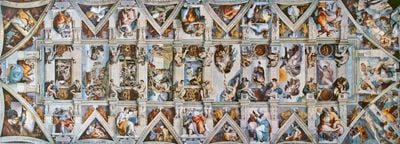
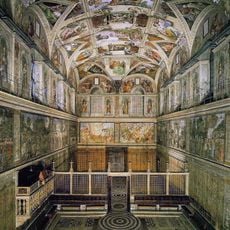
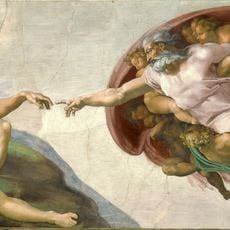
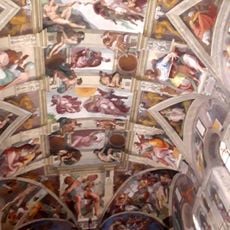
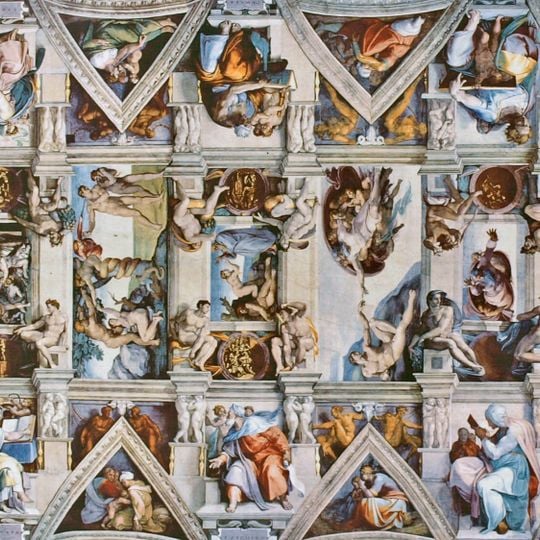
The Sistine Chapel ceiling is a cycle of frescoes extending across the entire vaulted surface, featuring more than 300 figures arranged within a symmetrical framework of painted architectural elements. Michelangelo divided the expanse into panels depicting biblical scenes, prophets, and sibyls, all rendered directly onto the plaster while still wet.
Pope Julius II commissioned Michelangelo between 1508 and 1512 to replace the earlier ceiling decoration of painted stars on a blue background. The artist worked largely alone and developed his technique as he progressed, gradually departing from traditional fresco methods to achieve more dynamic compositions.
Pilgrims and visitors from around the world gather daily beneath the ceiling, gazing upward in silence as chapel attendants remind them of its sacred purpose. The space continues to serve as a site for papal ceremonies, so the atmosphere often feels solemn and reverent despite the steady flow of travelers.
Visitors observe the ceiling from the chapel floor, where markers indicate the best viewing positions for examining the entire composition. Moving slowly and changing angles helps capture different details, as the curved surface reveals new elements depending on where you stand.
Michelangelo painted the entire ceiling while standing on scaffolding, developing neck strain that he later documented in personal writings and poetry. The pigments were applied directly onto wet plaster, bonding chemically with the surface as it dried and creating colors that have lasted for centuries without major fading.
The community of curious travelers
AroundUs brings together thousands of curated places, local tips, and hidden gems, enriched daily by 90,798 contributors worldwide.