Strudlhofstiege, Art Nouveau staircase in Alsergrund, Austria
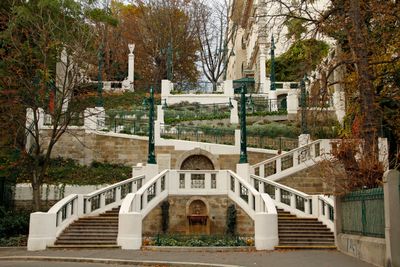
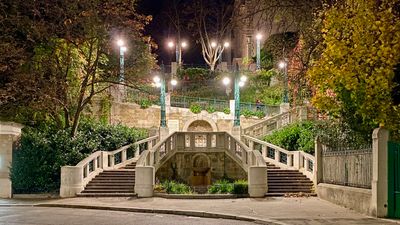
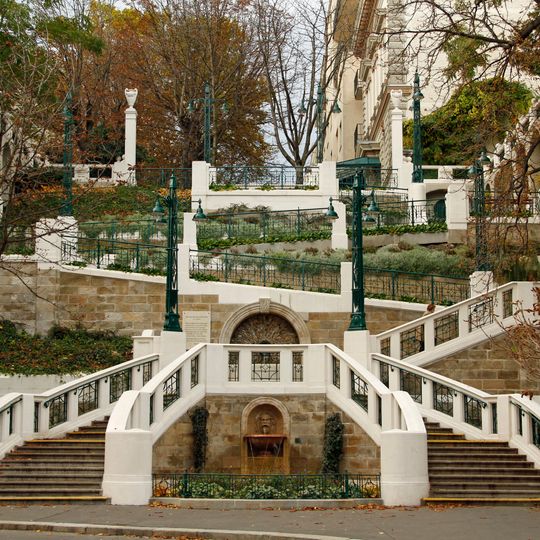
The Strudlhofstiege is an outdoor staircase in Vienna's Alsergrund district, built of Mannersdorf limestone, that bridges the height difference between the upper and lower stretches of Strudlhofgasse. Its lower section is symmetrical, with two mirrored curved flights flanking a recessed niche; a sculpted head mask spouts water into the lower basin, while a fish mouth feeds the upper basin. Above, stair and ramp elements alternate, and green-painted metal railings and candelabras with lily-of-the-valley lamps line the way.
The staircase opened in 1910 and was designed by architect Theodor Johann Jaeger. It was named after Peter Strudel, who established an art school at this location in 1688.
The stairs became famous through Heimito von Doderer's 1951 novel, which uses them as a central narrative element. Since then, the location has become a cultural gathering place in the neighborhood.
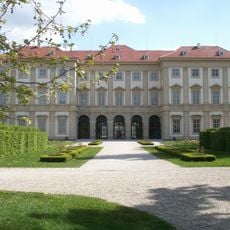
The staircase links the upper Strudlhofgasse, branching off Währinger Straße, with its lower section near Palais Liechtenstein off Liechtensteinstraße. The lower part is symmetric with two curved flights around the fountains; above, stairs and ramps alternate, so pedestrians get changing views. The open-air structure is also used for concerts during the Woche der Wiener Chöre.
The green paint of the railings and lampposts recalls Otto Wagner's Stadtbahn railings; the original version was blue. Before the 2008/2009 restoration, milky-glass globe lamps stood where the present fittings, matching the original state, now hang.
The community of curious travelers
AroundUs brings together thousands of curated places, local tips, and hidden gems, enriched daily by 93,585 contributors worldwide.