Palais Strudelhof, Palace in Alsergrund district, Vienna, Austria
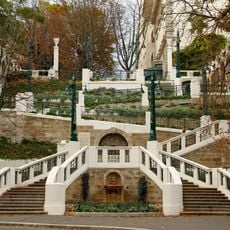
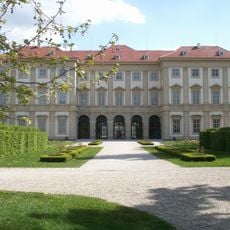
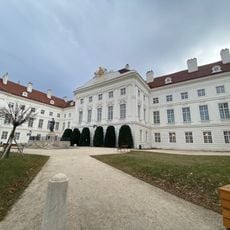
Palais Strudelhof is a Neoclassical city palace at Strudlhofgasse 10 in Vienna's 9th district, Alsergrund. It was built at the end of the 18th century on the site of Peter Strudel's 1690 Strudelhof, which was demolished in 1795. The building retains the name of its predecessor and stands next to the Strudlhofstiege, a public staircase built in 1910.
Peter Strudel, court painter and later director of the imperial academy, built the first Strudelhof around 1690 on land bought from Roman Bernhard Tschagon. From 1713 it served as a plague hospital, then passed through owners including Count Kuefstein and the Spanish Hospital. The old building was demolished in 1795; a neoclassical palace replaced it and kept the name. In 1914 the ultimatum to Serbia was signed here.
The palace takes its name from Peter Strudel, the court painter who built the first Strudelhof around 1690 and ran a private art school there. The neighbouring Strudlhofstiege, a public staircase built in 1910 under mayor Karl Lueger, became widely known through Heimito von Doderer's 1951 novel "Die Strudlhofstiege oder Melzer und die Tiefe der Jahre".
The palace stands at Strudlhofgasse 10 in the 9th district, next to the Strudlhofstiege staircase, which is freely accessible from the street. Since its 1999 conversion into a conference palace, the interior is used for meetings and events rather than regular sightseeing, so visitors should confirm access before planning a look inside.
In 1970 the palace hosted the SALT I disarmament talks between the USSR and the United States, and until its 1999 conversion into a conference centre it served as Qatar's embassy. The 1914 ultimatum to Serbia was signed here while Leopold Graf Berchtold, who bought the palace in 1906, was foreign minister.
The community of curious travelers
AroundUs brings together thousands of curated places, local tips, and hidden gems, enriched daily by 94,133 contributors worldwide.