Lutheran City Church, Renaissance church in Innere Stadt, Austria.
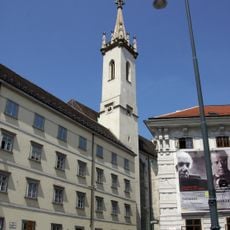
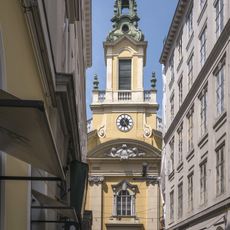
The Lutheran City Church is a Renaissance-style sacred building with a neoclassical facade topped by a triangular pediment. Its interior follows a hall church design with galleries on all sides.
Built 1582–1583 as the church of the Poor Clare Königinkloster, founded by Elisabeth of Austria, widow of Charles IX of France, probably as atonement for the St. Bartholomew's Day massacre. The monastery was dissolved in 1782 under Josephinist reforms; the Lutheran congregation bought the central part in 1783 and had the church converted, removing three towers because the Patent of Toleration forbade outward recognition. Inaugurated 30 November 1783.
The name refers to the Lutheran parish that bought the former monastery church in 1783; the Reformed congregation took the neighbouring plot. Inside, look for the 1876 carved choir stalls beside the altar and the 1822 baptismal font on a scagliola column. In the 19th century the composers Franz Lachner and Hermann Graedener served here as organists, and piano maker Andreas Streicher issued a new hymnal for services.
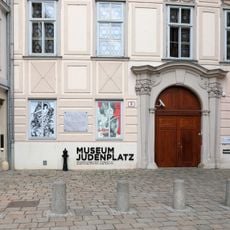
The building sits at Dorotheergasse 18 in Vienna's first district next to the Reformed City Church. The Dorotheum auction house opposite serves as a useful landmark for finding the location.
The church preserves marble plaques marking burial chambers where the hearts of Empress Anna, Emperor Matthias, and Emperor Ferdinand II were laid to rest. This small collection ties the building to imperial history.
The community of curious travelers
AroundUs brings together thousands of curated places, local tips, and hidden gems, enriched daily by 92,894 contributors worldwide.