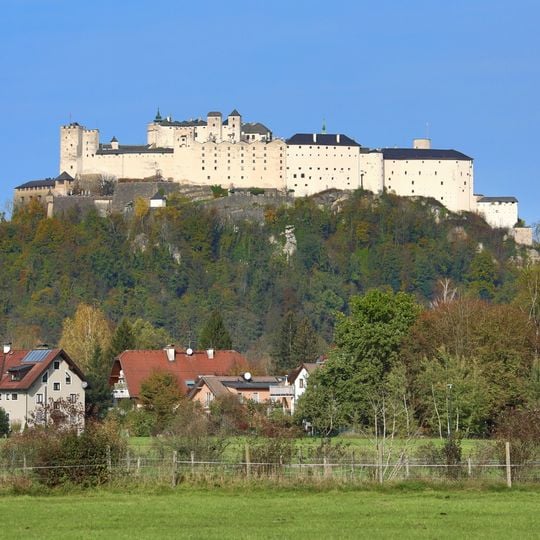
Hohensalzburg Fortress, Medieval fortress on Festungsberg hill, Salzburg, Austria
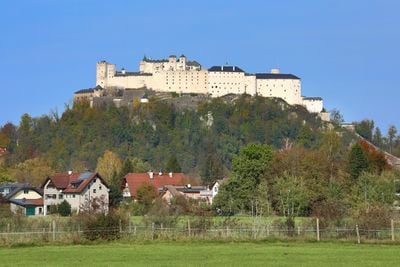
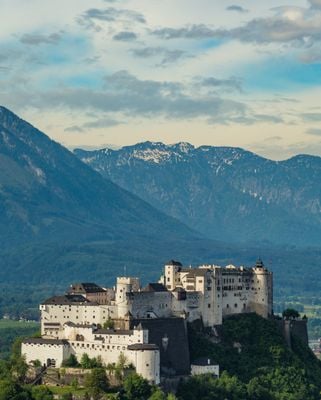
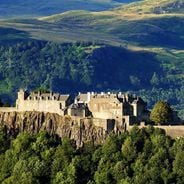
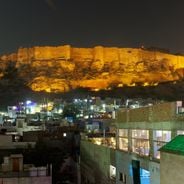
Hohensalzburg Fortress sits at the summit of Festungsberg hill at roughly 506 meters elevation and commands views across the entire city below. The stone walls create a powerful, visible silhouette that has shaped Salzburg's skyline since its founding.
Archbishop Gebhard began construction of this fortress in 1077, initially with simple earthen defenses and wooden structures. Over the following centuries it evolved into a stone fortress that successfully resisted attacks and sieges.
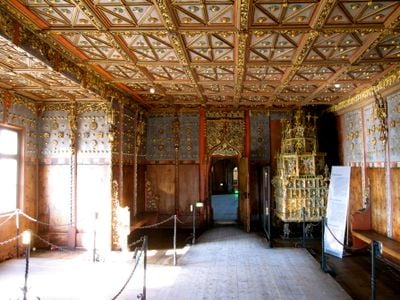
The Golden Hall takes its name from the gold buttons on its coffered ceiling, each standing for a star. A 17-metre beam carries the coats of arms of Leonhard von Keutschach, the Holy Roman Empire, German towns and Salzburg's bishoprics. The Salzburg Bull in the Krautturm, a mechanical organ of over 200 pipes built in 1502, plays daily from Palm Sunday to 31 October.
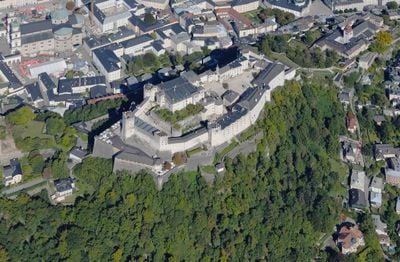
The Festungsbahn, a funicular railway opened in 1892, climbs from the town to the Hasengrabenbastei. On foot, paths lead up the Festungsberg from the city side. The fortress area is large, with several courtyards and wings, so allow time to move between the Hoher Stock, the Krautturm and the outer bastions.
The Salzburger Stier in the Krautturm is a mechanical organ with over 200 pipes, built in 1502 under Archbishop Leonhard von Keutschach and renewed by Rochus Egedacher in 1735. From Palm Sunday to 31 October it sounds daily at 7, 11 and 18 o'clock, historically cueing the carillon on Residenzplatz. An Austrian cabaret group takes its name from it.
The community of curious travelers
AroundUs brings together thousands of curated places, local tips, and hidden gems, enriched daily by 92,632 contributors worldwide.