See the monuments around you in AROpen chests in the app
Around Us is built for your phone — point your camera at the streets and discover the monuments and places around you in augmented reality.Around Us is built for your phone — chests unlock when you walk, explore and capture nearby places.
Historic fortresses and military castles worldwide
This collection brings together fortified military structures that show how defensive architecture has evolved across different eras and continents. Malbork Castle in Poland spans 140,000 square meters of brick constructions erected by the Teutonic Knights in the 13th century, while the Alhambra in Granada combines palaces and city walls in a complex where medieval Islamic architecture meets military needs. The Krak des Chevaliers in Syria reflects the defensive ingenuity of the Crusaders, and Suomenlinna, a naval fortress spread over six islands near Helsinki, illustrates how the Swedes and later the Finns fortified their Baltic coastlines in the 18th century.
The sites include mountain strongholds like Masada, where Herod built a refuge on an isolated plateau of the Judean Desert, and Chittorgarh Fort in India, covering 7 square kilometers (about 2.7 square miles) and housing a protected city. In Europe, Edinburgh Castle has occupied its volcanic rock since the Middle Ages, while Bourtange in the Netherlands features the geometric bastion layout typical of 16th-century fortifications. Each fortress retains the elements that ensured its defense: walls, moats, watchtowers, and cisterns. These structures tell stories of sieges, conquests, and conflicts that shaped their regions and remain today prominent witnesses to world military history.
Historic fortresses and military castles worldwide
This collection brings together fortified military structures that show how defensive architecture has evolved across different eras and continents. Malbork Castle in Poland spans 140,000 square meters of brick constructions erected by the Teutonic Knights in the 13th century, while the Alhambra in Granada combines palaces and city walls in a complex where medieval Islamic architecture meets military needs. The Krak des Chevaliers in Syria reflects the defensive ingenuity of the Crusaders, and Suomenlinna, a naval fortress spread over six islands near Helsinki, illustrates how the Swedes and later the Finns fortified their Baltic coastlines in the 18th century.
The sites include mountain strongholds like Masada, where Herod built a refuge on an isolated plateau of the Judean Desert, and Chittorgarh Fort in India, covering 7 square kilometers (about 2.7 square miles) and housing a protected city. In Europe, Edinburgh Castle has occupied its volcanic rock since the Middle Ages, while Bourtange in the Netherlands features the geometric bastion layout typical of 16th-century fortifications. Each fortress retains the elements that ensured its defense: walls, moats, watchtowers, and cisterns. These structures tell stories of sieges, conquests, and conflicts that shaped their regions and remain today prominent witnesses to world military history.
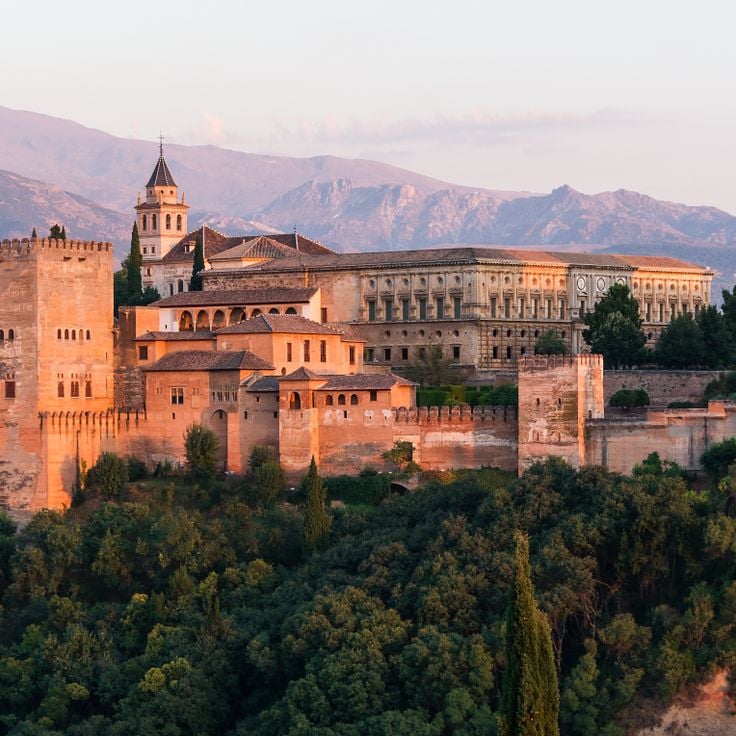
The Alhambra demonstrates how Islamic rulers in the 13th century combined military and residential architecture on a hill above Granada, where defensive towers and fortifications protected palaces with courtyards, water features and geometric gardens that were partially modified after the Christian conquest in 1492.
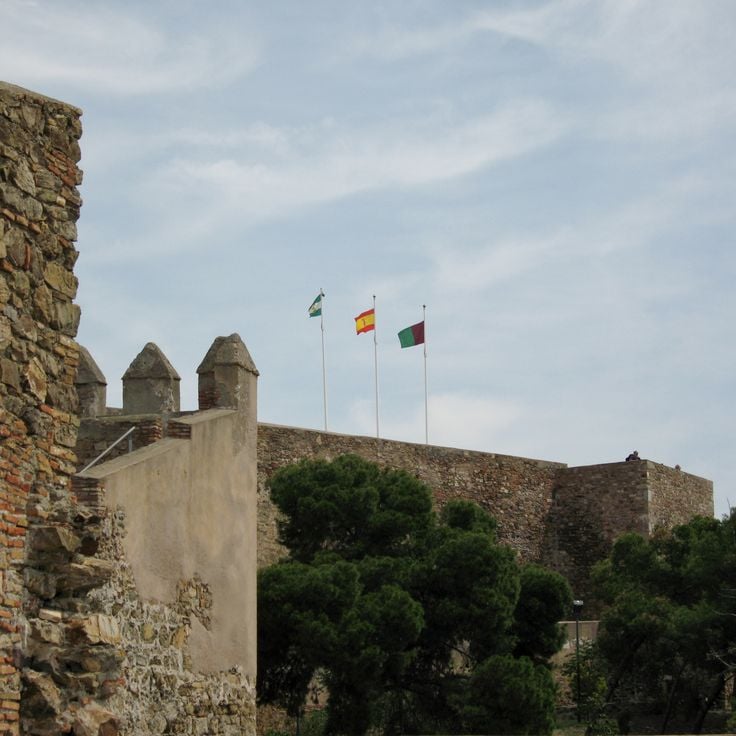
This tenth century fortress stands on a hill rising 430 feet (130 meters) and secured the port of Málaga. The Castillo de Gibralfaro was built under Moorish rule and equipped with double walls and eight towers that controlled the strategic point above the city. The compound was connected to the Alcazaba at the base of the hill through a fortified passage, forming an integrated defense system. From the ramparts, the view extends across the Mediterranean and the coastal plain, illustrating the military importance of the location.
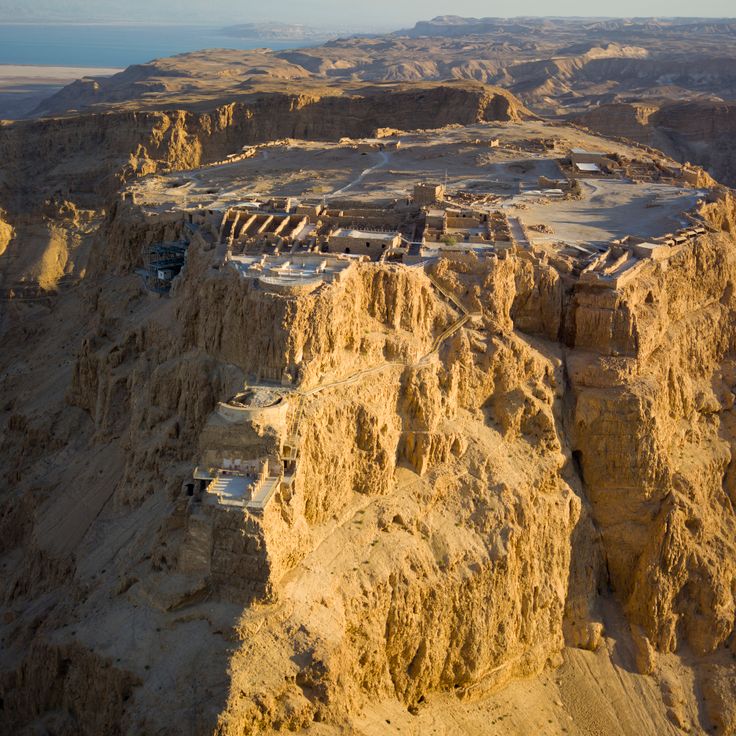
This fortress rises 1,300 feet (400 meters) above the Dead Sea on an isolated plateau where King Herod built a refuge between 37 and 31 BC. In 73 AD, Roman forces under Flavius Silva besieged Masada with a massive siege ramp that remains visible today. Archaeological excavations uncovered water collection systems, bathhouses and storage rooms that demonstrate how the stronghold maintained self-sufficiency in this remote desert location. The fortifications enclose roughly 17 acres (7 hectares) overlooking the Judean Desert.
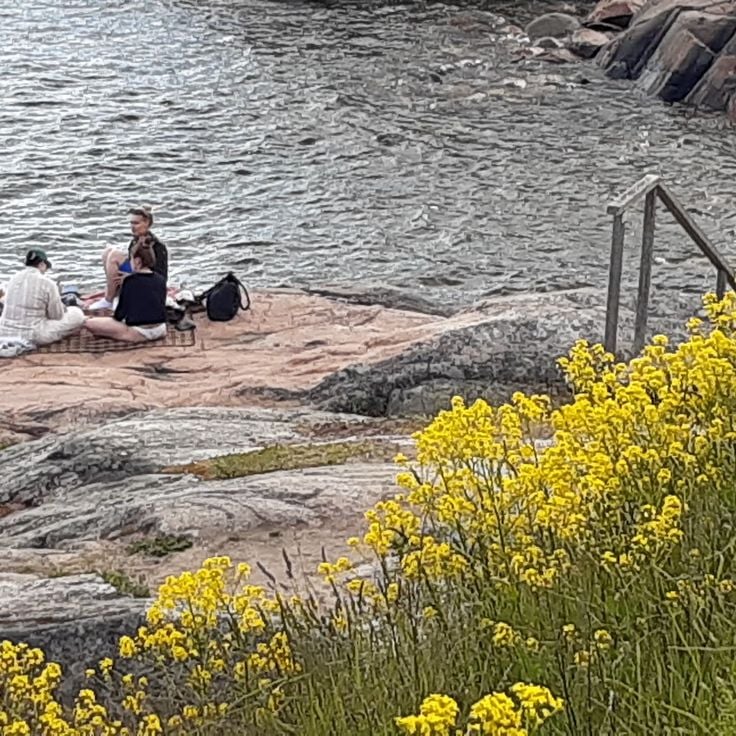
The Suomenlinna sea fortress extends across six islands off Helsinki and demonstrates the Swedish fortification system of the 18th century in the Baltic. Built between 1748 and 1772, the complex was designed to control access to the Gulf of Finland and includes bastions, barracks, gun positions and a dry dock for warships. After Russian forces took control in 1808, the fortress was expanded and served military purposes until 1918, today housing museums, workshops and residential buildings. The fortifications and historic harbor basin document three centuries of Baltic defensive architecture.
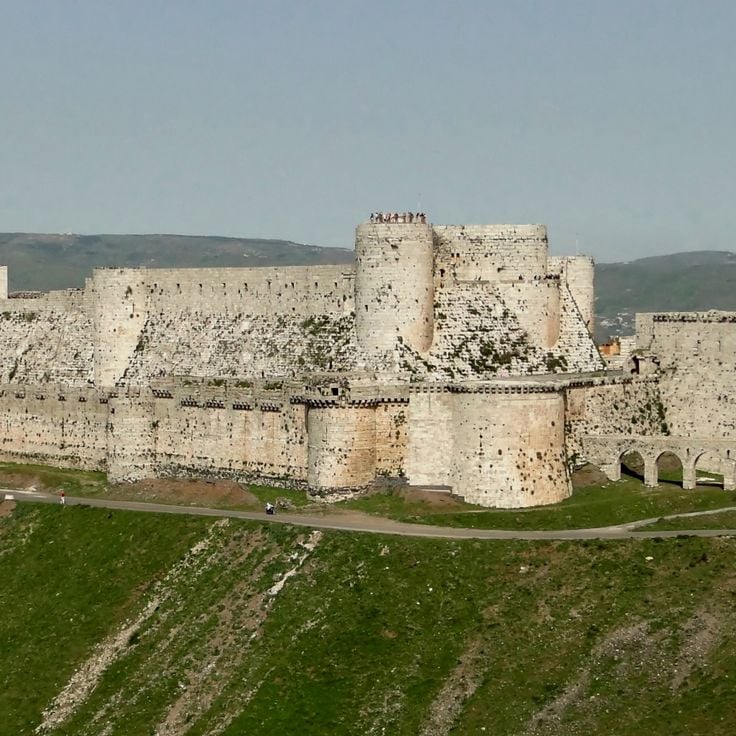
This Crusader stronghold was built between 1142 and 1170 by the Knights Hospitaller, who expanded an existing Arab fortress into a base that could garrison 2,000 troops. The complex sits on a rocky spur 2,130 feet (650 meters) above sea level and controlled the gap between Homs and Tripoli, a strategic route linking the coast to the interior. The double ring of walls, concentric defensive corridors, storage chambers and cisterns demonstrate the military architecture developed by the Crusaders in the Levant. The Krak served the Hospitallers as a launching point for military campaigns and fell in 1271 to Sultan Baibars after a month-long siege by the Mamluks.
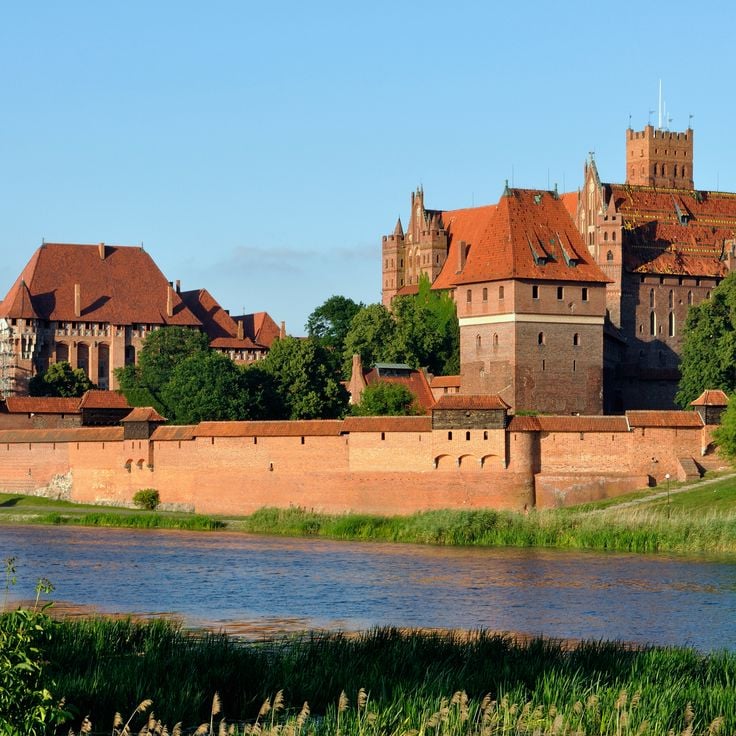
This complex was built from 1274 by the Teutonic Order and grew into the largest brick fortress in Europe. The structure spans roughly 344,000 square feet (144,000 square meters) and demonstrates the military power of the Order in medieval Prussia. The three-tier fortification comprises the High Castle, Middle Castle and Lower Castle, reinforced by massive towers, ramparts and a system of drawbridges. After the Battle of Grunwald in 1410, the castle changed hands several times and served Polish kings as a residence. Extensive restoration work in the 19th and 20th centuries rebuilt the Gothic structures that suffered heavy damage during World War II. The castle illustrates the defensive techniques and administrative organization of a religious military order in medieval Europe.
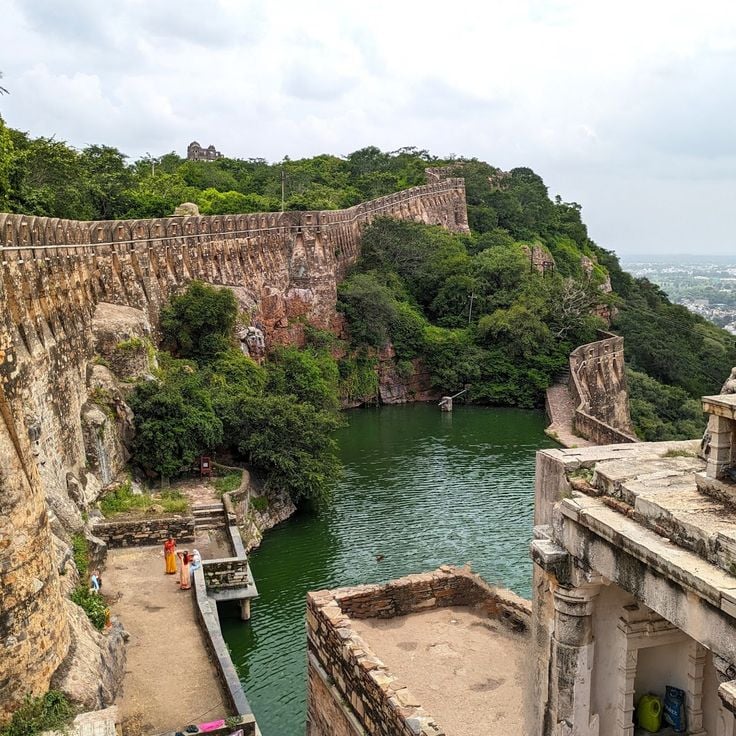
This fort was built in the 7th century and covers 700 acres (283 hectares) with multiple temples, palaces and water reservoirs. The fortress served for centuries as a military center and housed a protected city within its walls. The complex demonstrates how Indian rulers used strategic hilltop positions for defense while integrating supply facilities for extended sieges. Chittorgarh documents the evolution of fortress architecture in Rajasthan and ranks among the largest defensive installations on the Indian subcontinent.
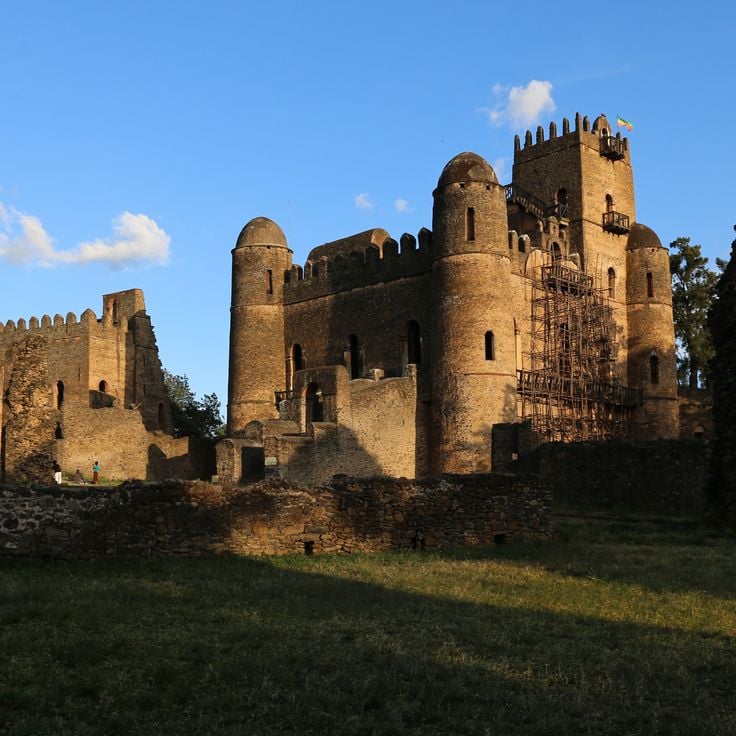
Fasil Ghebbi comprises several 17th-century structures built within a walled compound in the Gondar region by Emperor Fasilides and his successors. The complex blends Ethiopian building practices with design influences from the Mughal Empire, the Arab world and Europe, visible in its domes, towers and courtyards. Inside the fortified perimeter stand the main palace alongside reception halls, libraries and religious structures. Serving as the Ethiopian imperial seat for over two centuries, Fasil Ghebbi documents the political importance of Gondar during this period and represents a chapter in the history of this military collection's African fortifications.
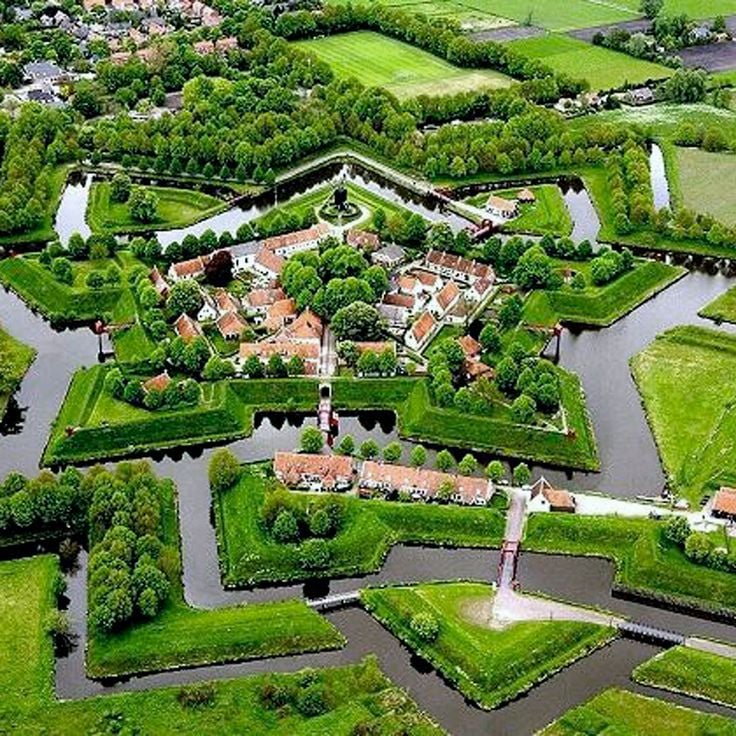
This pentagonal fortress shows the development of Dutch defensive architecture between the late 16th and 19th centuries, when the Groningen border region was contested between the Netherlands and Spanish territories. Fort Bourtange was built in 1593 on orders from William of Orange to control the only land route between Germany and the city of Groningen, then still under Spanish rule. The layout follows the bastioned system with five pointed bastions whose star-shaped geometry created fields of fire without blind spots. Earth ramparts, wide moats and forward ravelins formed a layered defense system that remained in military use until the 19th century. After decommissioning in 1851, the fortress became a village before being restored between 1960 and 1992 to its appearance around 1750, today illustrating how early modern bastioned fortresses operated.
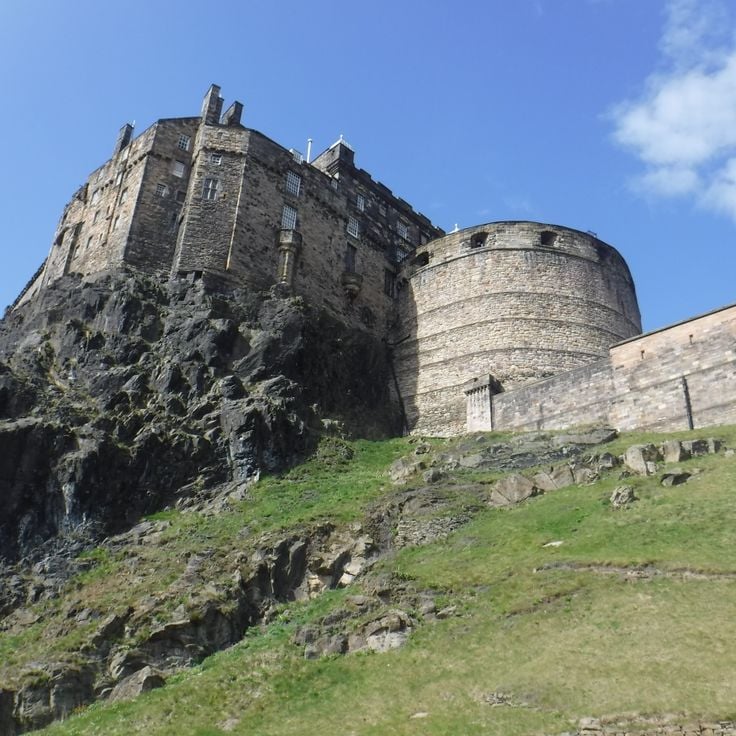
Edinburgh Castle stands on an extinct volcanic outcrop 430 feet (130 meters) above the city and has served as a royal residence and military stronghold since the Middle Ages. The complex safeguards the Scottish Crown Jewels, the Stone of Scone on which Scottish monarchs were crowned for centuries, and St Margaret's Chapel from the early 12th century, the oldest surviving building in Edinburgh. The fortifications were strengthened repeatedly during numerous sieges between Scots and English, with the present batteries and casemates dating mainly from the 16th to 18th centuries. The castle walls enclose military history collections, former garrison buildings and the Great Hall where the Scottish Parliament met until 1639.
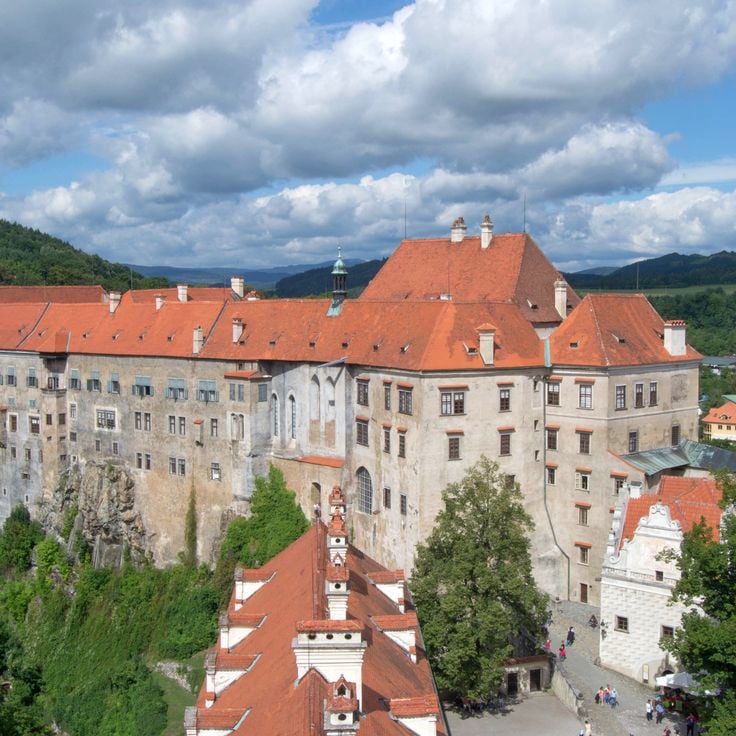
Český Krumlov Castle rises above the Vltava River and combines Gothic foundations from the 13th century with Renaissance arcades and Baroque halls across its 40 buildings. The three-story cloaked tower displays illusionistic painting that transforms flat facades into three-dimensional architecture. The complex encompasses five courtyards, a covered bridge spanning the gorge, and a Baroque castle garden with an 18th-century revolving theater stage. The ruling Rosenberg and Schwarzenberg families expanded this fortress gradually into a residence that now documents over 400 years of architectural development.
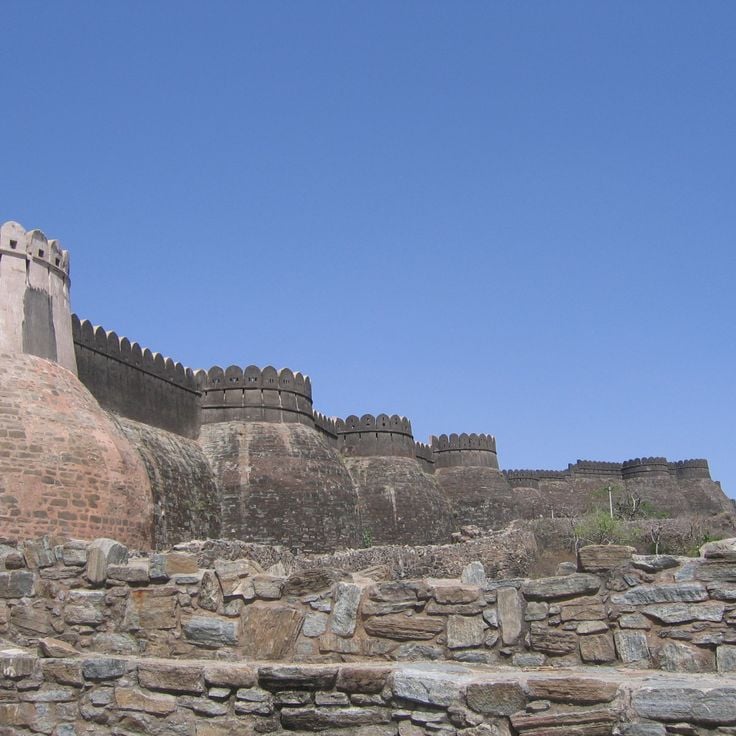
The fort at Kumbhalgarh rises along a ridge in the Aravalli Mountains of western Rajasthan and demonstrates the defensive strategies developed by Rajput rulers in the 15th century. Rana Kumbha commissioned the fortress around 1443, and its 22-mile (36-kilometer) perimeter wall forms the second longest continuous fortification after the Great Wall of China. Seven fortified gates control access through walls reaching up to 23 feet (7 meters) in thickness, while 360 temples within the complex underscore its religious significance. The Badal Mahal palace at the highest point served as the royal residence and provided views across the surrounding plains. This mountain fortress fell to siege only once in its history and documents the military engineering practiced during the Rajput era.
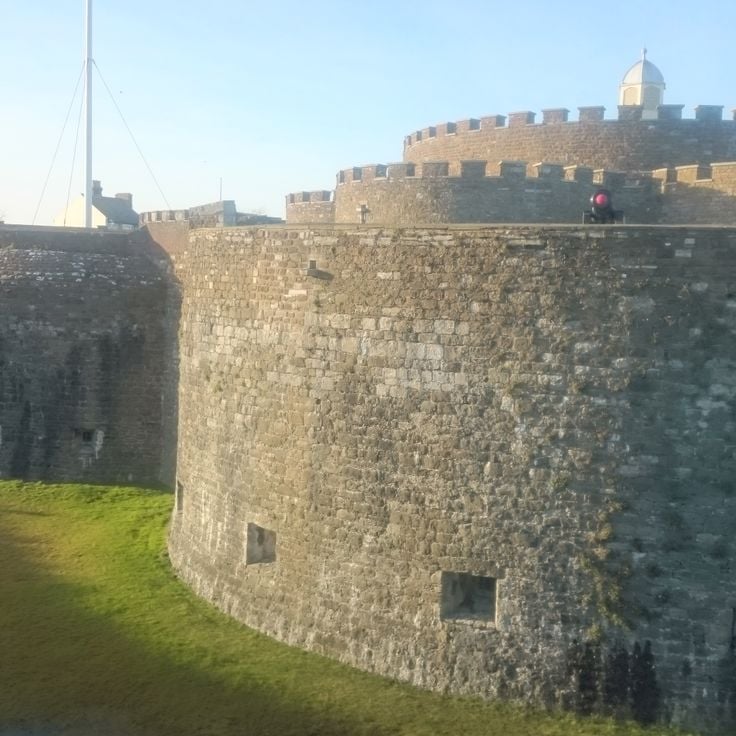
This coastal fortress was built in the 1530s under Henry VIII as a response to French threats and displays a circular design with six rounded bastions that exemplify the development of artillery fortifications in England. Deal Castle worked together with nearby Walmer and Sandown forts to guard the strategic strait between Dover and the continent, with its low profile and 119 gun ports reflecting Tudor military doctrine. The fortress withstood several sieges during the English Civil War in the 17th century and remained an active garrison through the 19th century. Today the site preserves its casemates, ammunition stores and gun positions, offering insight into coastal defense during the early modern period.
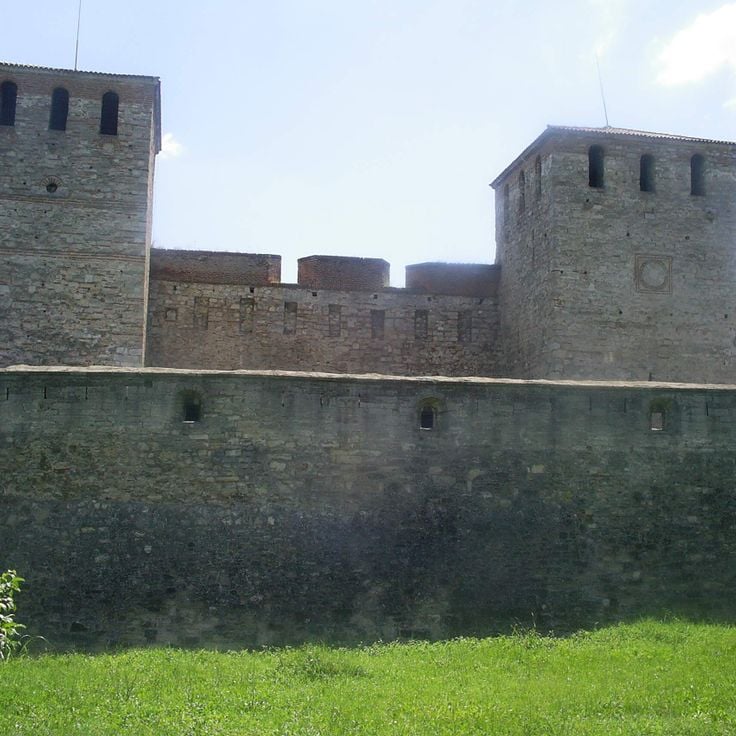
The fortress of Baba Vida from the tenth century rises along the Danube and demonstrates with its two concentric walls and four towers how medieval defensive structures operated on Bulgaria's river frontier. This fortification controlled the Danube passage for centuries and secured the northern approaches to the region. The towers enabled surveillance of the river and surrounding plains, while the double walls created multiple defensive lines. The fortress illustrates medieval Bulgarian military architecture and documents the strategic importance of the Danube border.
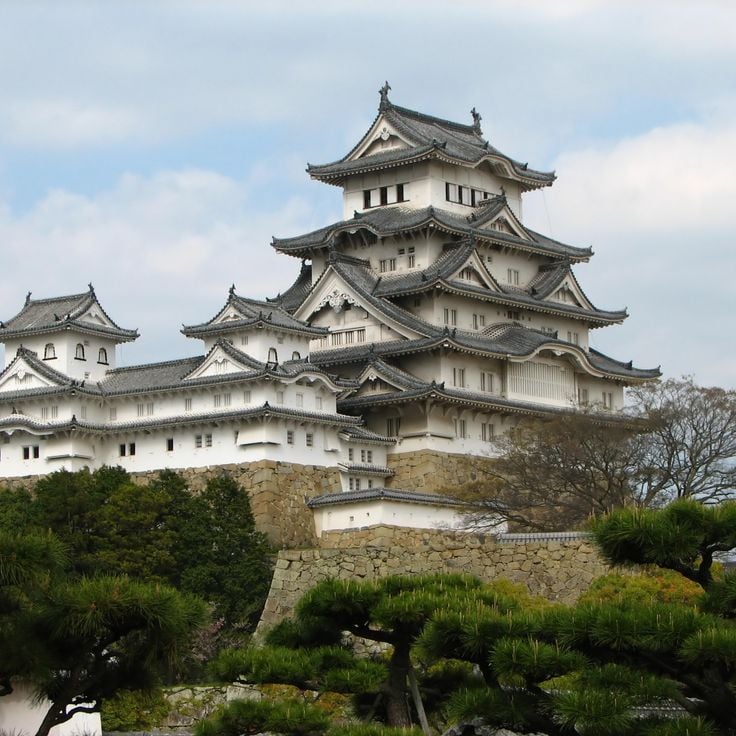
This 14th-century fortress complex in southern Hyōgo Prefecture unites 83 buildings behind white exterior walls and demonstrates how Japanese defensive architecture combined nested entrance gates, loopholes for bows and muskets, and multi-story watchtowers into a cohesive system. Himeji Castle originated under the warlord Akamatsu Norimura, was expanded in the 16th century by Toyotomi Hideyoshi and later by Ikeda Terumasa, and today preserves its original wooden structures including the five-story main keep that offered strategic sight lines across the Harima Plain.
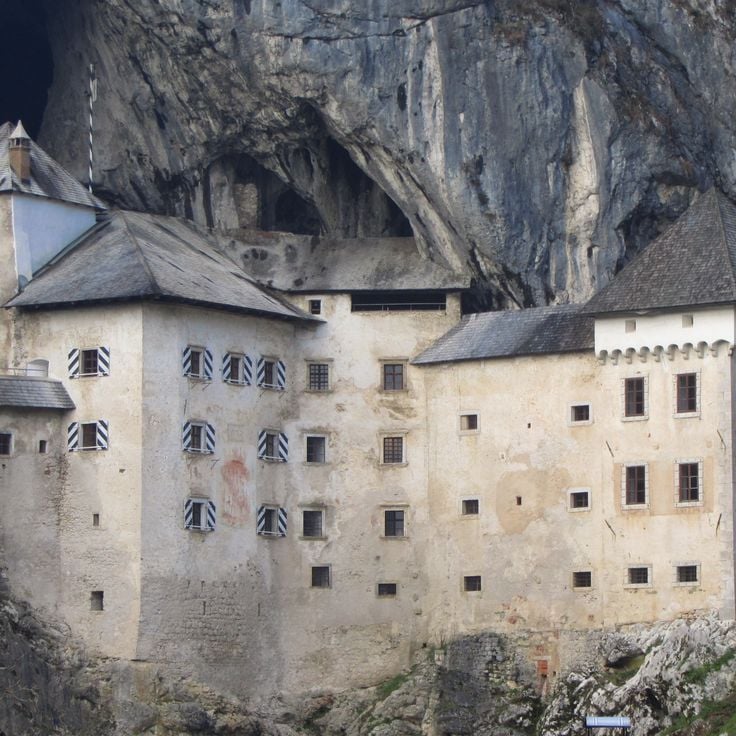
Predjama Castle occupies a 123-foot (37-meter) limestone cliff in Inner Carniola, where 13th-century builders integrated defensive structures directly into the karst cave systems. The complex combines masonry quarters with natural caverns that provided storage, escape routes and water sources. The design demonstrates how geographic conditions shaped military architecture: attackers had to overcome not only walls but also inaccessible rock formations, while defenders used the extensive cave network for supply and retreat.
El Morro has guarded the entrance to Havana harbor since the late 16th century, showing how the Spanish crown secured its Caribbean holdings against pirates and enemy fleets. The fortress stands on a rocky headland along the northern coast and combines multiple defensive levels with thick stone walls that supported cannons. Inside the compound, barracks housed the garrison, while underground magazine rooms stored ammunition and supplies. A 19th-century lighthouse rises above the military structures and still serves navigation today. This fortress belongs to the system of colonial defenses that made Havana one of the best protected ports in the New World.
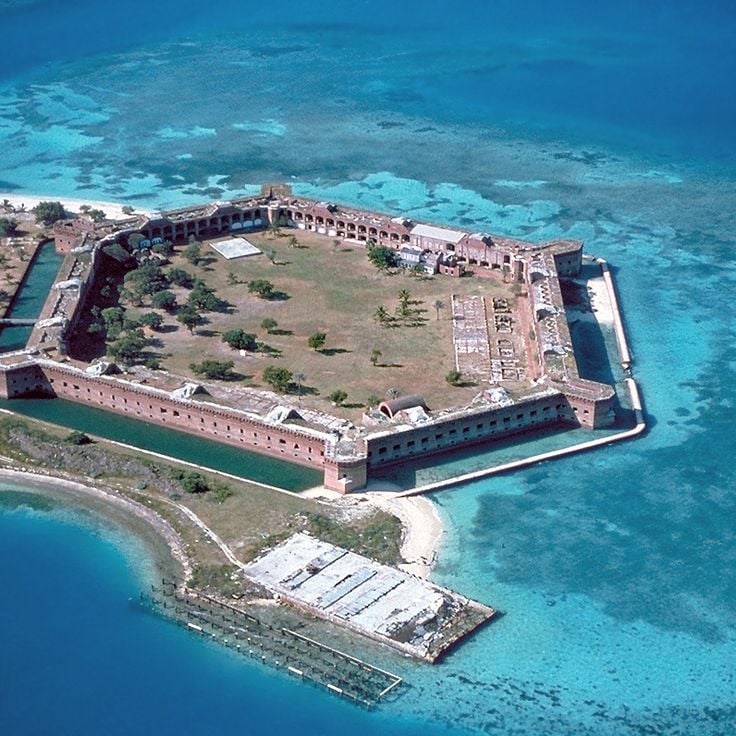
Fort Jefferson rises from an atoll in the Dry Tortugas, approximately 70 miles (110 kilometers) west of Key West in the Gulf of Mexico. Construction began in 1846 and continued until 1875, though the fort was never completed despite using roughly 16 million bricks. The hexagonal structure encloses a central parade ground, surrounded by three-story casemates designed to hold more than 400 artillery pieces. The massive fortification was intended to control shipping lanes between the Atlantic Ocean and the Gulf. During the Civil War, Fort Jefferson served as a military prison, notably housing Samuel Mudd, the physician who treated John Wilkes Booth. Today, the fort attracts visitors who arrive by seaplane or boat to explore the military architecture and snorkel in the surrounding coral waters.
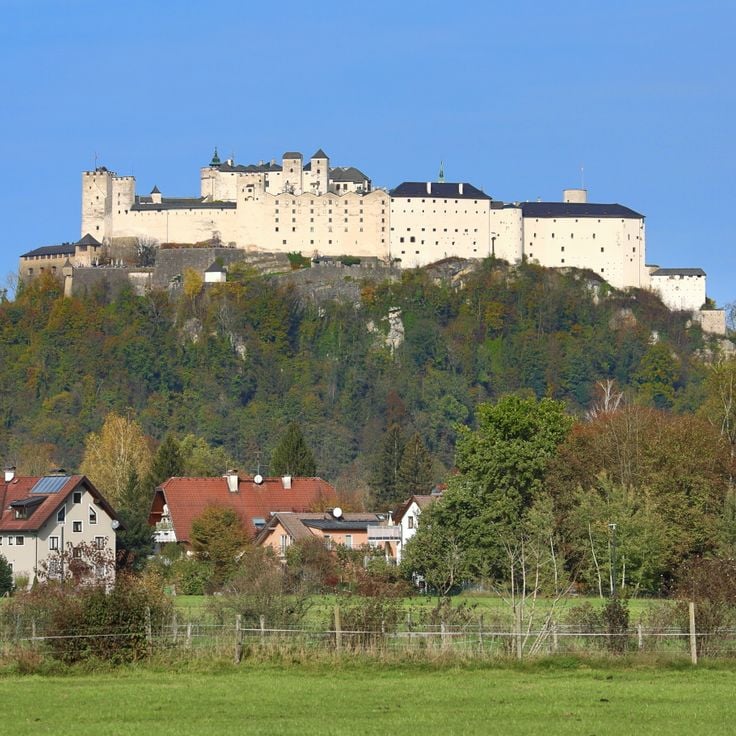
This fortress from the 11th century rises on a 400-foot (120-meter) hill above Salzburg and ranks among the largest fully preserved medieval castles in Europe. Prince-Archbishop Gebhard von Helfenstein commissioned the structure in 1077 to secure his position during the Investiture Controversy, while later rulers systematically expanded the fortifications in the 15th and 16th centuries. The ring walls, towers and bastions demonstrate the evolution of military architecture from the High Middle Ages to the early modern period, when the castle served as the impregnable residence of Salzburg's prince-archbishops. Inside, the princely chambers, the Gothic castle chapel and the Reckturm Museum document its dual function as both defensive stronghold and princely residence.
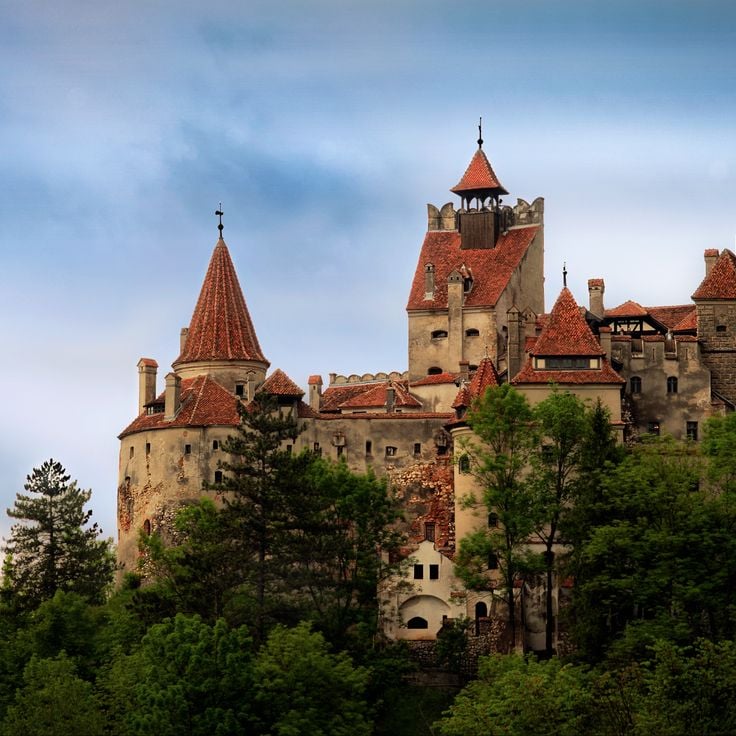
Bran Castle rises from a rocky outcrop near the border between Transylvania and Wallachia. King Louis I of Hungary ordered the fortress built in 1377 to protect the trade route threatened by the Ottoman Empire. The structure secured passage between the two Romanian regions and served as a customs post for merchants. Four towers reinforce the walls, while narrow staircases and winding corridors inside provided defenders with strategic advantages. The courtyard sits on multiple levels connected by a hidden tunnel to a well at the base of the rock.
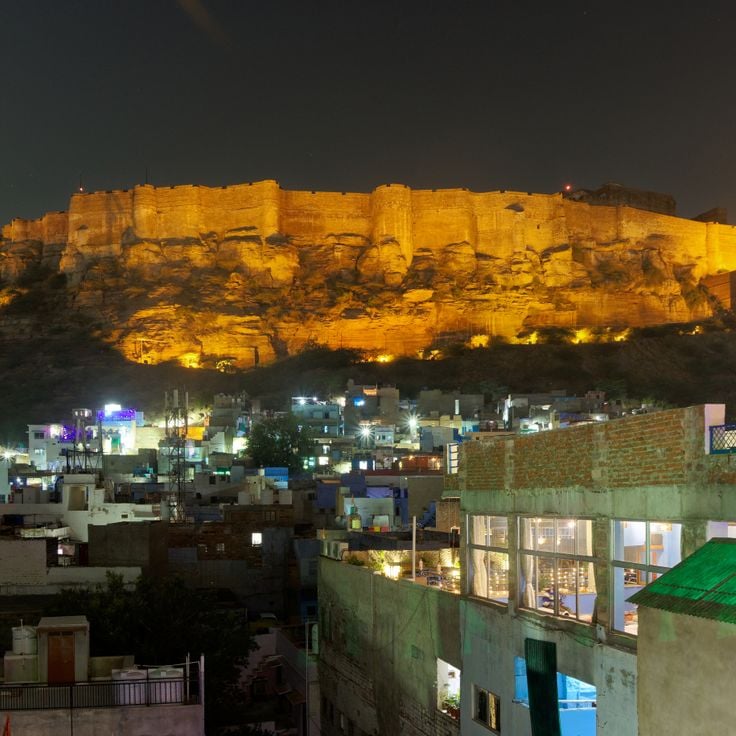
The fort of Mehrangarh rises 400 feet (125 meters) above Jodhpur and demonstrates through its 120-foot-thick (36-meter) walls and seven fortified gates the military architecture of the Rajput rulers who selected this rocky outcrop in the 15th century as a strategic point to control trade routes to Afghanistan and Central Asia.
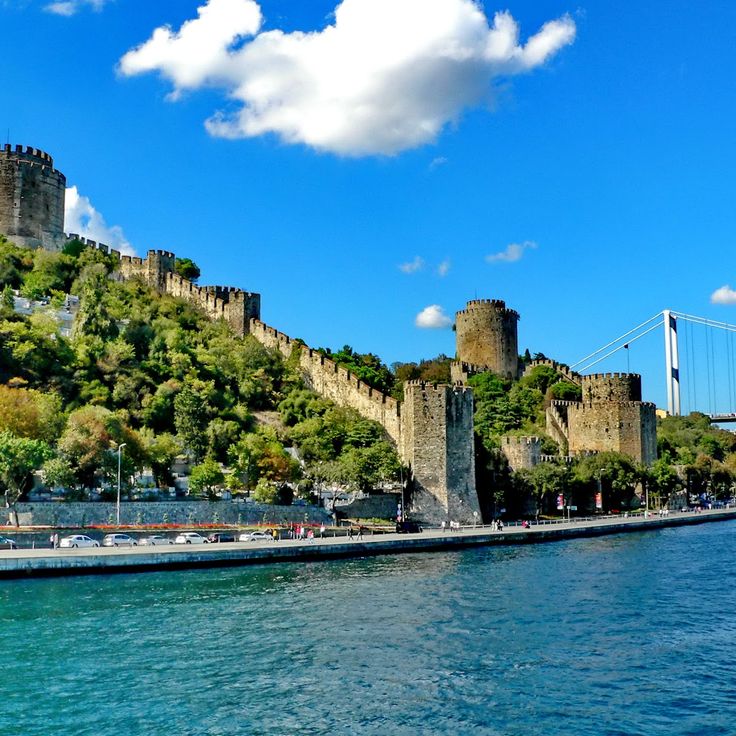
This fortress was built by Sultan Mehmed II in spring 1452 in just four months to control the narrowest point of the Bosphorus and cut Constantinople's supply lines. Rumeli Hisarı rises on the European shore of the strait and formed, together with the older fortress of Anadolu Hisarı on the opposite bank, a strategic stranglehold on maritime traffic. The three massive towers and jagged walls followed the terrain and allowed Ottoman cannons to target any vessel attempting unauthorized passage. One year after completion, the fortress played a decisive role in the siege and conquest of Constantinople in May 1453. The structure demonstrates the military efficiency of Ottoman construction and stands today as witness to that historical turning point which marked the end of the Byzantine Empire.
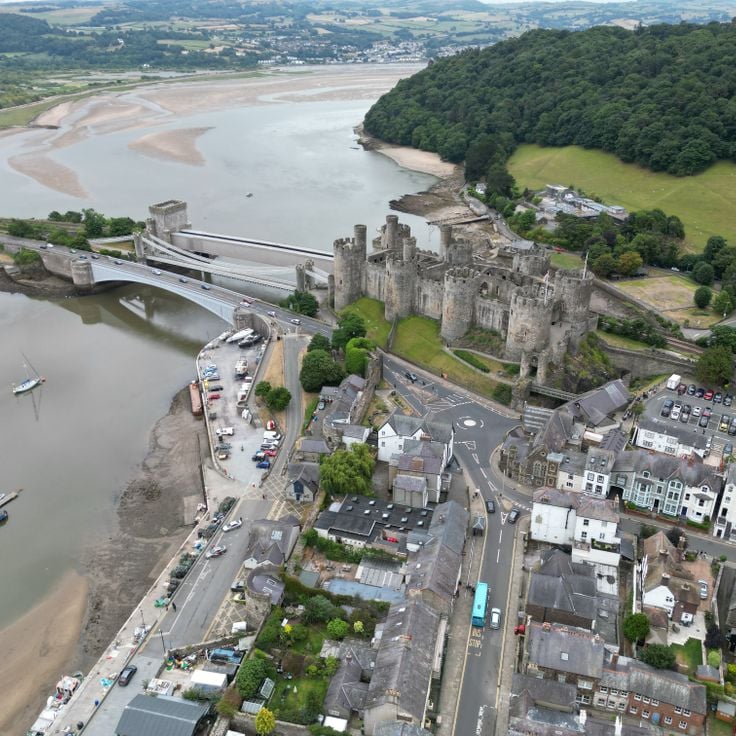
Conwy Castle rises above the Welsh coast since 1283, displaying eight massive towers and a 4,265-foot (1.3-kilometer) curtain wall that demonstrate the military architecture of Edward I, who commissioned this fortress to secure English control over North Wales. The ramparts enclose a rectangular layout with two courtyards, residential quarters for the royal household and a separate garrison section. From the keep, defenders monitored the Conwy River and the approaches to the town, while the towers provided sightlines along the entire fortification.
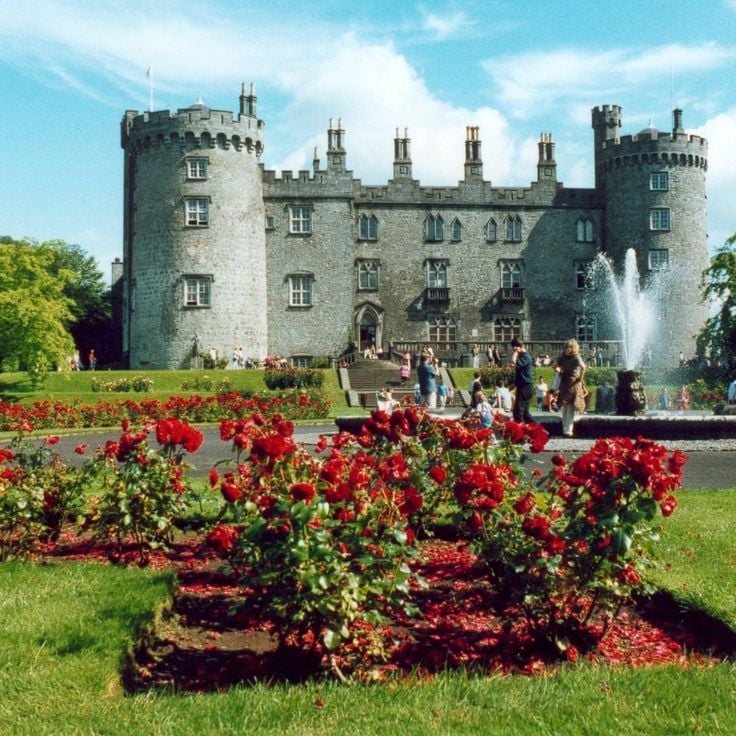
This Norman fortress from the 12th century was converted into a manor residence and retains three corner towers from the original structure. Kilkenny Castle served for eight centuries as the seat of the Butler family and demonstrates in its architecture the evolution from a medieval defensive installation to a representative estate that underwent extensive renovation in the 19th century.
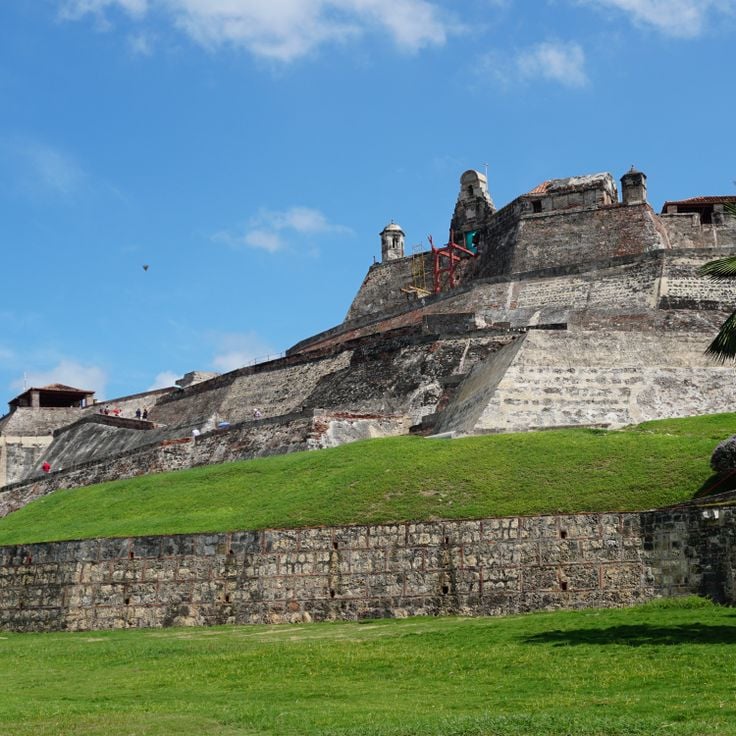
This fortress dates from the 16th century on the San Lázaro hill and demonstrates how Spanish military architects defended their Caribbean colonies. The structure connects several bastions through underground tunnels that allowed troops and supplies to move under protection, while the elevated position enabled artillery to control Cartagena's harbor. The complex was expanded multiple times during the colonial period to withstand attacks from English and French fleets, documenting the strategic importance of the city as a trade center for Spanish treasures from South America.
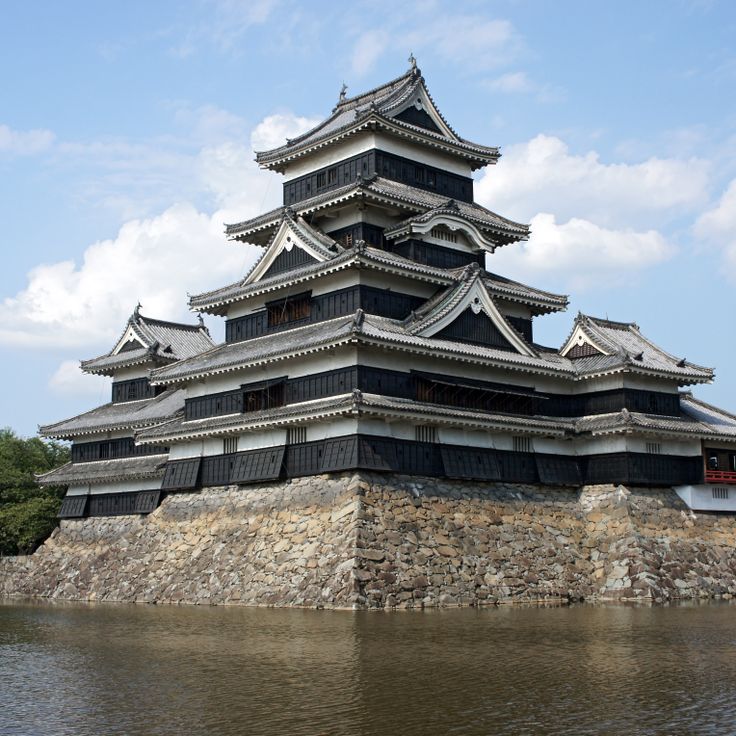
Matsumoto Castle combines the military requirements of the late Sengoku period with the architectural development of Japanese fortifications, displaying across its five stories the defensive installations built in the 16th century against firearms. The black exterior walls of this fortress in Nagano Prefecture extend over six internal levels, where loopholes and reinforced timber constructions were designed to provide protection against arquebus rounds. The complex documents how Japanese builders adapted traditional castle architecture to the challenges of the gunpowder age, while the original keep has survived to the present day.
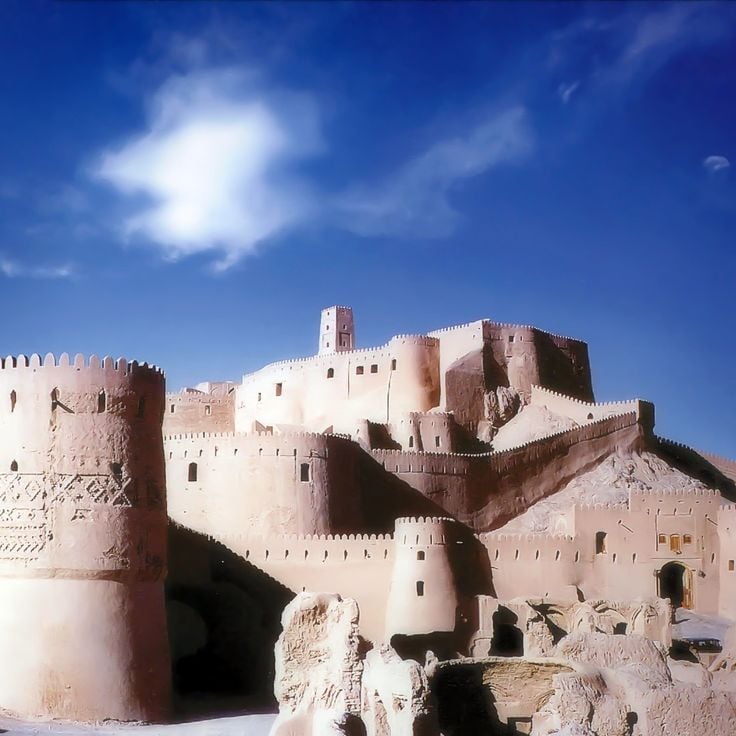
This citadel built from mud brick dates to the sixth century and spreads across 1.9 million square feet (180,000 square meters) at the edge of the Iranian desert. Its fortifications once controlled trade routes along the Silk Road, where caravans moved between Persia and Central Asia. The walls, towers and interior structures demonstrate how military architecture adapted to extreme desert conditions, where mud served as the primary building material. The 2003 earthquake damaged large sections of the complex, but restoration work allows visitors today to understand the original defensive structures and their strategic importance to the region.
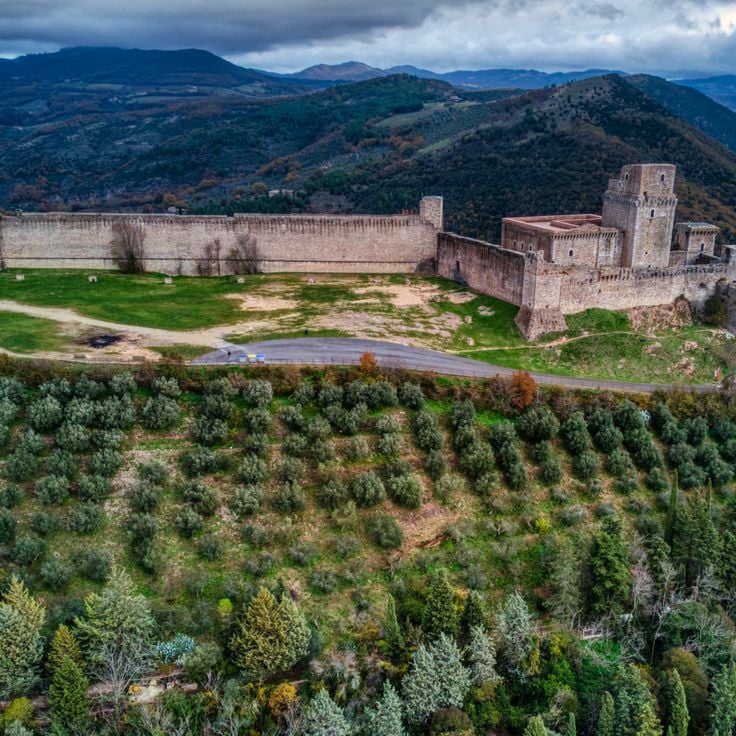
The Rocca Maggiore commands Assisi from its hilltop position and preserves its medieval fortification architecture with the polygonal tower, keep and connecting walls leading to different defensive levels. Emperor Frederick Barbarossa commissioned the first fortress in the 12th century, which Cardinal Albornoz expanded into a larger complex in 1365. The circular main tower provides views across the Spoleto Valley and the Umbrian plain. The castle served papal troops as a garrison controlling this strategic position at the edge of the Papal States. Defensive walls connect the main tower to the lower bastion.
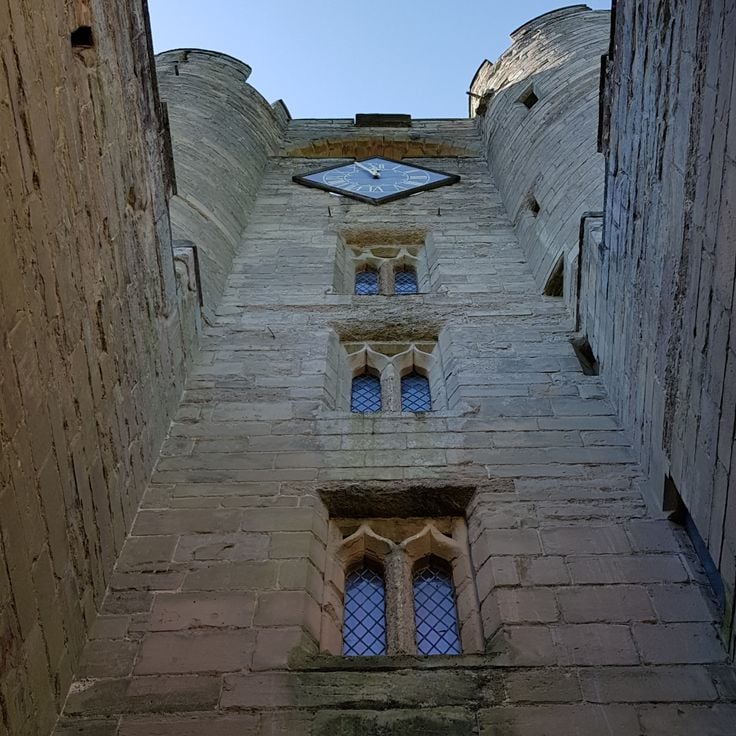
Warwick Castle was established in the 11th century as a Norman fortress and evolved over the centuries into a fortified residence that combined defensive structures with residential comfort. The complex includes several towers from different periods, notably Caesar's Tower and Guy's Tower from the 14th century, each rising more than 128 feet (39 meters). The walls and ramparts allow visitors to walk along the fortifications, while the great keep demonstrates the military function of the site. Inside, the State Rooms display the furnishings of an aristocratic residence from the 17th through 19th centuries. The castle occupies a rocky promontory above the River Avon and houses weapon collections that document English military history.
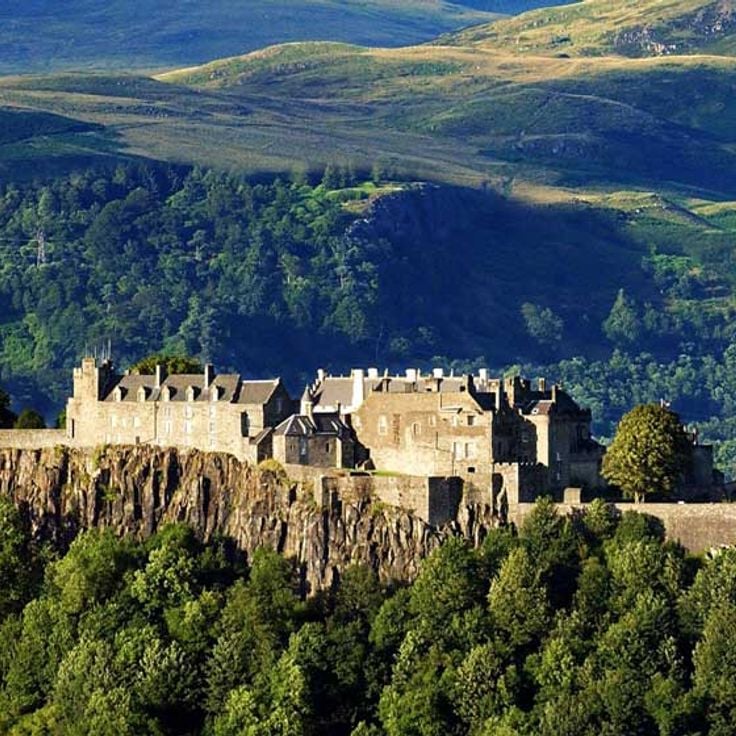
Stirling Castle sits atop a 250-foot (75-meter) volcanic crag and served as a royal residence from the 12th century onward, changing hands repeatedly during the Wars of Scottish Independence. The fortress commanded the strategic crossing of the River Forth and controlled access to the Highlands, making it central to conflicts between Scotland and England. The 16th-century Great Hall, palace wings and Chapel Royal show how military installations were combined with ceremonial living quarters. From the castle walls, views extend across the battlefields of Stirling Bridge and Bannockburn, where Robert the Bruce secured decisive victories.
The Alhambra demonstrates how Islamic rulers in the 13th century combined military and residential architecture on a hill above Granada, where defensive towers and fortifications protected palaces with courtyards, water features and geometric gardens that were partially modified after the Christian conquest in 1492.
This tenth century fortress stands on a hill rising 430 feet (130 meters) and secured the port of Málaga. The Castillo de Gibralfaro was built under Moorish rule and equipped with double walls and eight towers that controlled the strategic point above the city. The compound was connected to the Alcazaba at the base of the hill through a fortified passage, forming an integrated defense system. From the ramparts, the view extends across the Mediterranean and the coastal plain, illustrating the military importance of the location.
This fortress rises 1,300 feet (400 meters) above the Dead Sea on an isolated plateau where King Herod built a refuge between 37 and 31 BC. In 73 AD, Roman forces under Flavius Silva besieged Masada with a massive siege ramp that remains visible today. Archaeological excavations uncovered water collection systems, bathhouses and storage rooms that demonstrate how the stronghold maintained self-sufficiency in this remote desert location. The fortifications enclose roughly 17 acres (7 hectares) overlooking the Judean Desert.
The Suomenlinna sea fortress extends across six islands off Helsinki and demonstrates the Swedish fortification system of the 18th century in the Baltic. Built between 1748 and 1772, the complex was designed to control access to the Gulf of Finland and includes bastions, barracks, gun positions and a dry dock for warships. After Russian forces took control in 1808, the fortress was expanded and served military purposes until 1918, today housing museums, workshops and residential buildings. The fortifications and historic harbor basin document three centuries of Baltic defensive architecture.
This Crusader stronghold was built between 1142 and 1170 by the Knights Hospitaller, who expanded an existing Arab fortress into a base that could garrison 2,000 troops. The complex sits on a rocky spur 2,130 feet (650 meters) above sea level and controlled the gap between Homs and Tripoli, a strategic route linking the coast to the interior. The double ring of walls, concentric defensive corridors, storage chambers and cisterns demonstrate the military architecture developed by the Crusaders in the Levant. The Krak served the Hospitallers as a launching point for military campaigns and fell in 1271 to Sultan Baibars after a month-long siege by the Mamluks.
This complex was built from 1274 by the Teutonic Order and grew into the largest brick fortress in Europe. The structure spans roughly 344,000 square feet (144,000 square meters) and demonstrates the military power of the Order in medieval Prussia. The three-tier fortification comprises the High Castle, Middle Castle and Lower Castle, reinforced by massive towers, ramparts and a system of drawbridges. After the Battle of Grunwald in 1410, the castle changed hands several times and served Polish kings as a residence. Extensive restoration work in the 19th and 20th centuries rebuilt the Gothic structures that suffered heavy damage during World War II. The castle illustrates the defensive techniques and administrative organization of a religious military order in medieval Europe.
This fort was built in the 7th century and covers 700 acres (283 hectares) with multiple temples, palaces and water reservoirs. The fortress served for centuries as a military center and housed a protected city within its walls. The complex demonstrates how Indian rulers used strategic hilltop positions for defense while integrating supply facilities for extended sieges. Chittorgarh documents the evolution of fortress architecture in Rajasthan and ranks among the largest defensive installations on the Indian subcontinent.
Fasil Ghebbi comprises several 17th-century structures built within a walled compound in the Gondar region by Emperor Fasilides and his successors. The complex blends Ethiopian building practices with design influences from the Mughal Empire, the Arab world and Europe, visible in its domes, towers and courtyards. Inside the fortified perimeter stand the main palace alongside reception halls, libraries and religious structures. Serving as the Ethiopian imperial seat for over two centuries, Fasil Ghebbi documents the political importance of Gondar during this period and represents a chapter in the history of this military collection's African fortifications.
This pentagonal fortress shows the development of Dutch defensive architecture between the late 16th and 19th centuries, when the Groningen border region was contested between the Netherlands and Spanish territories. Fort Bourtange was built in 1593 on orders from William of Orange to control the only land route between Germany and the city of Groningen, then still under Spanish rule. The layout follows the bastioned system with five pointed bastions whose star-shaped geometry created fields of fire without blind spots. Earth ramparts, wide moats and forward ravelins formed a layered defense system that remained in military use until the 19th century. After decommissioning in 1851, the fortress became a village before being restored between 1960 and 1992 to its appearance around 1750, today illustrating how early modern bastioned fortresses operated.
Edinburgh Castle stands on an extinct volcanic outcrop 430 feet (130 meters) above the city and has served as a royal residence and military stronghold since the Middle Ages. The complex safeguards the Scottish Crown Jewels, the Stone of Scone on which Scottish monarchs were crowned for centuries, and St Margaret's Chapel from the early 12th century, the oldest surviving building in Edinburgh. The fortifications were strengthened repeatedly during numerous sieges between Scots and English, with the present batteries and casemates dating mainly from the 16th to 18th centuries. The castle walls enclose military history collections, former garrison buildings and the Great Hall where the Scottish Parliament met until 1639.
Český Krumlov Castle rises above the Vltava River and combines Gothic foundations from the 13th century with Renaissance arcades and Baroque halls across its 40 buildings. The three-story cloaked tower displays illusionistic painting that transforms flat facades into three-dimensional architecture. The complex encompasses five courtyards, a covered bridge spanning the gorge, and a Baroque castle garden with an 18th-century revolving theater stage. The ruling Rosenberg and Schwarzenberg families expanded this fortress gradually into a residence that now documents over 400 years of architectural development.
The fort at Kumbhalgarh rises along a ridge in the Aravalli Mountains of western Rajasthan and demonstrates the defensive strategies developed by Rajput rulers in the 15th century. Rana Kumbha commissioned the fortress around 1443, and its 22-mile (36-kilometer) perimeter wall forms the second longest continuous fortification after the Great Wall of China. Seven fortified gates control access through walls reaching up to 23 feet (7 meters) in thickness, while 360 temples within the complex underscore its religious significance. The Badal Mahal palace at the highest point served as the royal residence and provided views across the surrounding plains. This mountain fortress fell to siege only once in its history and documents the military engineering practiced during the Rajput era.
This coastal fortress was built in the 1530s under Henry VIII as a response to French threats and displays a circular design with six rounded bastions that exemplify the development of artillery fortifications in England. Deal Castle worked together with nearby Walmer and Sandown forts to guard the strategic strait between Dover and the continent, with its low profile and 119 gun ports reflecting Tudor military doctrine. The fortress withstood several sieges during the English Civil War in the 17th century and remained an active garrison through the 19th century. Today the site preserves its casemates, ammunition stores and gun positions, offering insight into coastal defense during the early modern period.
The fortress of Baba Vida from the tenth century rises along the Danube and demonstrates with its two concentric walls and four towers how medieval defensive structures operated on Bulgaria's river frontier. This fortification controlled the Danube passage for centuries and secured the northern approaches to the region. The towers enabled surveillance of the river and surrounding plains, while the double walls created multiple defensive lines. The fortress illustrates medieval Bulgarian military architecture and documents the strategic importance of the Danube border.
This 14th-century fortress complex in southern Hyōgo Prefecture unites 83 buildings behind white exterior walls and demonstrates how Japanese defensive architecture combined nested entrance gates, loopholes for bows and muskets, and multi-story watchtowers into a cohesive system. Himeji Castle originated under the warlord Akamatsu Norimura, was expanded in the 16th century by Toyotomi Hideyoshi and later by Ikeda Terumasa, and today preserves its original wooden structures including the five-story main keep that offered strategic sight lines across the Harima Plain.
Predjama Castle occupies a 123-foot (37-meter) limestone cliff in Inner Carniola, where 13th-century builders integrated defensive structures directly into the karst cave systems. The complex combines masonry quarters with natural caverns that provided storage, escape routes and water sources. The design demonstrates how geographic conditions shaped military architecture: attackers had to overcome not only walls but also inaccessible rock formations, while defenders used the extensive cave network for supply and retreat.
El Morro has guarded the entrance to Havana harbor since the late 16th century, showing how the Spanish crown secured its Caribbean holdings against pirates and enemy fleets. The fortress stands on a rocky headland along the northern coast and combines multiple defensive levels with thick stone walls that supported cannons. Inside the compound, barracks housed the garrison, while underground magazine rooms stored ammunition and supplies. A 19th-century lighthouse rises above the military structures and still serves navigation today. This fortress belongs to the system of colonial defenses that made Havana one of the best protected ports in the New World.
Fort Jefferson rises from an atoll in the Dry Tortugas, approximately 70 miles (110 kilometers) west of Key West in the Gulf of Mexico. Construction began in 1846 and continued until 1875, though the fort was never completed despite using roughly 16 million bricks. The hexagonal structure encloses a central parade ground, surrounded by three-story casemates designed to hold more than 400 artillery pieces. The massive fortification was intended to control shipping lanes between the Atlantic Ocean and the Gulf. During the Civil War, Fort Jefferson served as a military prison, notably housing Samuel Mudd, the physician who treated John Wilkes Booth. Today, the fort attracts visitors who arrive by seaplane or boat to explore the military architecture and snorkel in the surrounding coral waters.
This fortress from the 11th century rises on a 400-foot (120-meter) hill above Salzburg and ranks among the largest fully preserved medieval castles in Europe. Prince-Archbishop Gebhard von Helfenstein commissioned the structure in 1077 to secure his position during the Investiture Controversy, while later rulers systematically expanded the fortifications in the 15th and 16th centuries. The ring walls, towers and bastions demonstrate the evolution of military architecture from the High Middle Ages to the early modern period, when the castle served as the impregnable residence of Salzburg's prince-archbishops. Inside, the princely chambers, the Gothic castle chapel and the Reckturm Museum document its dual function as both defensive stronghold and princely residence.
Bran Castle rises from a rocky outcrop near the border between Transylvania and Wallachia. King Louis I of Hungary ordered the fortress built in 1377 to protect the trade route threatened by the Ottoman Empire. The structure secured passage between the two Romanian regions and served as a customs post for merchants. Four towers reinforce the walls, while narrow staircases and winding corridors inside provided defenders with strategic advantages. The courtyard sits on multiple levels connected by a hidden tunnel to a well at the base of the rock.
The fort of Mehrangarh rises 400 feet (125 meters) above Jodhpur and demonstrates through its 120-foot-thick (36-meter) walls and seven fortified gates the military architecture of the Rajput rulers who selected this rocky outcrop in the 15th century as a strategic point to control trade routes to Afghanistan and Central Asia.
This fortress was built by Sultan Mehmed II in spring 1452 in just four months to control the narrowest point of the Bosphorus and cut Constantinople's supply lines. Rumeli Hisarı rises on the European shore of the strait and formed, together with the older fortress of Anadolu Hisarı on the opposite bank, a strategic stranglehold on maritime traffic. The three massive towers and jagged walls followed the terrain and allowed Ottoman cannons to target any vessel attempting unauthorized passage. One year after completion, the fortress played a decisive role in the siege and conquest of Constantinople in May 1453. The structure demonstrates the military efficiency of Ottoman construction and stands today as witness to that historical turning point which marked the end of the Byzantine Empire.
Conwy Castle rises above the Welsh coast since 1283, displaying eight massive towers and a 4,265-foot (1.3-kilometer) curtain wall that demonstrate the military architecture of Edward I, who commissioned this fortress to secure English control over North Wales. The ramparts enclose a rectangular layout with two courtyards, residential quarters for the royal household and a separate garrison section. From the keep, defenders monitored the Conwy River and the approaches to the town, while the towers provided sightlines along the entire fortification.
This Norman fortress from the 12th century was converted into a manor residence and retains three corner towers from the original structure. Kilkenny Castle served for eight centuries as the seat of the Butler family and demonstrates in its architecture the evolution from a medieval defensive installation to a representative estate that underwent extensive renovation in the 19th century.
This fortress dates from the 16th century on the San Lázaro hill and demonstrates how Spanish military architects defended their Caribbean colonies. The structure connects several bastions through underground tunnels that allowed troops and supplies to move under protection, while the elevated position enabled artillery to control Cartagena's harbor. The complex was expanded multiple times during the colonial period to withstand attacks from English and French fleets, documenting the strategic importance of the city as a trade center for Spanish treasures from South America.
Matsumoto Castle combines the military requirements of the late Sengoku period with the architectural development of Japanese fortifications, displaying across its five stories the defensive installations built in the 16th century against firearms. The black exterior walls of this fortress in Nagano Prefecture extend over six internal levels, where loopholes and reinforced timber constructions were designed to provide protection against arquebus rounds. The complex documents how Japanese builders adapted traditional castle architecture to the challenges of the gunpowder age, while the original keep has survived to the present day.
This citadel built from mud brick dates to the sixth century and spreads across 1.9 million square feet (180,000 square meters) at the edge of the Iranian desert. Its fortifications once controlled trade routes along the Silk Road, where caravans moved between Persia and Central Asia. The walls, towers and interior structures demonstrate how military architecture adapted to extreme desert conditions, where mud served as the primary building material. The 2003 earthquake damaged large sections of the complex, but restoration work allows visitors today to understand the original defensive structures and their strategic importance to the region.
The Rocca Maggiore commands Assisi from its hilltop position and preserves its medieval fortification architecture with the polygonal tower, keep and connecting walls leading to different defensive levels. Emperor Frederick Barbarossa commissioned the first fortress in the 12th century, which Cardinal Albornoz expanded into a larger complex in 1365. The circular main tower provides views across the Spoleto Valley and the Umbrian plain. The castle served papal troops as a garrison controlling this strategic position at the edge of the Papal States. Defensive walls connect the main tower to the lower bastion.
Warwick Castle was established in the 11th century as a Norman fortress and evolved over the centuries into a fortified residence that combined defensive structures with residential comfort. The complex includes several towers from different periods, notably Caesar's Tower and Guy's Tower from the 14th century, each rising more than 128 feet (39 meters). The walls and ramparts allow visitors to walk along the fortifications, while the great keep demonstrates the military function of the site. Inside, the State Rooms display the furnishings of an aristocratic residence from the 17th through 19th centuries. The castle occupies a rocky promontory above the River Avon and houses weapon collections that document English military history.
Stirling Castle sits atop a 250-foot (75-meter) volcanic crag and served as a royal residence from the 12th century onward, changing hands repeatedly during the Wars of Scottish Independence. The fortress commanded the strategic crossing of the River Forth and controlled access to the Highlands, making it central to conflicts between Scotland and England. The 16th-century Great Hall, palace wings and Chapel Royal show how military installations were combined with ceremonial living quarters. From the castle walls, views extend across the battlefields of Stirling Bridge and Bannockburn, where Robert the Bruce secured decisive victories.
The Alhambra demonstrates how Islamic rulers in the 13th century combined military and residential architecture on a hill above Granada, where defensive towers and fortifications protected palaces with courtyards, water features and geometric gardens that were partially modified after the Christian conquest in 1492.
This tenth century fortress stands on a hill rising 430 feet (130 meters) and secured the port of Málaga. The Castillo de Gibralfaro was built under Moorish rule and equipped with double walls and eight towers that controlled the strategic point above the city. The compound was connected to the Alcazaba at the base of the hill through a fortified passage, forming an integrated defense system. From the ramparts, the view extends across the Mediterranean and the coastal plain, illustrating the military importance of the location.
This fortress rises 1,300 feet (400 meters) above the Dead Sea on an isolated plateau where King Herod built a refuge between 37 and 31 BC. In 73 AD, Roman forces under Flavius Silva besieged Masada with a massive siege ramp that remains visible today. Archaeological excavations uncovered water collection systems, bathhouses and storage rooms that demonstrate how the stronghold maintained self-sufficiency in this remote desert location. The fortifications enclose roughly 17 acres (7 hectares) overlooking the Judean Desert.
The Suomenlinna sea fortress extends across six islands off Helsinki and demonstrates the Swedish fortification system of the 18th century in the Baltic. Built between 1748 and 1772, the complex was designed to control access to the Gulf of Finland and includes bastions, barracks, gun positions and a dry dock for warships. After Russian forces took control in 1808, the fortress was expanded and served military purposes until 1918, today housing museums, workshops and residential buildings. The fortifications and historic harbor basin document three centuries of Baltic defensive architecture.
This Crusader stronghold was built between 1142 and 1170 by the Knights Hospitaller, who expanded an existing Arab fortress into a base that could garrison 2,000 troops. The complex sits on a rocky spur 2,130 feet (650 meters) above sea level and controlled the gap between Homs and Tripoli, a strategic route linking the coast to the interior. The double ring of walls, concentric defensive corridors, storage chambers and cisterns demonstrate the military architecture developed by the Crusaders in the Levant. The Krak served the Hospitallers as a launching point for military campaigns and fell in 1271 to Sultan Baibars after a month-long siege by the Mamluks.
This complex was built from 1274 by the Teutonic Order and grew into the largest brick fortress in Europe. The structure spans roughly 344,000 square feet (144,000 square meters) and demonstrates the military power of the Order in medieval Prussia. The three-tier fortification comprises the High Castle, Middle Castle and Lower Castle, reinforced by massive towers, ramparts and a system of drawbridges. After the Battle of Grunwald in 1410, the castle changed hands several times and served Polish kings as a residence. Extensive restoration work in the 19th and 20th centuries rebuilt the Gothic structures that suffered heavy damage during World War II. The castle illustrates the defensive techniques and administrative organization of a religious military order in medieval Europe.
This fort was built in the 7th century and covers 700 acres (283 hectares) with multiple temples, palaces and water reservoirs. The fortress served for centuries as a military center and housed a protected city within its walls. The complex demonstrates how Indian rulers used strategic hilltop positions for defense while integrating supply facilities for extended sieges. Chittorgarh documents the evolution of fortress architecture in Rajasthan and ranks among the largest defensive installations on the Indian subcontinent.
Fasil Ghebbi comprises several 17th-century structures built within a walled compound in the Gondar region by Emperor Fasilides and his successors. The complex blends Ethiopian building practices with design influences from the Mughal Empire, the Arab world and Europe, visible in its domes, towers and courtyards. Inside the fortified perimeter stand the main palace alongside reception halls, libraries and religious structures. Serving as the Ethiopian imperial seat for over two centuries, Fasil Ghebbi documents the political importance of Gondar during this period and represents a chapter in the history of this military collection's African fortifications.
This pentagonal fortress shows the development of Dutch defensive architecture between the late 16th and 19th centuries, when the Groningen border region was contested between the Netherlands and Spanish territories. Fort Bourtange was built in 1593 on orders from William of Orange to control the only land route between Germany and the city of Groningen, then still under Spanish rule. The layout follows the bastioned system with five pointed bastions whose star-shaped geometry created fields of fire without blind spots. Earth ramparts, wide moats and forward ravelins formed a layered defense system that remained in military use until the 19th century. After decommissioning in 1851, the fortress became a village before being restored between 1960 and 1992 to its appearance around 1750, today illustrating how early modern bastioned fortresses operated.
Edinburgh Castle stands on an extinct volcanic outcrop 430 feet (130 meters) above the city and has served as a royal residence and military stronghold since the Middle Ages. The complex safeguards the Scottish Crown Jewels, the Stone of Scone on which Scottish monarchs were crowned for centuries, and St Margaret's Chapel from the early 12th century, the oldest surviving building in Edinburgh. The fortifications were strengthened repeatedly during numerous sieges between Scots and English, with the present batteries and casemates dating mainly from the 16th to 18th centuries. The castle walls enclose military history collections, former garrison buildings and the Great Hall where the Scottish Parliament met until 1639.
Český Krumlov Castle rises above the Vltava River and combines Gothic foundations from the 13th century with Renaissance arcades and Baroque halls across its 40 buildings. The three-story cloaked tower displays illusionistic painting that transforms flat facades into three-dimensional architecture. The complex encompasses five courtyards, a covered bridge spanning the gorge, and a Baroque castle garden with an 18th-century revolving theater stage. The ruling Rosenberg and Schwarzenberg families expanded this fortress gradually into a residence that now documents over 400 years of architectural development.
The fort at Kumbhalgarh rises along a ridge in the Aravalli Mountains of western Rajasthan and demonstrates the defensive strategies developed by Rajput rulers in the 15th century. Rana Kumbha commissioned the fortress around 1443, and its 22-mile (36-kilometer) perimeter wall forms the second longest continuous fortification after the Great Wall of China. Seven fortified gates control access through walls reaching up to 23 feet (7 meters) in thickness, while 360 temples within the complex underscore its religious significance. The Badal Mahal palace at the highest point served as the royal residence and provided views across the surrounding plains. This mountain fortress fell to siege only once in its history and documents the military engineering practiced during the Rajput era.
This coastal fortress was built in the 1530s under Henry VIII as a response to French threats and displays a circular design with six rounded bastions that exemplify the development of artillery fortifications in England. Deal Castle worked together with nearby Walmer and Sandown forts to guard the strategic strait between Dover and the continent, with its low profile and 119 gun ports reflecting Tudor military doctrine. The fortress withstood several sieges during the English Civil War in the 17th century and remained an active garrison through the 19th century. Today the site preserves its casemates, ammunition stores and gun positions, offering insight into coastal defense during the early modern period.
The fortress of Baba Vida from the tenth century rises along the Danube and demonstrates with its two concentric walls and four towers how medieval defensive structures operated on Bulgaria's river frontier. This fortification controlled the Danube passage for centuries and secured the northern approaches to the region. The towers enabled surveillance of the river and surrounding plains, while the double walls created multiple defensive lines. The fortress illustrates medieval Bulgarian military architecture and documents the strategic importance of the Danube border.
This 14th-century fortress complex in southern Hyōgo Prefecture unites 83 buildings behind white exterior walls and demonstrates how Japanese defensive architecture combined nested entrance gates, loopholes for bows and muskets, and multi-story watchtowers into a cohesive system. Himeji Castle originated under the warlord Akamatsu Norimura, was expanded in the 16th century by Toyotomi Hideyoshi and later by Ikeda Terumasa, and today preserves its original wooden structures including the five-story main keep that offered strategic sight lines across the Harima Plain.
Predjama Castle occupies a 123-foot (37-meter) limestone cliff in Inner Carniola, where 13th-century builders integrated defensive structures directly into the karst cave systems. The complex combines masonry quarters with natural caverns that provided storage, escape routes and water sources. The design demonstrates how geographic conditions shaped military architecture: attackers had to overcome not only walls but also inaccessible rock formations, while defenders used the extensive cave network for supply and retreat.
El Morro has guarded the entrance to Havana harbor since the late 16th century, showing how the Spanish crown secured its Caribbean holdings against pirates and enemy fleets. The fortress stands on a rocky headland along the northern coast and combines multiple defensive levels with thick stone walls that supported cannons. Inside the compound, barracks housed the garrison, while underground magazine rooms stored ammunition and supplies. A 19th-century lighthouse rises above the military structures and still serves navigation today. This fortress belongs to the system of colonial defenses that made Havana one of the best protected ports in the New World.
Fort Jefferson rises from an atoll in the Dry Tortugas, approximately 70 miles (110 kilometers) west of Key West in the Gulf of Mexico. Construction began in 1846 and continued until 1875, though the fort was never completed despite using roughly 16 million bricks. The hexagonal structure encloses a central parade ground, surrounded by three-story casemates designed to hold more than 400 artillery pieces. The massive fortification was intended to control shipping lanes between the Atlantic Ocean and the Gulf. During the Civil War, Fort Jefferson served as a military prison, notably housing Samuel Mudd, the physician who treated John Wilkes Booth. Today, the fort attracts visitors who arrive by seaplane or boat to explore the military architecture and snorkel in the surrounding coral waters.
This fortress from the 11th century rises on a 400-foot (120-meter) hill above Salzburg and ranks among the largest fully preserved medieval castles in Europe. Prince-Archbishop Gebhard von Helfenstein commissioned the structure in 1077 to secure his position during the Investiture Controversy, while later rulers systematically expanded the fortifications in the 15th and 16th centuries. The ring walls, towers and bastions demonstrate the evolution of military architecture from the High Middle Ages to the early modern period, when the castle served as the impregnable residence of Salzburg's prince-archbishops. Inside, the princely chambers, the Gothic castle chapel and the Reckturm Museum document its dual function as both defensive stronghold and princely residence.
Bran Castle rises from a rocky outcrop near the border between Transylvania and Wallachia. King Louis I of Hungary ordered the fortress built in 1377 to protect the trade route threatened by the Ottoman Empire. The structure secured passage between the two Romanian regions and served as a customs post for merchants. Four towers reinforce the walls, while narrow staircases and winding corridors inside provided defenders with strategic advantages. The courtyard sits on multiple levels connected by a hidden tunnel to a well at the base of the rock.
The fort of Mehrangarh rises 400 feet (125 meters) above Jodhpur and demonstrates through its 120-foot-thick (36-meter) walls and seven fortified gates the military architecture of the Rajput rulers who selected this rocky outcrop in the 15th century as a strategic point to control trade routes to Afghanistan and Central Asia.
This fortress was built by Sultan Mehmed II in spring 1452 in just four months to control the narrowest point of the Bosphorus and cut Constantinople's supply lines. Rumeli Hisarı rises on the European shore of the strait and formed, together with the older fortress of Anadolu Hisarı on the opposite bank, a strategic stranglehold on maritime traffic. The three massive towers and jagged walls followed the terrain and allowed Ottoman cannons to target any vessel attempting unauthorized passage. One year after completion, the fortress played a decisive role in the siege and conquest of Constantinople in May 1453. The structure demonstrates the military efficiency of Ottoman construction and stands today as witness to that historical turning point which marked the end of the Byzantine Empire.
Conwy Castle rises above the Welsh coast since 1283, displaying eight massive towers and a 4,265-foot (1.3-kilometer) curtain wall that demonstrate the military architecture of Edward I, who commissioned this fortress to secure English control over North Wales. The ramparts enclose a rectangular layout with two courtyards, residential quarters for the royal household and a separate garrison section. From the keep, defenders monitored the Conwy River and the approaches to the town, while the towers provided sightlines along the entire fortification.
This Norman fortress from the 12th century was converted into a manor residence and retains three corner towers from the original structure. Kilkenny Castle served for eight centuries as the seat of the Butler family and demonstrates in its architecture the evolution from a medieval defensive installation to a representative estate that underwent extensive renovation in the 19th century.
This fortress dates from the 16th century on the San Lázaro hill and demonstrates how Spanish military architects defended their Caribbean colonies. The structure connects several bastions through underground tunnels that allowed troops and supplies to move under protection, while the elevated position enabled artillery to control Cartagena's harbor. The complex was expanded multiple times during the colonial period to withstand attacks from English and French fleets, documenting the strategic importance of the city as a trade center for Spanish treasures from South America.
Matsumoto Castle combines the military requirements of the late Sengoku period with the architectural development of Japanese fortifications, displaying across its five stories the defensive installations built in the 16th century against firearms. The black exterior walls of this fortress in Nagano Prefecture extend over six internal levels, where loopholes and reinforced timber constructions were designed to provide protection against arquebus rounds. The complex documents how Japanese builders adapted traditional castle architecture to the challenges of the gunpowder age, while the original keep has survived to the present day.
This citadel built from mud brick dates to the sixth century and spreads across 1.9 million square feet (180,000 square meters) at the edge of the Iranian desert. Its fortifications once controlled trade routes along the Silk Road, where caravans moved between Persia and Central Asia. The walls, towers and interior structures demonstrate how military architecture adapted to extreme desert conditions, where mud served as the primary building material. The 2003 earthquake damaged large sections of the complex, but restoration work allows visitors today to understand the original defensive structures and their strategic importance to the region.
The Rocca Maggiore commands Assisi from its hilltop position and preserves its medieval fortification architecture with the polygonal tower, keep and connecting walls leading to different defensive levels. Emperor Frederick Barbarossa commissioned the first fortress in the 12th century, which Cardinal Albornoz expanded into a larger complex in 1365. The circular main tower provides views across the Spoleto Valley and the Umbrian plain. The castle served papal troops as a garrison controlling this strategic position at the edge of the Papal States. Defensive walls connect the main tower to the lower bastion.
Warwick Castle was established in the 11th century as a Norman fortress and evolved over the centuries into a fortified residence that combined defensive structures with residential comfort. The complex includes several towers from different periods, notably Caesar's Tower and Guy's Tower from the 14th century, each rising more than 128 feet (39 meters). The walls and ramparts allow visitors to walk along the fortifications, while the great keep demonstrates the military function of the site. Inside, the State Rooms display the furnishings of an aristocratic residence from the 17th through 19th centuries. The castle occupies a rocky promontory above the River Avon and houses weapon collections that document English military history.
Stirling Castle sits atop a 250-foot (75-meter) volcanic crag and served as a royal residence from the 12th century onward, changing hands repeatedly during the Wars of Scottish Independence. The fortress commanded the strategic crossing of the River Forth and controlled access to the Highlands, making it central to conflicts between Scotland and England. The 16th-century Great Hall, palace wings and Chapel Royal show how military installations were combined with ceremonial living quarters. From the castle walls, views extend across the battlefields of Stirling Bridge and Bannockburn, where Robert the Bruce secured decisive victories.