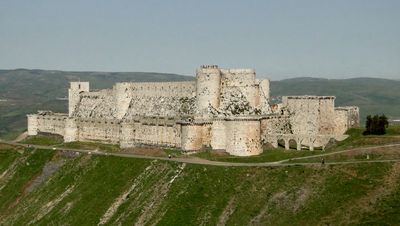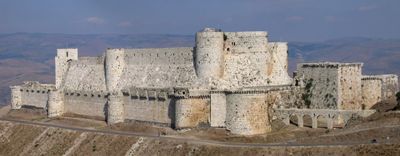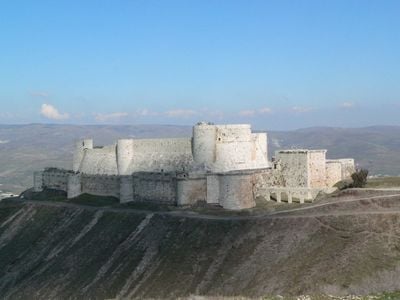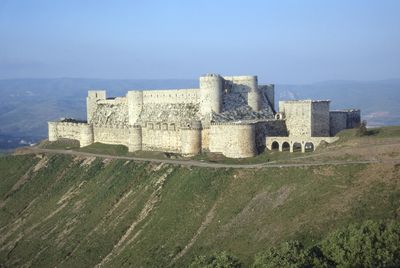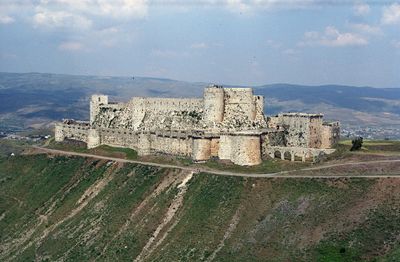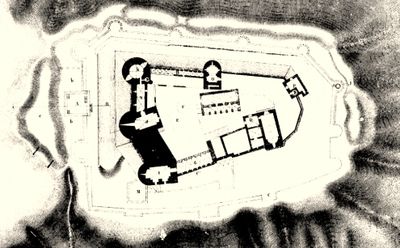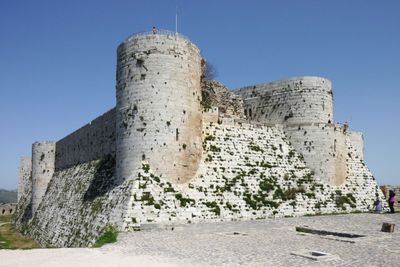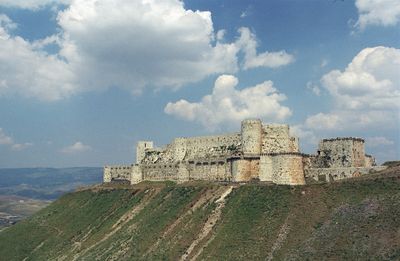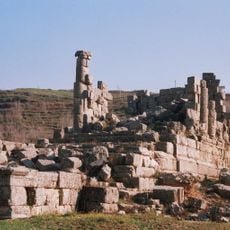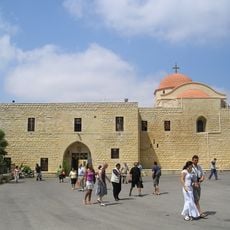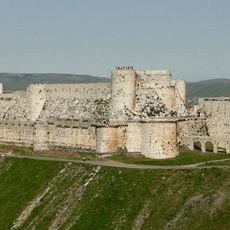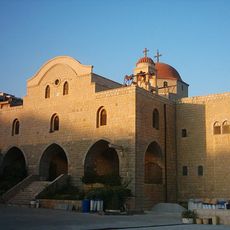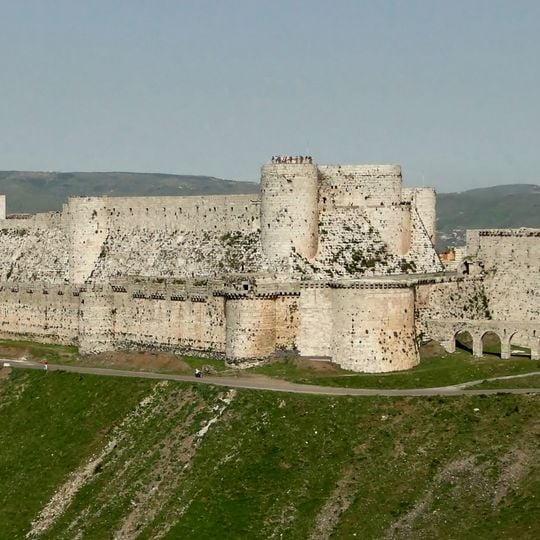
Krak des Chevaliers, Medieval fortress in Al-Husn, Syria
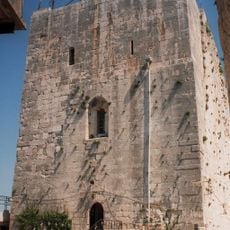
Krak des Chevaliers is a crusader castle in Al-Husn, Syria, built from local limestone across a hilltop with two concentric rings of defensive walls and multiple towers. The complex spreads over several levels with inner courtyards, chapels, halls, and underground storage chambers connected by vaulted passages.
Kurdish troops erected the fortress in 1031 as a local stronghold. The Knights Hospitaller took control in 1142 and expanded it into one of the most important defensive works of the Crusader States before Sultan Baibars captured it in 1271.
The castle structure combines Arab military elements with European medieval architectural features, including a chapel that was later transformed into a mosque.
Local guides offer tours through the inner rooms, defensive walkways, and vaulted cellars, with sturdy footwear recommended for the uneven stone paths and staircases. Opening hours remain limited and may vary depending on local conditions.
The garrison could accommodate up to 2,000 soldiers and contained storage vaults with enough food and equipment for five years. This capacity made the fortress nearly impervious to prolonged sieges.
Location: Al-Husn
Location: Syria
Inception: 1031
Made from material: limestone
Part of: Crac des Chevaliers and Qal’at Salah El-Din
GPS coordinates: 34.75694,36.29472
Latest update: December 4, 2025 19:02
This collection brings together fortified military structures that show how defensive architecture has evolved across different eras and continents. Malbork Castle in Poland spans 140,000 square meters of brick constructions erected by the Teutonic Knights in the 13th century, while the Alhambra in Granada combines palaces and city walls in a complex where medieval Islamic architecture meets military needs. The Krak des Chevaliers in Syria reflects the defensive ingenuity of the Crusaders, and Suomenlinna, a naval fortress spread over six islands near Helsinki, illustrates how the Swedes and later the Finns fortified their Baltic coastlines in the 18th century. The sites include mountain strongholds like Masada, where Herod built a refuge on an isolated plateau of the Judean Desert, and Chittorgarh Fort in India, covering 7 square kilometers (about 2.7 square miles) and housing a protected city. In Europe, Edinburgh Castle has occupied its volcanic rock since the Middle Ages, while Bourtange in the Netherlands features the geometric bastion layout typical of 16th-century fortifications. Each fortress retains the elements that ensured its defense: walls, moats, watchtowers, and cisterns. These structures tell stories of sieges, conquests, and conflicts that shaped their regions and remain today prominent witnesses to world military history.
Castles and palaces from different periods and regions reveal how architecture adapted to military needs, royal ambitions, or religious purposes. Some were built as fortresses, others served as residences or symbols of power. Construction styles range from medieval defenses to grand estates of later centuries. Each structure carries the mark of its time and its builders. This collection includes places such as Neuschwanstein in Bavaria, Edinburgh Castle in Scotland, and the Alhambra in Granada. It also features Himeji Castle in Japan, the Potala Palace in Lhasa, and Prague Castle. Some sites stand on cliffs or in mountains, others lie in river valleys or near towns. Visiting them shows how defense, living space, and display came together in one building.
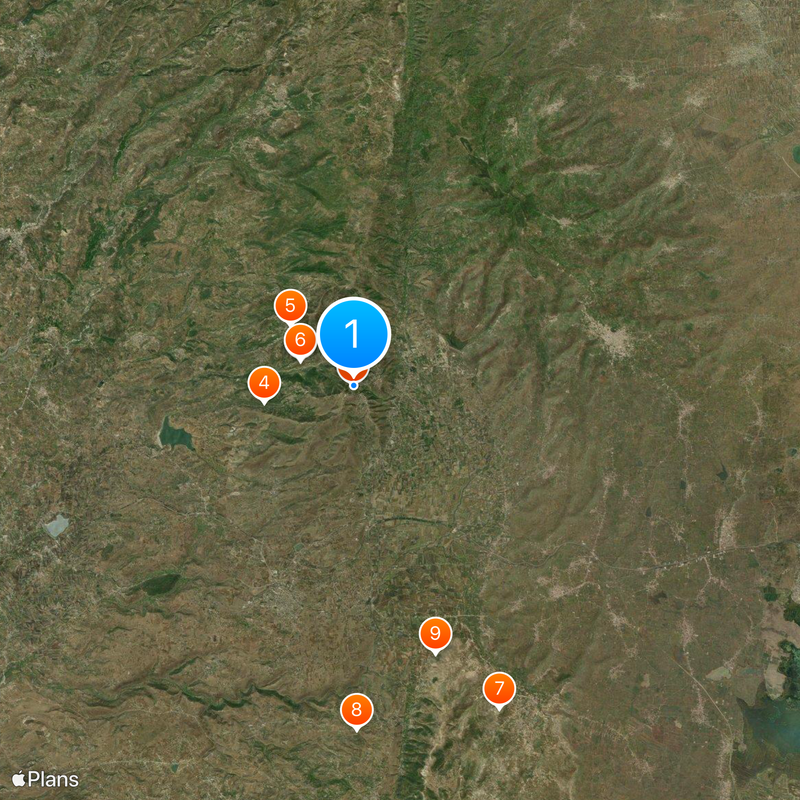
Masyaf Castle
34.7 km
Khalid ibn al-Walid Mosque
38.6 km
Chastel Blanc
17.7 km
Church of Saint Elian
39.4 km
Al-Kahf Castle
37.1 km
Lake Homs
28.4 km
Lake Homs Dam
31.4 km
Hosn Suleiman
19.9 km
Homs Municipal Stadium
37 km
Tell Kazel
28.8 km
Citadel of Homs
38.6 km
Gates of Homs
38.6 km
Chastel Rouge
30.3 km
Ba'rin
24.2 km
Saint George's Monastery
2.7 km
Areima Castle
23.1 km
Great Mosque of al-Nuri
38.5 km
Tell Arqa
33.9 km
Necropolis of Emesa
37 km
Melkite Catholic Archeparchy of Homs
38.7 km
Al-Sheikh Deeb Castle
21.5 km
Zahrawi Palace
39.1 km
Forty Martyrs Cathedral, Homs
39.1 km
Syrian Catholic Archeparchy of Homs
38.7 km
Homs Cathedral of the Holy Spirit
38.8 km
Berzine
4.2 km
Cathedral of Our Lady of Peace
38.9 km
Crac des Chevaliers and Qal’at Salah El-Din
4 kmReviews
Visited this place? Tap the stars to rate it and share your experience / photos with the community! Try now! You can cancel it anytime.
Discover hidden gems everywhere you go!
From secret cafés to breathtaking viewpoints, skip the crowded tourist spots and find places that match your style. Our app makes it easy with voice search, smart filtering, route optimization, and insider tips from travelers worldwide. Download now for the complete mobile experience.
A unique approach to discovering new places❞
— Le Figaro
All the places worth exploring❞
— France Info
A tailor-made excursion in just a few clicks❞
— 20 Minutes