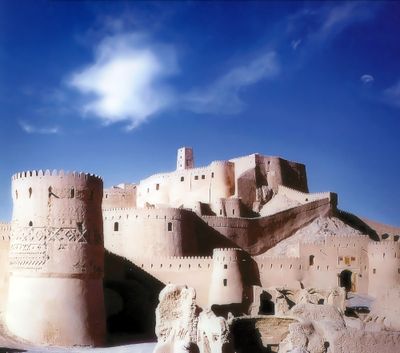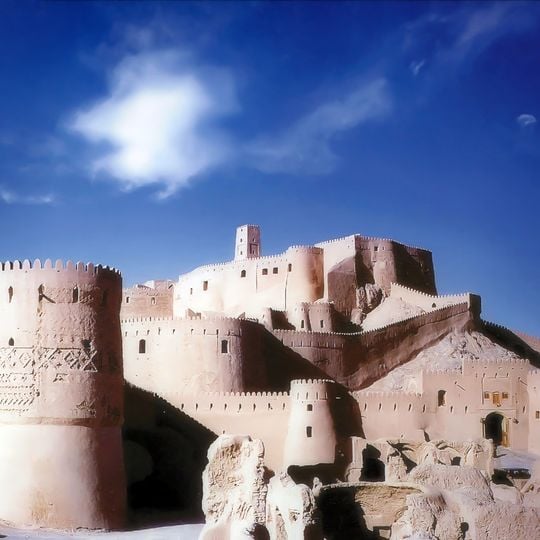
Bam Citadel, Ancient adobe citadel in Kerman Province, Iran.
The fortified complex spans 1,815 meters with thick defensive walls, watchtowers, residential quarters, and multiple entrance gates across its perimeter.
Dating back to 500 BCE, this fortress developed into a major center along the Silk Road between the seventh and eleventh centuries.
The citadel structure represents traditional Persian architectural methods, built entirely from adobe bricks that suited the regional climate conditions.
Local guides lead tours through the archaeological site daily, offering detailed explanations of the ancient military, residential, and commercial sections.
The citadel underwent extensive restoration following the 2003 earthquake, incorporating original construction techniques to maintain its architectural authenticity.
Location: Kerman Province
Inception: 5 century BCE
Length: 1,815 m
Made from material: adobe
GPS coordinates: 29.11686,58.36847
Latest update: May 17, 2025 10:34
This collection brings together fortified military structures that show how defensive architecture has evolved across different eras and continents. Malbork Castle in Poland spans 140,000 square meters of brick constructions erected by the Teutonic Knights in the 13th century, while the Alhambra in Granada combines palaces and city walls in a complex where medieval Islamic architecture meets military needs. The Krak des Chevaliers in Syria reflects the defensive ingenuity of the Crusaders, and Suomenlinna, a naval fortress spread over six islands near Helsinki, illustrates how the Swedes and later the Finns fortified their Baltic coastlines in the 18th century. The sites include mountain strongholds like Masada, where Herod built a refuge on an isolated plateau of the Judean Desert, and Chittorgarh Fort in India, covering 7 square kilometers (about 2.7 square miles) and housing a protected city. In Europe, Edinburgh Castle has occupied its volcanic rock since the Middle Ages, while Bourtange in the Netherlands features the geometric bastion layout typical of 16th-century fortifications. Each fortress retains the elements that ensured its defense: walls, moats, watchtowers, and cisterns. These structures tell stories of sieges, conquests, and conflicts that shaped their regions and remain today prominent witnesses to world military history.
Dasht-e Lut
153.1 km
Shazdeh Garden
145.8 km
Rayen Citadel
104.7 km
Shah Nematollah Vali Shrine
148 km
Tepe Yahya
170.7 km
Konar Sandal
92.7 km
Gonbad-e Jabaliyeh
178.2 km
Jameh Mosque of Kerman
180.4 km
Kerman Fire Temple
180.4 km
Malek Mosque
180.2 km
Dokhtar Castle (Kerman)
179.6 km
Jiroft Dam
92.4 km
Remuk Castle
162.2 km
Imamzadeh Zeid
158.6 km
Keshit Castle
84.8 km
Ganjali Khan Castle
167.6 km
Shafiabad Castle
169 km
Mushtaqieh Dome
180.2 km
Ziaratgah Castle
168.5 km
Jameh Mosque of Negar
173.5 km
Vakil Mosque (Kerman)
180.5 km
Kuzeh Garan Caravanserai
180.5 km
Baft Dam
169.6 km
Zarisf Icehouse
179.5 km
Vakil Complex
180.5 km
Haj Mohammad Taqi Ab Anbar
158 km
Shahdad Watermill
158 km
Ju Moayedi Icehouse
179.7 kmReviews
Visited this place? Tap the stars to rate it and share your experience / photos with the community! Try now! You can cancel it anytime.
Discover hidden gems everywhere you go!
From secret cafés to breathtaking viewpoints, skip the crowded tourist spots and find places that match your style. Our app makes it easy with voice search, smart filtering, route optimization, and insider tips from travelers worldwide. Download now for the complete mobile experience.
A unique approach to discovering new places❞
— Le Figaro
All the places worth exploring❞
— France Info
A tailor-made excursion in just a few clicks❞
— 20 Minutes