Eisriesenwelt, Natural ice cave in Werfen, Austria
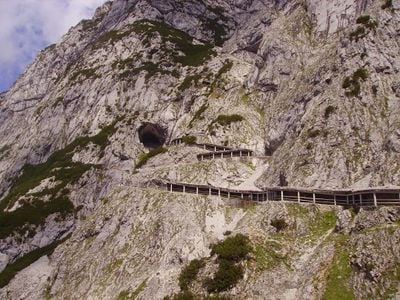
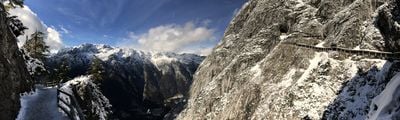
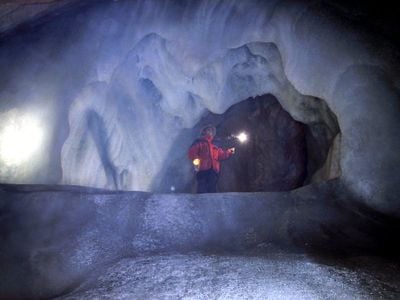
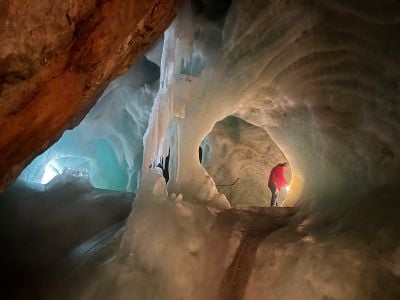
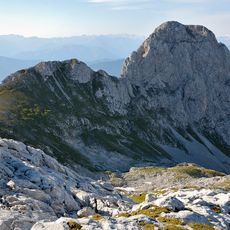
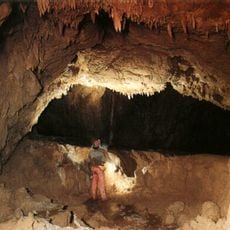
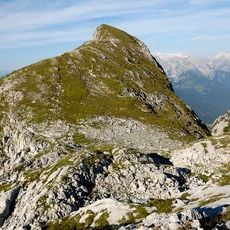
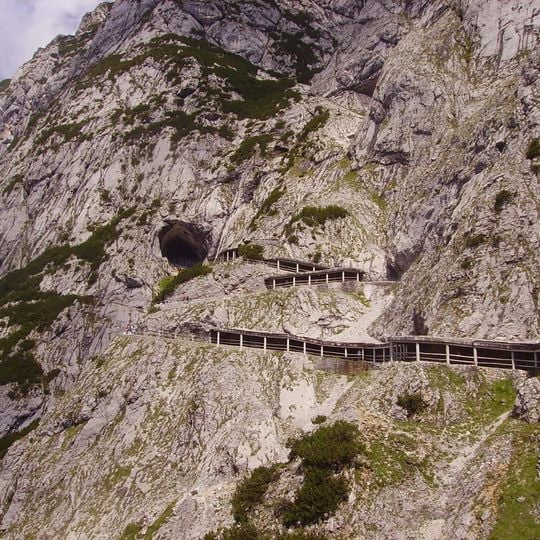
The cave system extends 42 kilometers into the Tennengebirge massif and displays ice formations created by penetrating meltwater and winter cold air currents. Ice stalactites and stalagmites reach from floor to ceiling in multiple underground chambers. Limestone walls surround frozen waterfalls and ice columns, while natural passages branch in various directions through the mountain.
Anton Posselt, a high school teacher from Salzburg, systematically entered the cave in 1879 and documented his findings. Alexander von Mörk organized several expeditions between 1912 and 1913 that conducted cartographic work and expanded accessible areas. A cable car was installed in 1955 to facilitate visitor access after earlier tourists had to navigate a steep mountain trail.
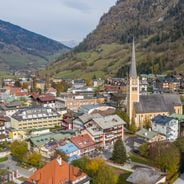
Generations of Upper Austrians regarded the cave as an unexplained natural phenomenon before scientific expeditions in the early 20th century began documenting ice formation processes. Local mountain guides developed techniques for safe visits and established standards now used worldwide for ice cave tours. Development transformed Werfen from an agricultural village into an internationally recognized base for speleological research and alpine tourism.
Guided tours last 75 minutes and require warm clothing plus sturdy footwear, as interior temperatures remain constant at 32 degrees Fahrenheit (zero degrees Celsius). A cable car transports visitors from the valley to the cave entry point, followed by a 20-minute walk. Tours operate from May through October, with reservations recommended during summer months. Mobility is required for approximately 1,400 steps during the circuit.
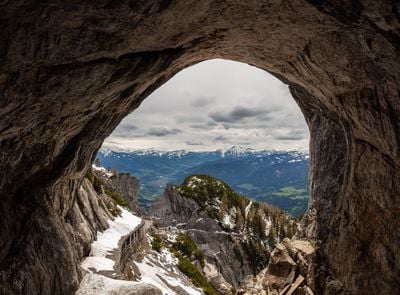
The entrance portal measures 66 feet wide and 59 feet high (20 meters by 18 meters), creating natural wind currents that contribute to year-round ice formation. Scientists have determined that winter cold air circulates inside the cave and forms ice crystals when snow melts during spring. This air movement prevents summer melting in deeper chambers.
Location: Werfen
Elevation above the sea: 1,646 m
Address: Eishöhlenstraße 30, 5450 Werfen, Austria
Phone: +4364685248
Website: http://eisriesenwelt.at
GPS coordinates: 47.50278,13.18972
Latest update: December 2, 2025 09:34
Caves form through gradual geological processes that can span millions of years. Water dissolves limestone and creates underground chambers filled with stalactites and stalagmites, while ice caves in alpine regions maintain their frozen formations even during summer months. Each cave system tells a distinct story about the forces that shaped it, from chemical erosion to tectonic shifts that exposed new rock layers to underground rivers. This collection includes some of the most geologically significant caves on Earth. Carlsbad Caverns in New Mexico encompasses more than 30 miles (48 kilometers) of passages filled with mineral formations, while Mammoth Cave in Kentucky extends over 400 miles (650 kilometers) through limestone bedrock. Eisriesenwelt in Austria stretches 26 miles (42 kilometers) and contains ice structures that reform each winter. Reed Flute Cave in Guilin showcases limestone formations that began developing 180 million years ago. Waitomo Caves in New Zealand are home to thousands of glowworms that light the darkness with bioluminescence. Puerto Princesa in the Philippines features an underground river that flows 5 miles (8 kilometers) before reaching the sea. Several caves also preserve human history, including Lascaux in France with its 17,000-year-old paintings. These formations demonstrate how water, ice, and time create underground worlds that reveal both geological and cultural history.
Austria extends well beyond Vienna and Salzburg. Away from major tourist routes lie natural monuments and historical sites that reveal the country's geological and cultural heritage. From the Eisriesenwelt ice caves near Werfen to medieval castles such as Hochosterwitz in Carinthia, this collection documents the diversity of Austrian regions. The selection includes alpine lakes like Plansee near Reutte and Altausseer See, historical railways in the Waldviertel, gorges such as Garnitzen Klamm, and mountain roads like the Grossglockner High Alpine Road. Libraries such as the one at Admont Abbey, waterfalls at Krimml and Gastein, and memorial sites like Mauthausen are among the documented locations. These destinations reveal Austria's geographical range and make a visit worthwhile.
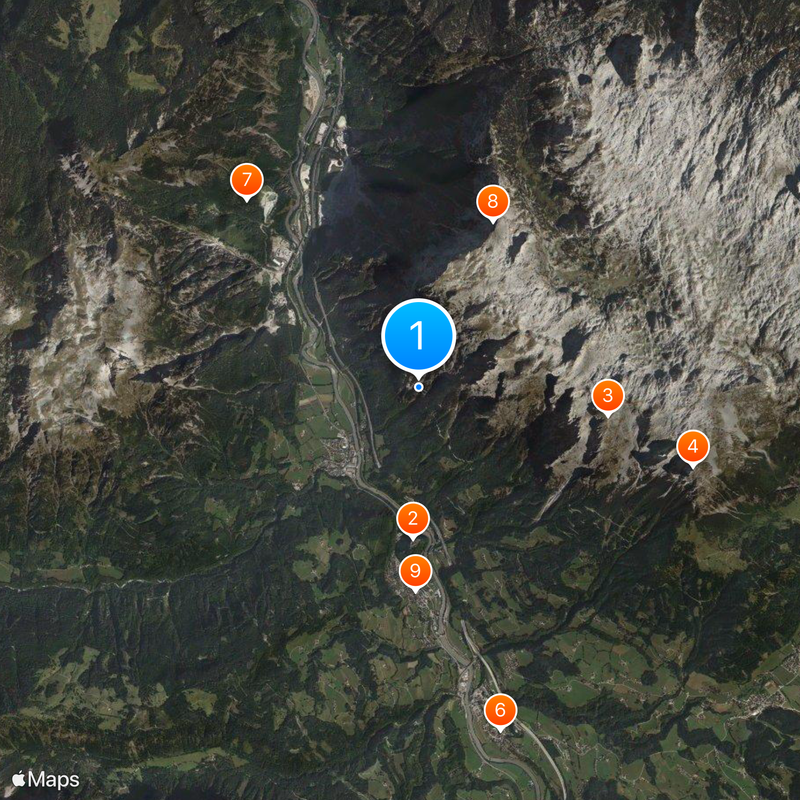
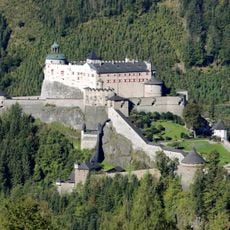
Hohenwerfen Castle
2.2 km
Raucheck
2.8 km
Werfener Hochthron
4.2 km
Dr.-Friedrich-Oedl-Haus
580 m
Pfarrkirche hl. Cyriak Pfarrwerfen
5.2 km
Scheukofen
3.7 km
Tiroler Kogel
2.7 km
Pfarrkirche hl. Jakobus in Werfen
3 km
Brennhof in Werfen
2.9 km
Burgahnl
2.3 km
Filialkirche Tenneck
1.8 km
Kapuzinerkloster u Kirche Werfen
2.9 km
Ariadnahöhle
3.3 km
Samerhof
4.3 km
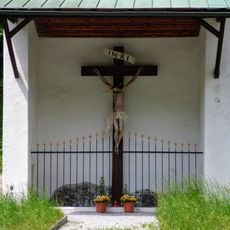
Kruzifix Pestkapelle Werfen
2.2 km
Großes Fieberhorn
3.7 km
Gericht, Bezirksgericht, ehem. Pfleggericht
2.8 km
Gerspointgut Blühenbach
2.8 km
Maxlehen-Hof in Sulzau
5.2 km
Kriegerdenkmal, Pfarrwerfen
5.1 km
Esse, Schlögl – bzw. Wimmerschmiede
4.5 km
Gemeindehaus Markt 20 in Werfen
2.8 km
Pfarrhof Werfen
3 km
Seniorenheim Werfen
3.1 km
Lichtsäule
2.6 km
Kasten des Pfarrhofs Pfarrwerfen
5.1 km
Gasthaus Stegenwald
5 km
Pfarrhof Pfarrwerfen
5.1 kmReviews
Visited this place? Tap the stars to rate it and share your experience / photos with the community! Try now! You can cancel it anytime.
Discover hidden gems everywhere you go!
From secret cafés to breathtaking viewpoints, skip the crowded tourist spots and find places that match your style. Our app makes it easy with voice search, smart filtering, route optimization, and insider tips from travelers worldwide. Download now for the complete mobile experience.
A unique approach to discovering new places❞
— Le Figaro
All the places worth exploring❞
— France Info
A tailor-made excursion in just a few clicks❞
— 20 Minutes