Bosruck, Mountain peak in Ennstal Alps, Austria
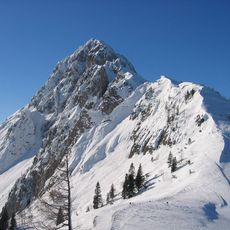
Bosruck is a mountain summit in the Ennstal Alps that straddles the border between Upper Austria and Styria. The peak sits at 1,992 meters (6,535 feet) and forms a natural divide in this section of the range.
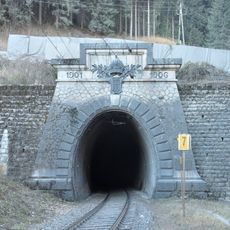
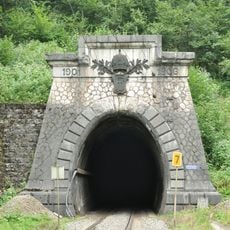
The Bosruck is pierced by two tunnels: a 4.8 km railway tunnel on the Pyhrnbahn, built between 1901 and 1904, and a 5.5 km motorway tunnel on the A9, built between 1980 and 1983. Anhydrite and gypsum layers in the rock caused repeated water inrushes and pressure during the railway tunnel's construction. In the late 1980s the mountain was considered as a nuclear waste repository; protests, including a human chain of 7,000 people over the Arlingsattel in October 1991, ended the plan in February 1992.
The name Bosruck comes from "Bocksrücken" (buck's back), referring to the mountain's long, stretched ridge; another reading is "böser Rücken" (bad back), a nod to its steep, partly exposed crests. The east approach from the Arlingsattel follows the Wildfrauensteig, a secured climbing route of difficulty A/B that passes the Wildfrauenhöhle cave.
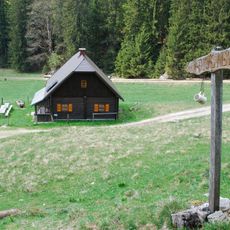
The climb begins from Ardning Alm hut, situated at 1,037 meters (3,402 feet), which serves as a main starting point. The route demands solid climbing skills and experience on steep terrain, so visitors should assess their abilities before attempting it.
From the summit, you can see across two major protected natural areas: the Dachstein World Heritage region and Gesäuse National Park. This sweeping view reveals how the mountain sits between two specially protected landscapes.
The community of curious travelers
AroundUs brings together thousands of curated places, local tips, and hidden gems, enriched daily by 92,984 contributors worldwide.