Falkensteinkirche, Protected pilgrimage church in Sankt Gilgen, Austria
Falkensteinkirche is a Roman Catholic pilgrimage church built against the Falkensteinwand, the rock face dropping into Lake Wolfgangsee. It consists of a substructure topped by a hall with a cross-ridge vault, a narrower triumphal arch and a choir with a semicircular apse; a stair wing leads up to a rock niche. The side wall opens onto the cliff in tall round-arched arcades, and the red marble floor bears the date 1692 at the choir step.
A Wolfgang chapel on the Falkenstein was first recorded in 1350. In 1626 Johann Wilhelm Lueger, the Salzburg pfleger of Hüttenstein, had the present church built around a cave in the rock wall with a Schliefstein squeeze-through opening. In the 16th century the Falkenstein was one of Europe's most visited pilgrimage sites, with some 300,000 pilgrims in peak years. The church was renewed around 1692 and restored in 1923, 1937 and 1958.
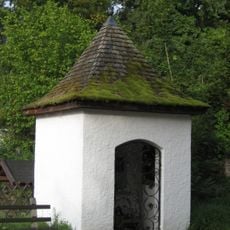
Pilgrims once passed through a narrow opening in the rock, the Schliefstein, silently and without looking back; pregnant women hoped for an easier birth. The Brunnkapelle on the ascent marks a spring attributed to Saint Wolfgang, whose water was sent out in thousands of bottles a year and drunk by women against infertility.
The church sits on the St. Rupert Pilgrim Route between Sankt Gilgen and Sankt Wolfgang and is accessible on foot. Visitors should expect steep paths and wear sturdy shoes, especially if exploring the natural areas around the site.
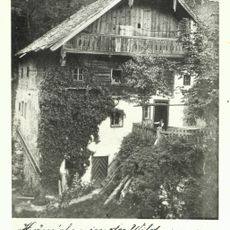
From 1659 to 1811, hermits lived at this location in a skete, a form of monastic retreat in nature. This religious practice has become rare today, and traces of that era remain visible in the rock areas below the church.
The community of curious travelers
AroundUs brings together thousands of curated places, local tips, and hidden gems, enriched daily by 93,610 contributors worldwide.