Weiherburg, Gothic castle in Hötting district, Innsbruck, Austria.
Weiherburg is a late Gothic Ansitz in the Hötting district of Innsbruck, directly beside the Alpenzoo. The castle consists of a main building with the fresco-decorated Langenmantel-Saal added in 1560 and the St. Anna castle chapel, consecrated between 1481 and 1513. The city of Innsbruck restored the complex in 1976–1978; it now serves as a representation building for cultural and social events and houses a restaurant.
Christian Tänzl, enriched by silver mining in Schwaz, built the castle around 1460. Around 1480 he sold it to Sigismund the Rich in Coin, Archduke of Austria and ruler of Tyrol. After Sigismund's abdication in 1490, the estate passed to King Maximilian I, who in 1493 raised it to a noble seat and gave it the name Weiherburg.
The St. Anna Chapel inside houses frescoes painted in 1798 showing the Virgin Mary flanked by Saint Anne and Saint Christopher. These religious images reveal how locals and residents used this space for prayer and devotion.
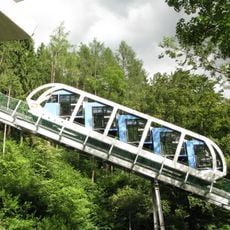
The Weiherburg stands directly beside the Alpenzoo in Hötting, so the two can be combined in one outing; the Alpenzoo is reached by the Hungerburgbahn funicular or bus lines from central Innsbruck. The building itself serves as a restaurant and event venue, so access to the historic rooms depends on whether an event is being held.
The Weiherburg name refers to a fish pond that survived until 1911, when the city of Innsbruck took over the Ansitz. The St. Anna chapel was consecrated between 1481 and 1513 under Brixen auxiliary bishop Conrad Reichard, and its altarpiece shows Mary between Saint Anne and Saint Christopher.
The community of curious travelers
AroundUs brings together thousands of curated places, local tips, and hidden gems, enriched daily by 92,759 contributors worldwide.