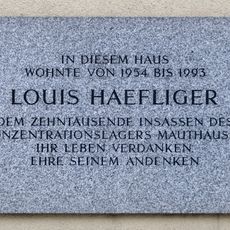
Fuchsenfeldhof, Municipal residential complex in Meidling, Vienna, Austria.
The Fuchsenfeldhof is a residential complex in Meidling containing 481 apartments distributed across four connected courtyards. Arches link these spaces together and provide multiple access points from the surrounding streets.
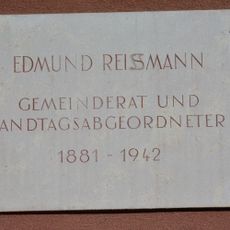
Planned from before World War I, the Fuchsenfeldhof was built in 1921–24 to designs by Heinrich Schmid and Hermann Aichinger. It was the first Vienna municipal housing block financed by the housing tax. After the first phase, the architects continued across Längenfeldgasse; that section became the separate Reismannhof in 1949.
The name comes not from the fountain but from Michael Fuchs, a migrant from the Palatinate who opened the tavern Zum Fuchsen in Vienna in 1852; the surrounding meadows were called Fuchsenfeld. In one courtyard stands a fountain with a fox head, and near the former kindergarten two sculptures show children making music.
Access is available from Längenfeldgasse 68 and from Karl-Löwe-Gasse, Aßmayergasse, and Murlingengasse, creating multiple pathways through the complex. Visitors can freely explore the courtyards and open areas without special equipment or preparation.
In February 1934 both parts of the complex, the Fuchsenfeldhof and the neighbouring Reismannhof, held centres of resistance by the Republican Schutzbund against the Austrofascist state. The fighting of that month is the event that ties the two otherwise separate building complexes together.
The community of curious travelers
AroundUs brings together thousands of curated places, local tips, and hidden gems, enriched daily by 92,841 contributors worldwide.