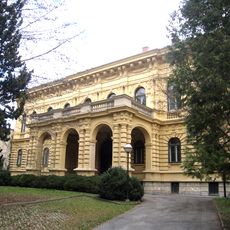
Stadtpark Graz, Public park in central Graz, Austria
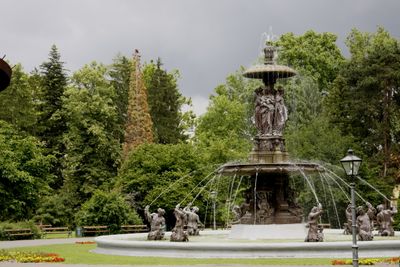
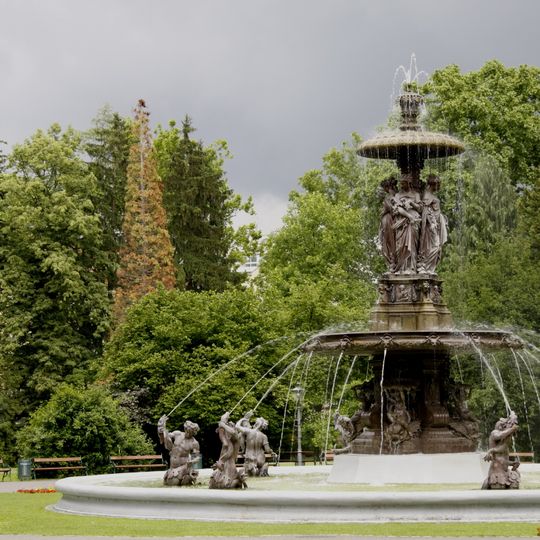
Stadtpark Graz is a 12.6-hectare park laid out from 1869 on the former Glacis outside the city walls, mainly to plans by painter Ernst Matthèy-Guenet as an English-style landscape garden. It holds 1,989 trees, double avenues on former ramparts, 600 cast-iron benches and a central fountain in a rotunda.
In 1868 Graz swapped land with the military: the city took over the disused Glacis, while the army received the Feliferhof as a shooting range. The park was laid out from 1869 under mayor Moritz Ritter von Franck and largely completed by 1872 to plans by painter Ernst Matthèy-Guenet. An imperial law of 22 November 1868 required a public park on the roughly 12.6-hectare site.
The park became an open-air gallery of Styrian cultural history in the 20th century, with busts of Robert Hamerling, Robert Stolz, Peter Rosegger and Johannes Kepler set among the trees. An oak honours Moritz von Franck, the mayor who founded the park and long chaired the beautification society.
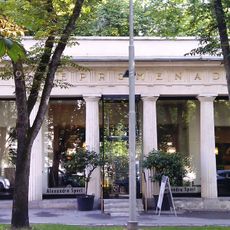
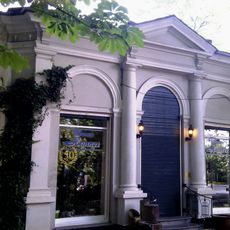
The area is freely accessible during daylight hours and offers plenty of seating for resting. Several small establishments within the park provide food and drinks without needing to leave the grounds.
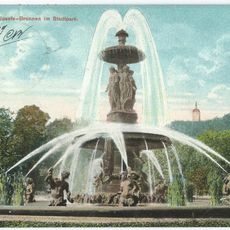
The Stadtparkbrunnen was shown at the 1873 Vienna World's Fair and won an honorary diploma for artistic casting. Vienna declined to buy it, so Graz acquired the fountain for 30,000 gulden in 1874. Its eight hollow bronze figures each weigh about 1,000 kg, and the canopy alone weighs three tonnes.
The community of curious travelers
AroundUs brings together thousands of curated places, local tips, and hidden gems, enriched daily by 94,460 contributors worldwide.