Schloss Vöslau, Protected castle in Bad Vöslau, Austria.
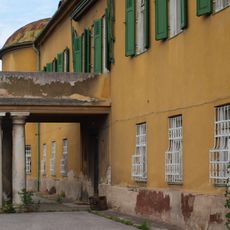
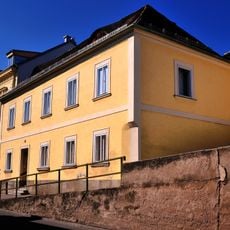
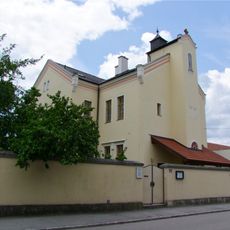
Schloss Vöslau is a former water castle in Bad Vöslau, now housing the town hall. Two projecting wings frame a small entrance courtyard, and a moat runs in front of the main facade. At the rear stands a two-storey polygonal extension on the site of the castle chapel, now a meeting hall; some interiors keep their 18th-century wall decoration.
The castle began as a water fortress in the 12th century and underwent major baroque transformations between 1740 and 1753 under August von Wöber's leadership. These changes shaped the building we see today.
The castle gardens display stone vases by sculptor Franz Anton Zauner that represent the continents known at that time. These works remain a defining feature of the grounds and invite visitors to stroll through.
The castle is publicly accessible today since it serves as the town's administrative center. Visitors should check in advance about tours outside official events, as regular municipal meetings take place here.
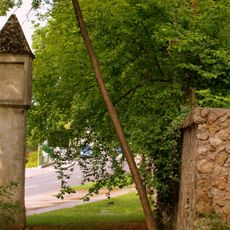
The artificial mountains and grottos in the park were created by Johann Ferdinand Hetzendorf von Hohenberg, the architect who also added the castle's staircase, festival hall and vestibule for Count Johann von Fries. The garden gate is flanked by putti groups and four stone vases carved in 1783–1784 by Franz Anton von Zauner, depicting Asia, Africa, America and Europe; they came from the Palais Pallavicini in Vienna.
The community of curious travelers
AroundUs brings together thousands of curated places, local tips, and hidden gems, enriched daily by 93,026 contributors worldwide.