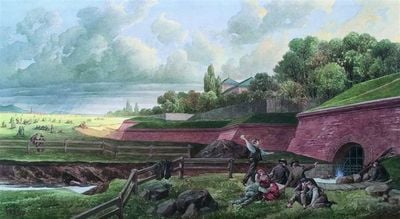
Linienwall, 1704 fortification system in Vienna, Austria.
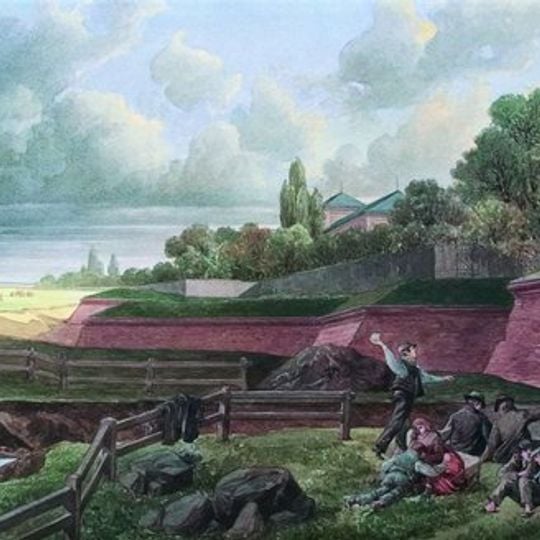
The Linienwall was a zigzagging earth rampart four metres high and four metres wide, fronted by a three-metre-deep ditch and reinforced with palisades; in 1738 the earthwork was faced with bricks. It ran 13.5 km from the Danube Canal at Sankt Marx to Lichtental, with nine gates on the main roads, each with a drawbridge and a toll house. Only sparse wall remnants and one chapel survive.
Emperor Leopold I ordered the Linienwall built in 1704 against Turkish and Kuruc attacks, as part of a defensive line along the Leitha, March and Danube. The four-metre-high earthen rampart with palisades and a three-metre ditch was finished in four months by Viennese residents aged 18 to 60. It soon lost military value; from 1829 it served mainly as a customs and toll boundary until it was razed from March 1894.
Between 1740 and 1760, eighteen chapels dedicated to John of Nepomuk were built at the gates, where travellers and toll officials could attend mass at the tax boundary. Viennese called them "Hansl am Weg". Only the Hundsturmer Kapelle in Margareten, at Schönbrunner Straße 124, survives in its original position and state.
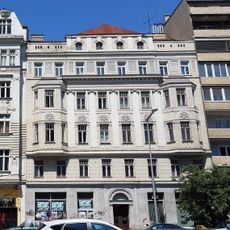
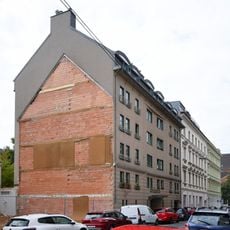
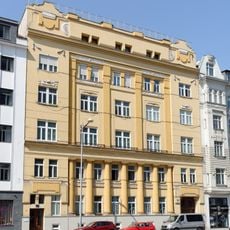
Remnants survive in the 3rd district along the S-Bahn tracks between Rennweg and the former Südbahnhof, near the old cattle market in Sankt Marx, and in the yard of Weyringergasse 13 in the 4th district. The Hundsturmer Kapelle at Schönbrunner Straße 124 in Margareten stands in its original position.
Eighteen chapels dedicated to John of Nepomuk were built at the city gates between the 1740s and 1760s, providing a place of prayer for those passing through. These small religious buildings transformed a military structure into a spiritual landmark for everyday travelers.
The community of curious travelers
AroundUs brings together thousands of curated places, local tips, and hidden gems, enriched daily by 93,928 contributors worldwide.