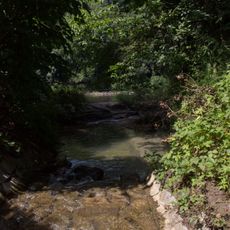
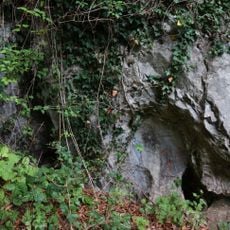
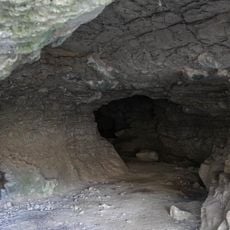
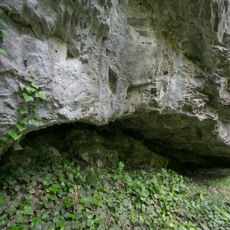
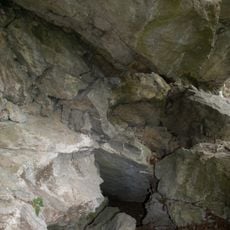
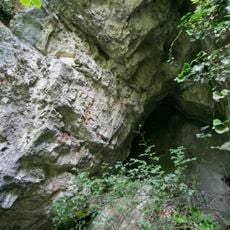
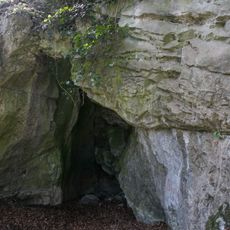
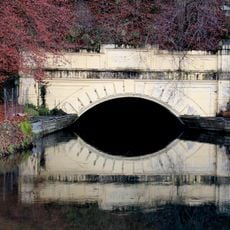
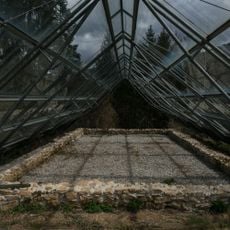
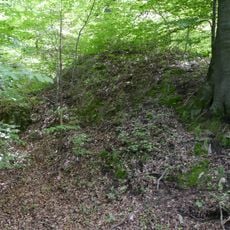
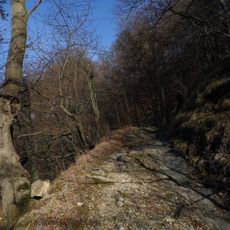
Repolusthöhle, Cave system in Frohnleiten, Austria.
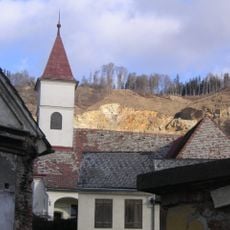
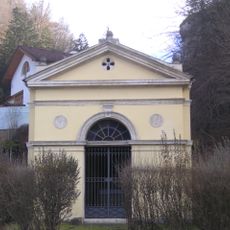
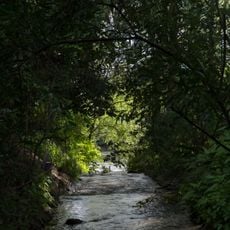
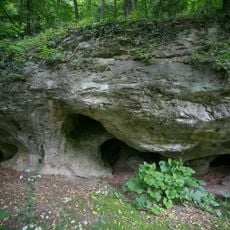
Repolusthöhle is a cave in the Badlgraben above Badl, north of Peggau on the Mur in Styria. It lies opposite the Badlhöhle on the other side of the valley. The cave is an archaeological site, a Protoaurignacian station, and its finds are kept at the Universalmuseum Joanneum in Graz.
The cave was discovered in 1910 by miner Anton Repolust and contains evidence of human activity from around 300,000 years ago. Archaeological work later documented its use across multiple time periods.
The cave is named after Anton Repolust, a miner from Badl (born 1877, died in the First World War) who found it in 1910. Excavations from 1948 onward, associated with Maria Mottl's work on the Protoaurignacian, yielded over 2,000 stone tools, bone tools and pottery fragments. The finds are now kept at the Universalmuseum Joanneum in Graz.
The site is located north of Peggau in the Badlgraben region and is generally not open to regular visitors. You will need special permission to access the cave.
The cave's occupation layers span more than 210,000 years, and re-dating of cave-bear bones in the 1980s by Gernot Rabeder aged part of the old finds by around 100,000 years. Among the material are what may be the oldest traces of chains made from perforated wolf incisors or perforated stone blades.
The community of curious travelers
AroundUs brings together thousands of curated places, local tips, and hidden gems, enriched daily by 93,593 contributors worldwide.