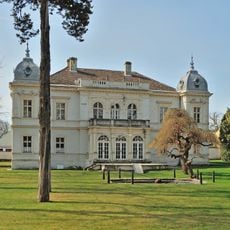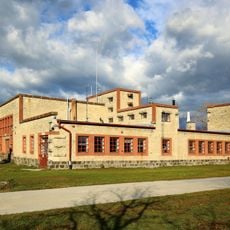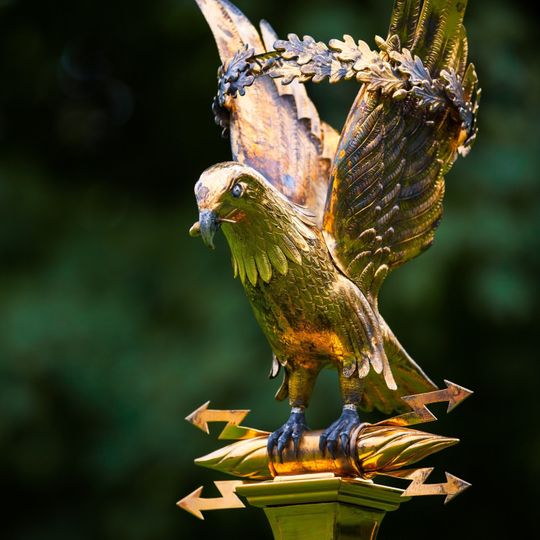
Museum Carnuntinum, Archaeological museum in Bad Deutsch-Altenburg, Austria.
Museum Carnuntinum is an archaeological museum in Bad Deutsch-Altenburg that preserves findings from the former Roman city of Carnuntum. The halls display sculptures, tombstones, coins, and personal objects that give insight into life along the Danube during Roman times.
Freiherr Eduard von Sacken laid the foundation of the Roman collection through his research at Carnuntum in 1852. The Verein Carnuntum, founded in Vienna in 1884, pushed for a museum, and architects Friedrich Ohmann and August Kirstein designed it; the foundation stone was laid in 1901 and Emperor Franz Joseph opened the building in 1904. Damaged in both world wars, it reopened in 1950 and was modernised in 1992.
The displays include tombstones, votive altars and statues of Jupiter Dolichenus and of Mithras along with Syrian and Egyptian gods, showing the cults soldiers and residents followed. The collection grew from the private collections of Abensberg-Traun, Ludwigstorff, Hollitzer, Nowatzi and Widter. Since 2004 temporary exhibitions have highlighted changing themes.
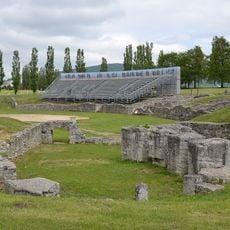
The museum is located near the historical excavation site and is easily accessible on foot, with enough space to explore comfortably. Plan to spend two to three hours to view the collections thoroughly.
One of the most valuable pieces is a portrait of Emperor Caracalla that displays Egyptian features, revealing the cultural blending of that period. Such objects are rare testimonies to how Eastern and Western artistic traditions met in this region.
The community of curious travelers
AroundUs brings together thousands of curated places, local tips, and hidden gems, enriched daily by 92,832 contributors worldwide.