Wallfahrtskirche Mariae Himmelfahrt, Pilgrimage church in Bad Deutsch-Altenburg, Austria.
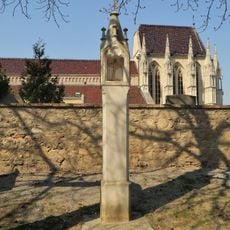
The Wallfahrtskirche Mariae Himmelfahrt in Bad Deutsch-Altenburg is a three-nave basilica standing on an elevated plateau above the Danube River. The building blends Romanesque and Gothic architectural styles and is surrounded by a stone cemetery wall.
A predecessor church, likely built under King Stephen I of Hungary, was probably destroyed around 1050 in fighting with King Andrew I. In 1058 the seven-year-old King Henry gave the newly built three-nave basilica to his mother Agnes of Poitou. In 1213 Alban and Johann Doerr funded a priest and had the church rebuilt as their family burial place; it became a parish church again in 1725.
The church is named after the Assumption of Mary and has drawn pilgrims to this location for centuries. Visitors come here seeking spiritual reflection and connection to its religious significance.
The church stands in the northeast of Bad Deutsch-Altenburg on a terrace that drops steeply to the Danube, enclosed by a dry-stone cemetery wall. The Romanesque charnel house (Karner) lies southeast of the church inside the cemetery grounds. The site is a protected monument; access to the church interior depends on parish use.
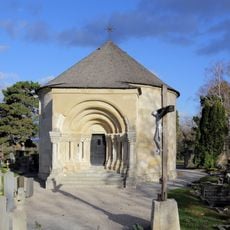
Southeast of the church, inside the cemetery, stands a Romanesque charnel house (Karner) built in the early to mid-13th century. Its round lower level once served as an ossuary, while the upper level was a chapel. Since 1995 the parish owns it and uses it as a funeral wake hall.
The community of curious travelers
AroundUs brings together thousands of curated places, local tips, and hidden gems, enriched daily by 94,371 contributors worldwide.