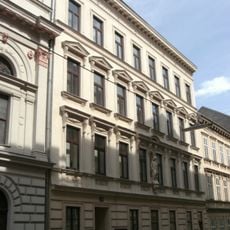
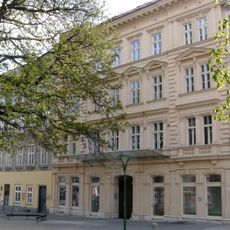
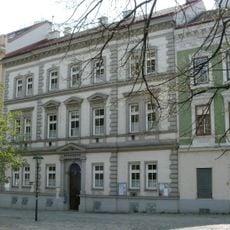
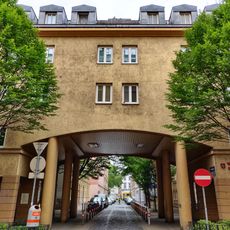
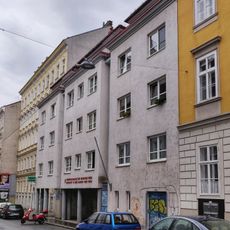
Museum of contraception and abortion, Educational medical museum in Rudolfsheim-Fünfhaus, Vienna, Austria.
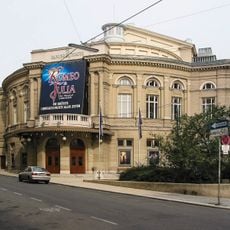
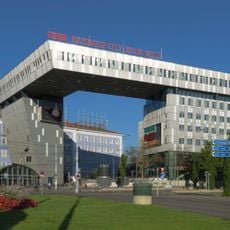
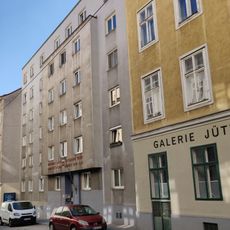
The Museum of Contraception and Abortion (MUVS) occupies rooms at Mariahilfer Gürtel in Vienna's 15th district, near Westbahnhof. Its three exhibition rooms display objects, models, files, writings and films drawn from a collection of about 2,100 objects, 1,120 books and over 500 specialist articles. Only a small part of the holdings is shown; the rest is accessible through the virtual museum.
The institution was founded in 2003 by a gynecologist and received the Austrian Museum Quality Seal in 2009. This recognition acknowledged its contribution to medical education and public understanding.
The museum presents how societies across different cultures have approached reproductive decisions and family planning. The collection shows that these concerns have shaped human practices and thinking throughout history in many ways.
The museum sits on Mariahilfer Gürtel in Rudolfsheim-Fünfhaus, next to Vienna's Westbahnhof station. Three exhibition rooms show only a small part of the collection; audio guides and a basic brochure are available in German and English, with further brochures on special topics. The museum takes part in the Long Night of Museums each year.
The museum holds a partial archive of Hermann Knaus (1892–1970), the Austrian gynecologist who, with Japanese physician Kyusaku Ogino, identified the fertile and infertile days of the menstrual cycle. It also runs a research project on abortion in Austria from 1945 to 1974, later extended to the present.
The community of curious travelers
AroundUs brings together thousands of curated places, local tips, and hidden gems, enriched daily by 94,222 contributors worldwide.