Mekhitarist Monastery of Vienna, Armenian Catholic monastery in Neubau, Vienna, Austria.
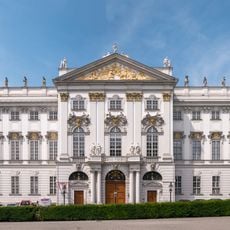
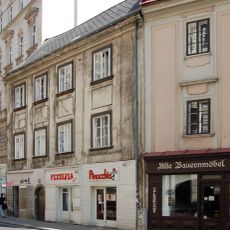
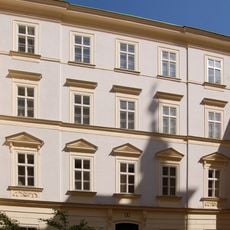
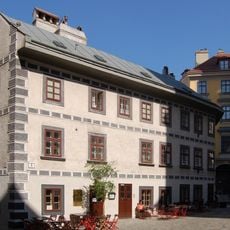
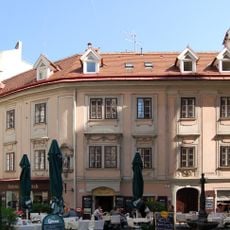
The Mekhitarist Monastery is an Armenian Catholic complex on Mechitaristengasse in Vienna's Neubau district. Its four-story main building was designed by Joseph Kornhäusel; construction began in 1835 and the cornerstone was laid on October 18, 1837. Two wings and the Neo-Renaissance church of Maria Schutz, designed by Camillo Sitte, were added in 1874. The refectory holds an 1839 wall painting by Ludwig Ferdinand Schnorr von Carolsfeld.
Armenian monks established this community after relocating from Venice to Trieste, then moving to Vienna in 1805 as Napoleon's military campaigns disrupted traditional European religious centers. The monastery became a permanent home for preserving Armenian Catholic knowledge and practice.
The monastery's name comes from Mechitar of Sebastia, founder of the order. Sunday Mass draws 30 to 50 people, Armenians and non-Armenian Catholics alike, and around 4,000 visitors come each year. A khachkar in the courtyard, inaugurated in 2015, commemorates the victims of the Armenian genocide.
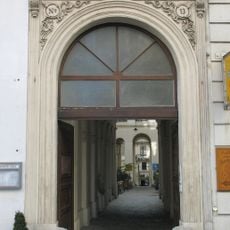
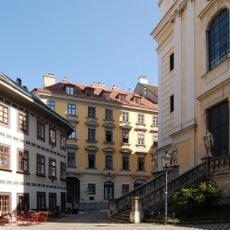
The monastery occupies almost the entire length of Mechitaristengasse in Neubau, with its four-story Kornhäusel facade facing the street. Around 4,000 people visit annually, including tourists of Armenian ancestry; guided tours are among the community's income sources. The church, Kirche Maria Schutz, was last renovated in 2011, and a khachkar commemorating the Armenian genocide stands in the courtyard since 2015.
The community has produced Mechitharine, a herbal liqueur, since 1889 as a primary income source for maintaining the monastery. This unexpected product is one of the less known aspects of the place and shows how the monks secured their economic independence.
The community of curious travelers
AroundUs brings together thousands of curated places, local tips, and hidden gems, enriched daily by 93,591 contributors worldwide.